

How to Check the Authenticity of Smart Glasses Lenses?
SpeCiC-AI-Smart-Glasses2026-04-24T21:27:55+08:00How to Check the Authenticity of Smart Glasses Lenses?
Ever dropped a chunk of change on a pair of snazzy AI smart glasses, only to slip them on and realize the lenses feel like they’re pulled straight from a cereal box toy? You fire up the real-time translation feature you were hyped for, and the text looks like it’s doing the cha-cha across your field of view. You try the AR navigation, and the turn signals are so warped you’d probably end up in a ditch instead of your destination. You’re not alone.
As AI smart glasses have exploded in popularity—with brands like SpeCiC leading the charge in making sleek, capable, everyday AI wearables—counterfeiters and low-quality knockoff artists have followed right on their heels. The worst part? They don’t just cut corners on the fancy electronics. They skimp on the single most important part of your smart glasses: the lenses.
Your smart glasses are only as good as the lenses you look through. All the cutting-edge AI features, the real-time captions, the seamless AR overlays, the hands-free productivity tools—they all mean nothing if your lenses are fake, warped, or made from cheap plastic that belongs in a dollar store toy. For SpeCiC users, this is even more critical: every part of the SpeCiC AI smart glasses experience is built around precision-engineered lenses that work hand-in-hand with the brand’s proprietary AI display engine and software. A fake lens doesn’t just ruin your view—it turns your top-tier AI glasses into nothing more than a fancy plastic headband.
🤔 Hot Take: Should Smart Glasses Lenses Be User-Replaceable At All?
Here’s a question that divides the AI wearables community: should premium smart glasses even have user-replaceable lenses? Some argue that sealed, non-replaceable lenses (like many high-end AR headsets use) ensure perfect optical alignment and prevent counterfeiting entirely. Others say user-replaceable lenses are essential for prescription options, customization, and sustainability. Where do you stand on this debate?
This guide is your ultimate, no-BS handbook to checking the authenticity of your smart glasses lenses, with a special focus on the features and checks that matter most for SpeCiC AI smart glasses owners. We’re ditching the overly technical jargon, keeping things light and funny, and giving you every single tool you need to spot a fake from a mile away, before you buy and after you unbox. By the end of this, you’ll be a smart glasses lens authenticity expert, and you’ll never get scammed by a knockoff artist again.
Why Your Smart Glasses Lenses Matter (Even More Than the Fancy AI Features)
Let’s get one thing straight right out of the gate: when it comes to AI smart glasses, the lenses aren’t just a “part” of the device. They’re the entire foundation of the experience. You could have the most advanced AI chip on the planet, a 20-hour battery life, and a feature list longer than a CVS receipt, but if your lenses are garbage, the whole thing is useless. Here’s why, and what you stand to lose with fake, inauthentic lenses.
Your Lenses Are Your Window to the AI World
Think of your smart glasses lenses like the screen on your smartphone. If your phone screen was cracked, warped, or made from fuzzy plastic, you wouldn’t be able to read texts, watch videos, or use any of your apps. It’s the exact same with smart glasses—except the “screen” is the lenses right in front of your eyes.
For SpeCiC AI smart glasses owners: Every single AI feature the brand is known for—from ultra-low latency real-time translation across 60+ languages, to crisp AR navigation overlays, to hands-free meeting captions that sync perfectly with your conversations—is built to work with the brand’s precision optical lenses. The lenses are calibrated to work with SpeCiC’s micro-display system, ensuring that the AI content overlays perfectly on your field of view, with zero distortion, zero blurriness, and zero lag.
A fake lens? It doesn’t have that precision calibration. Even if it looks identical to the naked eye, the optical parameters are off. The AR content will be misaligned, blurry, or warped. The text from your translation feature will be fuzzy around the edges, making it hard to read. The navigation arrows will jump around, instead of staying fixed on the road ahead. You didn’t buy AI smart glasses to squint at distorted text or second-guess where your navigation is telling you to go—and that’s exactly what you’ll get with inauthentic lenses.
Comfort Is Non-Negotiable (No, Headaches Aren’t a “Feature” of Smart Glasses)
We’ve all heard the horror stories: someone buys a pair of AI smart glasses, wears them for 20 minutes, and ends up with a splitting headache that lasts the rest of the day. A lot of people brush this off as “just how smart glasses are,” but that’s a lie. The #1 cause of that headache isn’t the AI tech, or the weight of the frames—it’s bad, fake, poorly made lenses.
🤔 Community Debate: Is “Break-In Period” Just a Myth for Bad Lenses?
You’ve heard it before: “Oh, they just need a break-in period! Your eyes will adjust after a week!” But here’s the controversial question: should high-end smart glasses need a “break-in period” at all? Some say yes—your eyes need time to adapt to any new lens. Others say it’s just a marketing excuse for poorly calibrated, uncomfortable lenses. What’s your experience with SpeCiC glasses? Did they feel perfect from day one, or did you need an adjustment period?
High-quality, authentic smart glasses lenses are engineered with optical precision that ensures your eyes don’t have to work overtime to focus on the content in front of you. SpeCiC’s lenses, for example, are designed for all-day wear, with a lightweight optical material and a curvature that’s optimized to reduce eye strain during extended use. Whether you’re wearing them for a 3-hour work meeting, a full day of travel, or a weekend exploring a new city, authentic SpeCiC lenses are built to keep your eyes feeling fresh, not fatigued.
Fake lenses? They’re made from cheap, low-quality plastic with zero optical precision. They often have hidden distortions, uneven thickness, or incorrect curvature that forces your eyes to constantly adjust and refocus. It’s like trying to read a book through a dirty, warped window. After 20 minutes, your eyes are exhausted, and the headache sets in. Worse, these cheap lenses often have inconsistent clarity across the surface, so the center is slightly clear, but the edges are a blurry mess—making it even harder for your eyes to focus.
Durability: Your Lenses Need to Keep Up With Your On-the-Go Lifestyle
Smart glasses aren’t meant to sit on a shelf in a protective case. They’re meant to be worn every single day: commuting to work, walking around the city, traveling, hiking, grabbing coffee with friends, even just lounging around the house. That means your lenses need to stand up to the chaos of everyday life.
Authentic smart glasses lenses, like the ones from SpeCiC, are built with this in mind. SpeCiC’s proprietary triple-layer coating system is engineered specifically for daily wear: a hard outer scratch-resistant layer that stands up to accidental bumps, wipes, and drops; an anti-glare, anti-fog middle layer that keeps your view clear in bright sunlight, cold-to-warm temperature changes, and humid environments; and an inner anti-smudge, oleophobic layer that repels fingerprints, sweat, and dust, so you don’t have to wipe your lenses every 5 minutes.
Fake lenses? They have none of this. At best, they have a thin, cheap coating that wears off after a few weeks of use. At worst, they have no coating at all. That means a single wipe with the wrong cloth will leave permanent scratches all over the lens. A quick walk from your air-conditioned car into a humid summer day will leave the lenses completely fogged over, with zero way to clear it besides taking them off and wiping them. A single touch with your finger will leave a greasy fingerprint that’s impossible to fully remove. After a month of use, your fake lenses will look like they’ve been dragged through a gravel parking lot, while authentic SpeCiC lenses will still look and perform like new.
The Big Red Flags: Spotting Fake/Inauthentic Lenses Before You Buy
The best way to avoid getting scammed with fake smart glasses lenses is to never buy them in the first place. Scammers are getting smarter every day—their fake listings look almost as polished as the real thing, their product photos are stolen from official brand sites, and their copy sounds convincing if you don’t know what to look for. But no matter how good their fake listing is, there are always red flags. Here are the biggest ones to watch for, before you click “buy now.”
The Price Tag That’s Too Good to Be True (Spoiler: It Is)
Let’s start with the most obvious, and most ignored, red flag: the price. If a deal makes you do a double-take and whisper “no way,” that’s your brain screaming “run.”
Authentic smart glasses lenses, especially replacement lenses for premium AI smart glasses like SpeCiC, have a fixed, consistent price point across all official channels. SpeCiC’s official replacement lenses are priced to reflect the precision engineering, high-quality materials, and rigorous testing that goes into every single pair. If you see a listing for “brand new authentic SpeCiC lenses” for 50%, 70%, even 90% off the official price? It’s a fake. Period.
🤔 Unpopular Opinion: Should Brands Offer “Budget” Replacement Lenses?
Here’s a question that sparks fierce debate: should premium brands like SpeCiC offer a “budget” line of replacement lenses? Some argue that a lower-cost option would cut into the counterfeit market by giving price-sensitive shoppers a legitimate alternative. Others say a budget line would dilute the brand’s premium positioning and force compromises on quality. Do you think SpeCiC should offer different tiers of lenses, or keep everything at their current premium standard?
Scammers rely on the allure of a “once-in-a-lifetime deal” to get you to lower your guard. They’ll tell you it’s “overstock,” “liquidation stock,” “open-box returns,” or “exclusive wholesale pricing.” But here’s the truth: premium brands like SpeCiC don’t dump their authentic lenses on random third-party sellers for pennies on the dollar. Open-box returns are almost always sold through official channels, not random eBay or Facebook Marketplace sellers. And “wholesale pricing” is only available to authorized dealers, who are required to sell at the brand’s minimum advertised price.
We get it—everyone loves a good deal. But when it comes to smart glasses lenses, the “deal” will end up costing you more in the long run. You’ll waste money on a fake pair of lenses that ruin your AI experience, scratch after a week, and give you headaches. You’ll end up having to buy the authentic ones anyway, so you’re just throwing money down the drain. If the price seems too good to be true, it is. Walk away.
Vague, Generic Product Descriptions (No, “Premium Lenses” Doesn’t Mean Anything)
Another huge red flag is a product description that’s full of empty buzzwords, but zero specific details. Scammers don’t know the ins and outs of the authentic lenses they’re faking—so they can’t write a detailed, accurate product description. Instead, they fill the listing with generic, meaningless phrases that sound good, but don’t actually say anything.
| Fake Listing Description | Authentic SpeCiC Listing Description |
|---|---|
| “Premium high-quality lenses for SpeCiC smart glasses! Anti-scratch, anti-fog, HD clarity! Perfect fit for your glasses! Fast free shipping!” | Exact compatibility (Gen 1, Gen 2, etc.), detailed material specifications, full breakdown of triple-layer coating, AI optimization details, official warranty, customer support access |
The fake description sounds fine at first glance, but it’s all fluff. There’s no specific information about the materials, the optical specifications, the coating system, the exact models they fit, or any of the unique features of the authentic lenses. It’s the kind of description you could write for any pair of cheap plastic lenses, for any brand of glasses.
Scammers can’t replicate the level of detail you’ll find on an official SpeCiC listing, because they don’t have access to the official product specifications. If a listing doesn’t have specific, model-exact details about the lenses, it’s a fake. Don’t waste your time.
Missing Branding & Official Packaging
Authentic branded products come with authentic branded packaging. It’s that simple. Premium brands like SpeCiC put just as much care into the packaging and unboxing experience as they do into the product itself. It’s part of the brand experience, and it’s also a key anti-counterfeiting measure.
If a listing doesn’t show clear photos of the official, branded packaging, or says the lenses come “without original box to save shipping cost,” that’s a massive red flag. Authentic SpeCiC replacement lenses come in a rigid, branded box with the SpeCiC logo clearly printed on the outside, a sealed security sticker to prove it hasn’t been opened or tampered with, and a unique anti-counterfeiting label with a scratch-off verification code. Inside the box, you’ll find the lenses in a protective lens case, a premium SpeCiC-branded microfiber cleaning cloth, and an official user manual with installation instructions and warranty information.
Fake lenses? They come in one of two ways: either a cheap, unbranded plastic zip-lock bag, or a flimsy box with a blurry, misprinted SpeCiC logo that looks like it was printed on a home inkjet printer. There’s no security seal, no anti-counterfeiting label, no branded cleaning cloth, no user manual. The scammers will tell you they “removed the packaging to save on shipping” or “it’s a bulk package without the box,” but that’s just an excuse. Authentic brands don’t ship their premium products in zip-lock bags. If the listing doesn’t show clear, detailed photos of the official branded packaging, it’s a fake.
Quick Pre-Purchase Red Flag Checklist
- ❌ Price is 50%+ below official retail price
- ❌ Description is full of buzzwords but no specific details
- ❌ No photos of official branded packaging
- ❌ Seller profile is new, has no reviews, or sells random unrelated products
- ❌ Makes wild, sci-fi claims the brand doesn’t make
The Step-by-Step Guide to Checking Authenticity When You Have the Lenses In Hand
Okay, so you’ve pulled the trigger, the package is on your doorstep, and you’re ready to unbox. Maybe you bought from a third-party seller and want to double-check, or maybe you just want to be 100% sure you got the real deal before you pop them into your SpeCiC frames. Either way, we’ve got you covered.
This step-by-step guide will walk you through every single check you need to do to confirm your lenses are authentic, with a special focus on the SpeCiC-specific details that scammers just can’t replicate. We’ll start with the easiest checks, and work our way up to the most critical tests that will confirm once and for all if your lenses are the real thing.
Step 1: Start With the Packaging & Unboxing Experience
We talked about packaging in the red flags section, but it’s the first thing you should check when your package arrives. Scammers can fake listing photos, but they can’t replicate the high-quality, official packaging of an authentic brand like SpeCiC.
First, check the outside of the box. Authentic SpeCiC lens boxes are made from thick, rigid cardboard, with a crisp, clean print of the SpeCiC logo on the front and sides. The colors are consistent with the official brand, the text is sharp and clear, and there are no typos, misspellings, or blurry printing. Fake boxes are usually made from thin, flimsy cardboard, with a blurry, misprinted logo, off-brand colors, and typos in the text (we’ve seen everything from “SpeCiC” misspelled as “SpeCic” to “smart glasses” written as “smert glasses”).
Next, check the security seal. Every authentic SpeCiC lens box has a tamper-evident security seal across the opening of the box. If the seal is broken, missing, or looks like it’s been peeled off and re-stuck, that’s a huge red flag. Scammers will often take fake lenses, put them into stolen or replica boxes, and try to re-seal them with cheap tape. Authentic seals are designed to show clear signs of tampering if they’re opened, so if the seal isn’t perfectly intact, send it back immediately.
Then, look for the anti-counterfeiting label. On every authentic SpeCiC box, you’ll find a unique anti-counterfeiting sticker with a scratch-off section. Under the scratch-off layer is a unique, one-time use verification code. You can enter this code on the official SpeCiC website’s anti-counterfeiting page to confirm that your lenses are authentic. If the box doesn’t have this sticker, if the scratch-off section is already scratched off, or if the code doesn’t work on the official website, your lenses are fake.
Finally, check the contents inside the box. Authentic SpeCiC lenses come with:
- ✅ The lenses themselves, in a protective, branded hard lens case
- ✅ A premium SpeCiC-branded microfiber cleaning cloth
- ✅ An official user manual and installation guide
- ✅ A warranty card with information about the 1-year manufacturer warranty
If any of these items are missing, if they’re unbranded, or if they look cheap and poorly made, your lenses are fake. Authentic brands don’t cut corners on the details, and every part of the unboxing experience is designed to feel premium. If it feels cheap, it is cheap.
Step 2: Inspect the Lens Branding & Physical Markings
Once you’ve checked the packaging, it’s time to take a close look at the lenses themselves. Authentic SpeCiC lenses have unique, hard-to-replicate physical markings that scammers can’t copy with cheap manufacturing processes.
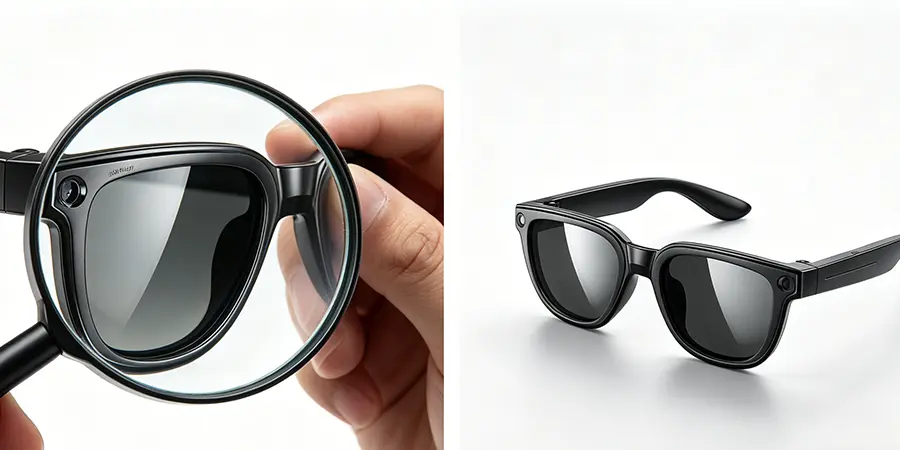
First, look at the edge of the lenses. Every authentic SpeCiC lens has a precision laser-engraved SpeCiC logo and a unique model/serial number on the outer edge of the lens. This isn’t a printed sticker or ink—it’s laser-etched directly into the lens material, so it won’t rub off, scratch off, or fade over time. The engraving is incredibly precise, with clean, sharp lines, consistent spacing, and perfect alignment with the lens shape.
Fake lenses will either have no marking at all, or a cheap printed logo that rubs off with a single wipe of a cloth. If they do try to laser-engrave the logo, it’s almost always poorly done: the lines are blurry, the spacing is off, the logo is misspelled, or the engraving is too deep or too shallow, leaving a rough edge on the lens.
🤔 Design Debate: Should Brand Logos Be Visible or Discreet?
Here’s a purely aesthetic question that divides the SpeCiC community: should the brand logo be visible on the lenses, or completely discreet? Some love the subtle status symbol of a visible laser engraving. Others want their smart glasses to look as “normal” as possible, with no visible branding at all. Where do you stand? Do you like the current discreet edge engraving, or do you wish SpeCiC would make it either more prominent or completely invisible?
Next, check the edge finish of the lenses. Authentic SpeCiC lenses are precision-cut and polished to a perfectly smooth, even edge. There are no rough spots, no burrs, no uneven cuts, no chips or cracks. The edge is consistent all the way around the lens, with a smooth, uniform finish that feels completely smooth to the touch.
Fake lenses are cut with cheap, low-precision tools, so the edges are almost always rough and uneven. You’ll feel burrs and rough spots when you run your finger along the edge, the thickness will vary around the lens, and you may even see small chips or cracks from the cutting process. This isn’t just a sign of a fake lens—it’s also a risk, as the rough edges can scratch the inside of your SpeCiC frames, damage the internal electronics, or even irritate your skin when you wear them.
Finally, check the overall build quality. Hold the lenses up to the light and look at the material. Authentic SpeCiC lenses are made from a high-quality, lightweight optical polymer that’s completely clear, with no yellow tint, no cloudiness, no bubbles, no specks of dust or debris trapped inside the material. The thickness is consistent across the entire lens, with no thin spots or uneven areas.
Fake lenses are made from cheap, low-quality plastic that often has a slight yellow or blue tint, cloudiness, or small bubbles and specks trapped inside. The thickness is often uneven, with the center thicker or thinner than the edges, leading to distortion and eye strain. If the lens material looks or feels cheap, it’s a fake.
Step 3: Test the Optical Clarity & Precision (The Most Important Test)
This is the make-or-break test. Even if the packaging looks perfect, even if the logo is engraved correctly, if the optical clarity and precision aren’t there, the lenses are fake. This is the area where scammers cut the most corners, and it’s the area that matters most for your SpeCiC AI experience.
First, do a basic clarity and distortion test. Hold the lenses up to a bright light, and look through them at a straight line: the edge of a table, a window frame, a door frame, a line on a piece of paper. Move the lens around, looking at the line through different parts of the lens: the center, the edges, the top, the bottom.
An authentic SpeCiC lens will show the line as perfectly straight, crisp, and clear, no matter which part of the lens you look through. There’s no distortion, no waviness, no bending of the line, no blurriness around the edges. The entire lens has consistent, perfect optical clarity, because it’s engineered to exacting optical standards.
A fake lens will fail this test immediately. When you look at the straight line through the lens, it will look wavy, bent, or distorted, especially around the edges. The center may be slightly clear, but the edges will be blurry and warped. The line may even appear to jump or shift as you move the lens around. This is because the fake lens is made from cheap plastic with no optical precision, and the material has inconsistent density and curvature that distorts the light passing through it.
The Ultimate SpeCiC-Specific Test: Install the lenses into your SpeCiC frames, and test the AI features. This is where the rubber meets the road, because authentic SpeCiC lenses are calibrated to work perfectly with the brand’s AI display engine and software. Fake lenses are not.
Once the lenses are installed, power on your SpeCiC glasses, and open the real-time translation feature. Type in some text, or have a friend speak to you, and look at the captions that appear in your field of view. With authentic SpeCiC lenses, the text will be perfectly crisp, sharp, and clear, with no blurriness around the edges, no double-vision or ghosting, no distortion. The text will stay perfectly aligned in your field of view as you move your head, with no jumping or shifting.
With fake lenses, the text will be blurry, distorted, or doubled. The edges of the letters will be fuzzy, making it hard to read. The text may appear warped, or it may jump around as you move your head. You may see ghosting or double-vision, where the text appears twice, slightly offset. This is because the fake lens doesn’t have the correct optical properties to project the display content correctly, so the AI algorithms can’t align the content properly.
Next, test the AR navigation feature. Pull up a route, and look at the AR overlays that appear on the road ahead. With authentic lenses, the navigation arrows and markers will be perfectly aligned with the real world, crisp and clear, with no distortion. They’ll stay fixed in place as you move your head, just like they’re painted on the road. With fake lenses, the markers will be misaligned, blurry, or warped. They’ll jump around as you move your head, and they won’t line up with the real world at all.
If the AI features don’t work perfectly, if the content is blurry, distorted, or misaligned, the lenses are fake. It’s that simple. SpeCiC’s entire system is built around their authentic lenses, and fake lenses break that system completely.
Core Feature Deep Dive: Camera & Translation Capabilities
For many users, the two biggest reasons to invest in smart camera glasses and wearable translator glasses are the hands-free functionality and the ability to capture moments or break down language barriers without pulling out your phone. But none of these features work as intended if your lenses are fake or poorly calibrated.
With authentic smart camera glasses, the lenses are engineered to be optically neutral, so they don’t distort the view of the built-in 8MP camera. Fake lenses can cause vignetting, blurriness, or color distortion in your photos and videos, ruining the hands-free recording experience you paid for. Similarly, authentic wearable translator glasses rely on perfectly calibrated lenses to display real-time translation text clearly and in the correct position in your field of view—fake lenses turn this game-changing feature into a frustrating, unreadable mess.
Step 4: Put the Coatings to the Test (Scratch, Fog, Smudge Resistance)
Authentic SpeCiC lenses have a proprietary triple-layer coating system that’s engineered to stand up to daily wear and tear. Fake lenses either have no coating at all, or a thin, cheap coating that wears off immediately. This test will help you tell the difference, without damaging the lenses.
First, the anti-smudge/oleophobic coating test. This is the easiest test to do, and it’s a dead giveaway for fake lenses. Gently press the pad of your clean finger against the surface of the lens, leaving a fingerprint. Then, take a clean microfiber cloth, and wipe the lens once, with light pressure.
With an authentic SpeCiC lens, the fingerprint will wipe away completely, with no smudges, streaks, or residue left behind. The oleophobic coating repels oil and sweat from your skin, so fingerprints don’t stick, and they wipe away easily. With a fake lens, the fingerprint will leave a greasy smudge that won’t wipe away completely. You’ll have to scrub the lens multiple times to get rid of it, and it will still leave streaks and residue behind. That’s because the fake lens has no oleophobic coating, so the oil from your finger sticks directly to the plastic.
Next, the anti-fog test. This is another easy test that shows the difference between authentic and fake lenses. Hold the lens up to your mouth, and gently breathe on the surface, like you’re fogging up a window.
With an authentic SpeCiC lens, the anti-fog coating will prevent any heavy fog from forming. You may see a very light mist that dissipates completely in 1-2 seconds, leaving the lens completely clear. With a fake lens, the surface will fog up completely, with a thick, white layer of mist that takes 10+ seconds to dissipate, if it dissipates at all. It will leave streaks and water spots behind when it finally clears. This is a critical test for daily wear—if you’ve ever walked from a cold car into a warm building and had your glasses fog up completely, you know how frustrating it is. Authentic SpeCiC lenses are built to avoid that, fake lenses are not.
Finally, the scratch resistance test. Important note: we’re not telling you to take a key to the lens, or scrub it with steel wool. Even authentic scratch-resistant coatings aren’t indestructible, and we don’t want you to damage your lenses. This is a gentle test to check for the presence of a hard scratch-resistant coating.
Take a clean, high-quality microfiber cloth, and gently wipe the lens in a circular motion, with light pressure, 10-15 times. This is the same motion you’d use to clean a smudge off the lens. With an authentic SpeCiC lens, there will be zero scratches left behind, no matter how many times you wipe it. The hard scratch-resistant coating stands up to daily cleaning with a microfiber cloth, no problem.
With a fake lens, even this gentle wiping will leave fine, hairline scratches all over the surface. Hold the lens up to a bright light, and you’ll see a web of tiny scratches where you wiped it. That’s because the fake lens has no hard scratch-resistant coating, so even the soft microfiber cloth will scratch the soft plastic surface. Imagine what will happen after a month of daily use, wiping smudges off the lens, or accidentally bumping it against your keys in your pocket. The fake lens will be completely scratched up, while the authentic one will still look brand new.
Step 5: Verify Fit & Compatibility With Your SpeCiC Frames
Authentic SpeCiC replacement lenses are precision-engineered to fit your specific SpeCiC smart glasses model perfectly. They’re 3D modeled and cut to exact, micron-level specifications, so they snap into the frames perfectly, with zero gaps, zero wiggle room, and zero force required to install them. Fake lenses are made with generic, low-precision molds, and they almost never fit correctly.
First, try installing the lenses into your SpeCiC frames. Authentic lenses will snap into place easily, with light, even pressure. They’ll sit perfectly flush in the frame, with no gaps around the edges, no parts sticking out, and no uneven alignment. Once they’re installed, they’ll be completely secure—you can shake the frames, turn them upside down, even gently tap the frame, and the lenses won’t move, shift, or fall out.
Fake lenses will have one of two problems: either they’re too big, or they’re too small. If they’re too big, you’ll have to force them into the frame, using excessive pressure that can crack the lens, scratch the frame, or damage the internal electronics of your SpeCiC glasses. Even if you do get them in, they’ll be under constant pressure, which can cause the lens to crack over time. If they’re too small, they’ll fall into the frame easily, but they’ll be loose and wobbly. They’ll shift around when you move your head, they won’t sit flush in the frame, and they may even fall out completely if you shake your head.
Even if the fake lenses fit into the frame, they’ll almost always block or interfere with the built-in sensors and microphones on your SpeCiC glasses. Authentic lenses are cut with exact cutouts and clearances for every sensor, microphone, and display component on the frames. Fake lenses don’t have that precision, so they’ll often cover part of a sensor, block a microphone, or interfere with the display projection. This will cause your AI features to work poorly, or not work at all.
If the lenses don’t fit perfectly, if you have to force them in, if they’re loose, or if they interfere with the sensors or features of your SpeCiC glasses, they’re fake. Authentic lenses fit like a glove, every single time.
Step 6: Cross-Check the Serial Number & Authenticity on the Official SpeCiC Website
This is the final, definitive check to confirm your lenses are authentic. Every pair of authentic SpeCiC lenses has a unique, one-of-a-kind serial number. This number is laser-engraved on the edge of the lens, and it’s also printed on the anti-counterfeiting label on the box. The two numbers will always match.
To verify the serial number, go directly to the official SpeCiC website. Never use a link sent to you by the seller, or a link printed on a fake box—scammers will create fake verification websites that say any serial number is authentic. Go straight to the official SpeCiC site, navigate to the anti-counterfeiting verification page, and enter the serial number from your lens and box.
If the lenses are authentic, the website will confirm that the serial number is valid, show you the exact model of lenses the serial number is for, the production date, and the warranty information. It will also tell you if the serial number has been verified before. If it’s a brand new pair of lenses, it should say this is the first verification.
If the lenses are fake, one of three things will happen:
- ❌ The website will say the serial number is invalid, and doesn’t exist in the SpeCiC database.
- ❌ The website will say the serial number has already been verified multiple times, meaning it’s a stolen serial number from a real pair of lenses, being used on hundreds of fake pairs.
- ❌ The serial number on the lens doesn’t match the serial number on the box.
Any of these outcomes means the lenses are fake, and you should send them back immediately. This is the most definitive check you can do, because scammers can’t replicate the official SpeCiC serial number database.
Step 7: The Long-Haul Test: Comfort & Performance Over Time
Finally, the ultimate test of authenticity is how the lenses perform over time. Authentic SpeCiC lenses are built to last, with consistent performance for years. Fake lenses will start to show their true colors within a few weeks of use.
First, the comfort test. Wear the lenses for a few hours, doing your normal daily activities: working, commuting, using the AI features. With authentic SpeCiC lenses, you won’t experience excessive eye strain, fatigue, or headaches. The optical precision means your eyes don’t have to work overtime to focus, even during extended wear.
With fake lenses, you’ll start to feel eye fatigue within 20-30 minutes. After a few hours, you’ll have a splitting headache, and your eyes will feel tired and sore. This is the number one complaint we hear from people who bought fake lenses, and it’s a guaranteed sign that the lenses are not authentic.
Next, the long-term durability test. After a month of regular daily use, authentic SpeCiC lenses will still look and perform like new. The coatings will still be intact, the lens will be scratch-free, the anti-fog and anti-smudge features will still work perfectly, and the optical clarity will be just as good as the day you bought them.
Fake lenses will fall apart quickly. After a month, the cheap coating will have worn off completely, leaving the lens covered in scratches. The anti-fog and anti-smudge features will stop working entirely. The plastic will start to yellow and cloud up, reducing the clarity. The lens may even start to warp or crack, from the pressure of being in the frame.
If your lenses start to degrade, scratch, or yellow after a few weeks of use, they’re fake. Authentic SpeCiC lenses are built to last, and they’ll maintain their performance for years, not weeks.
SpeCiC-Specific Authenticity Checks: What Makes Our Lenses Unique
If you’re a proud SpeCiC AI smart glasses owner (or about to be), there are a few brand-specific checks you can do that scammers just can’t replicate—no matter how hard they try. These are the secret sauce that makes SpeCiC lenses stand out from the cheap knockoffs, and they’re non-negotiable for authenticity.
AI-Optimized Optical Design: Built for Seamless AR Integration
The biggest difference between authentic SpeCiC lenses and fake knockoffs is that our lenses aren’t just “clear pieces of plastic.” They’re a core part of the SpeCiC AI system, engineered from the ground up to work perfectly with our proprietary display engine, AR algorithms, and sensor suite.
Every single SpeCiC lens is calibrated to exact optical specifications that are matched to our display hardware. The refractive index, the curvature, the thickness, the light transmission rate—every single parameter is tuned to ensure that the AI content projected by the display is perfectly aligned, crisp, and clear in your field of view. Our engineers spend thousands of hours testing and tuning the lenses to work with our software, so the AR content feels like it’s actually part of the real world, not just a projection on a lens.
🤔 Future of Smart Glasses: Should Lenses Be Custom-Calibrated to Your Eyes?
Here’s a forward-looking debate: should premium smart glasses lenses be custom-calibrated to each individual user’s eyes? Some argue that one-size-fits-all lenses will never be perfect for everyone, and custom calibration (like prescription glasses) is the future. Others say it would make replacement lenses prohibitively expensive and logistically impossible for most users. Do you think SpeCiC should offer custom eye calibration as a premium option, or keep the current one-size-fits-most approach?
Scammers can’t replicate this. They don’t have access to our proprietary display specifications, our software algorithms, or our engineering data. They just make a clear piece of plastic that looks like our lenses, with none of the AI-specific optical calibration. That’s why fake lenses always result in blurry, distorted, misaligned AI content. The only way to get the seamless, magical SpeCiC AI experience is with authentic SpeCiC lenses.
Precision-Engineered Fit for SpeCiC Frame Models
Every SpeCiC smart glasses model has a unique frame design, with unique lens dimensions, curvature, and mounting points. We don’t use generic, one-size-fits-all lens designs. Every single replacement lens we make is 3D modeled and precision-cut to fit a specific SpeCiC model, down to the micron.
This means that authentic SpeCiC lenses snap into your frames perfectly, every single time. There’s no force required, no gaps, no wiggle room, no interference with the sensors, microphones, or display. They’re designed to be an exact replacement for the original lenses that came with your glasses, with zero compromises.
Scammers use generic, low-precision molds to make their fake lenses. They don’t have access to our exact 3D models, so they can only approximate the shape and size. This is why fake lenses never fit correctly: they’re either too big and require force to install, or too small and fall out easily. They often block the sensors or display, ruining the AI experience, and they can even damage your frames. If the lenses don’t fit perfectly, they’re not authentic SpeCiC lenses.
The SpeCiC Triple-Layer Coating System
We’ve talked about the coatings already, but it’s worth diving deeper into what makes our coating system unique, and why scammers can’t replicate it. Our proprietary triple-layer coating system is the result of years of research and development, and it’s tested to stand up to the harshest daily wear and tear.
| Coating Layer | What It Does | Why It Matters |
|---|---|---|
| Outer Layer | Hard scratch-resistant coating | Stands up to daily bumps, wipes, and drops |
| Middle Layer | Anti-glare, anti-fog dual-action coating | Cuts glare in bright sun, prevents fogging in temperature changes |
| Inner Layer | Oleophobic anti-smudge coating | Repels oil, sweat, and fingerprints; wipes clean easily |
Scammers can’t replicate this multi-layer coating system. At best, they’ll spray a thin, cheap single-layer coating on the lens that wears off after a few weeks. At worst, they’ll have no coating at all. The only way to get the full performance of our triple-layer coating system is with authentic SpeCiC lenses.
Official Serial Number Verification: Exclusively on SpeCiC.com
Our anti-counterfeiting serial number system is designed to be unbreakable. Every single pair of SpeCiC lenses has a unique, random serial number that’s laser-engraved on the lens and printed on the box. This number is stored in our secure, encrypted database, and it can only be verified on the official SpeCiC website.
Each serial number can only be verified a limited number of times, so if a scammer steals a serial number from a real pair of lenses and prints it on hundreds of fake pairs, the verification system will flag it as over-verified, and you’ll know it’s a fake. We also tie each serial number to a specific lens model, production batch, and warranty information, so you’ll know exactly what you’re getting, and that it’s 100% authentic.
Scammers can’t replicate this system. They can’t access our database, they can’t create valid serial numbers, and they can’t fake the official verification page. This is the ultimate check to confirm your lenses are authentic.
Official Warranty & Support: Only for Authentic Lenses
When you buy authentic SpeCiC lenses, you’re not just buying a product—you’re buying the peace of mind that comes with our 1-year manufacturer warranty, and access to our world-class customer support team.
Our warranty covers any manufacturing defects in the lenses for a full year after purchase. If the coating wears off prematurely, if the lens has a manufacturing defect, if there’s any issue with the quality of the product, we’ll replace it for free, no questions asked. Our customer support team is also available to help you with installation, troubleshooting, or any other questions you have about your lenses.
Fake lenses have none of this. Scammers will disappear as soon as you buy the lenses, and they won’t honor any warranty or support requests. If the lenses break, scratch, or don’t work, you’re out of luck. Even worse, if the fake lenses damage your SpeCiC frames, our warranty won’t cover that damage either. The only way to get our official warranty and support is to buy authentic SpeCiC lenses from our official website or authorized dealers.
Common Myths About Smart Glasses Lenses Debunked
Let’s bust some of the most ridiculous myths floating around about smart glasses lenses—because misinformation is scammers’ best friend, and we’re here to kick it to the curb. These myths lead people to buy fake lenses, ruin their AI experience, and waste their hard-earned money. We’re setting the record straight, once and for all.
Myth #1: “All Optical Lenses Are the Same—A Lens Is a Lens”
Reality: This is the most common myth, and the most dangerous one. A lot of people think that a clear piece of plastic is a clear piece of plastic, and that all lenses are basically the same. That couldn’t be further from the truth.
Regular eyeglass lenses are designed to do one thing: correct your vision. They’re engineered to focus light onto your retina, and that’s it. AI smart glasses lenses have to do that, plus a whole lot more. They have to be perfectly calibrated to work with the micro-display system, to project AI content into your field of view with zero distortion. They have to be compatible with the sensors and cameras on the glasses, so they don’t block or interfere with their performance. They have to have specialized coatings that reduce glare from the display, while still being clear enough to see the real world through.
Myth #2: “If It Fits, It’s Authentic”
Reality: Another common myth: if the lens fits into the frame, it must be the real thing. This is a lie that scammers love to perpetuate, because it makes people lower their guard.
As we’ve already covered, authentic SpeCiC lenses are precision-engineered to fit your frames perfectly. But just because a lens fits into the frame doesn’t mean it’s authentic. Scammers can make a lens that’s roughly the right shape and size to fit into the frame, but that’s where the similarities end.
A fake lens that fits into the frame will still have terrible optical clarity, no specialized coatings, and none of the AI-specific calibration that authentic lenses have. It will still cause eye strain and headaches, it will still scratch easily, and it will still ruin your AI experience. It may even damage your frames or the internal electronics of your glasses, even if it fits. Fit is just one small part of what makes a lens authentic. Don’t fall for the myth that “if it fits, it’s real.”
Myth #3: “Third-Party Lenses Are Just As Good As the Official Ones”
Reality: A lot of people think that third-party replacement lenses are just as good as the official brand lenses, for a fraction of the price. This is almost never true, especially for AI smart glasses like SpeCiC.
For regular sunglasses, third-party lenses can be a decent option, if you buy from a reputable brand. But for AI smart glasses, it’s a completely different story. Third-party lenses don’t have access to the proprietary display specifications, software algorithms, or engineering data from the brand. They can’t calibrate the lenses to work with the AI system, so the AR content will be blurry, distorted, and misaligned.
Even if a third-party lens maker claims their lenses are “compatible with SpeCiC smart glasses,” they’re not optimized for the SpeCiC AI system. You’ll lose all the benefits of the precision engineering that went into your glasses, and you’ll end up with a subpar AI experience. On top of that, third-party lenses don’t come with the official SpeCiC warranty, and if they damage your glasses, you’re on the hook for the repairs.
Myth #4: “Scratches Mean the Lenses Are Fake”
Reality: A lot of people think that if their lenses get scratched, they must be fake. This is another common myth that leads to a lot of confusion.
Authentic SpeCiC lenses have a hard scratch-resistant coating, but they’re not indestructible. If you drop them on concrete, rub them with a paper towel, or scratch them with your keys, they will still get scratched. The scratch-resistant coating makes them more durable than fake lenses, but it doesn’t make them immune to damage.
The difference is that authentic lenses will resist scratches from normal daily use, while fake lenses will scratch if you look at them wrong. If your lenses get scratched from a major accident, that doesn’t mean they’re fake. But if they get covered in scratches from a few weeks of normal cleaning and use, that’s a huge red flag.
🤔 Final Debate: Is the “Authenticity Hype” Just Brand Marketing?
Here’s the big, controversial question to wrap things up: is all this talk about “authentic lenses” just brand marketing to get you to pay more? Some argue that as long as the lens is clear and fits, the “AI optimization” is overblown. Others swear they can tell the difference immediately, and that authentic lenses are worth every penny. What has your experience been? Can you tell the difference between authentic SpeCiC lenses and third-party alternatives? Is the authenticity worth the price premium?
Final Thoughts: Your Smart Glasses Deserve Authentic Lenses
At the end of the day, your AI smart glasses are a big investment. You spent your hard-earned money on a premium device that’s supposed to make your life easier, more productive, and more fun. The last thing you want is to ruin that experience with a pair of fake, low-quality lenses.
Authentic SpeCiC lenses aren’t just an accessory—they’re a core part of the device. They’re engineered to work perfectly with every other component of your SpeCiC glasses, from the display hardware to the AI software. They’re built to last, with a triple-layer coating system that stands up to daily wear and tear. They’re designed for all-day comfort, with optical precision that keeps your eyes fresh and focused. And they come with the peace of mind that comes with our official warranty and customer support.
Fake lenses might seem like a good deal at first, but they’ll end up costing you more in the long run. They’ll ruin your AI experience, give you headaches, scratch easily, and fall apart quickly. You’ll end up having to buy the authentic ones anyway, so you’re just throwing money down the drain.
So, the next time you’re shopping for replacement lenses for your SpeCiC AI smart glasses, remember: if the price seems too good to be true, it is. If the listing is vague and generic, it’s a fake. If the packaging is missing or looks cheap, walk away. And always, always verify the serial number on the official SpeCiC website.
Your smart glasses deserve authentic lenses. You deserve authentic lenses. Don’t settle for anything less.