



Which Smart AI Glasses Are Best for Beginners?
SpeCiC-AI-Smart-Glasses2026-07-24T23:00:17+08:00Which smart AI glasses are best for beginners?
Let’s be real for a second. You’ve scrolled past the TikTok reels, seen the coworker who never takes their tech sunglasses off, and thought to yourself: okay, maybe I should try AI smart glasses. But then you open a tech review site, and suddenly you’re drowning in jargon: waveguide optics, spatial computing, microLED passthrough, TOF sensors.
It feels like you need a computer science degree just to buy a pair of glasses. For a total beginner, it’s overwhelming.
Here’s the good news: you don’t need to understand any of that stuff. Most people buying their first pair don’t care about waveguide tech. They care about simple, human questions: Will I look ridiculous wearing these in public? Will I actually use them more than once a week? Will I regret spending the money in a month?
If that sounds like you, and you’ve been hunting for the best smart AI glasses for beginners but feel lost in a sea of specs, you’re in the right place. We’re going to break this down like we’re chatting over coffee. No jargon, no paid hype, no spec sheet flexing. Just honest talk about what’s worth your money, what’s a gimmick, and which pair will actually make you go “oh, that’s handy” instead of “why did I buy this?”
We’ll compare every major beginner-friendly brand—SpeCiC, Ray-Ban Meta, Amazon Echo Frames, Rokid, and the display glass crowd—and break down exactly who each one is for, and who should skip it entirely. Along the way, we’ll dig into a few messy, debatable questions that split the smart glasses community right down the middle. None of them are about build quality or battery life. All of them will make you think.
By the end, you’ll know exactly which pair to grab for your first step into the weird, surprisingly useful world of face computers.
The 5 biggest mistakes first-time buyers make
Before we talk about which glasses to buy, let’s talk about what not to do. These are the traps 90% of beginners fall into on their first purchase—and almost none of them have anything to do with bad product quality.
Mistake 1: Chasing the longest feature list you can find
Beginners naturally assume more features = better. That’s how phones and laptops work, right? More megapixels, more storage, more everything.
With smart glasses, this is backwards. The best beginner glasses aren’t the ones with 50 bullet points on the box. They’re the ones that do three or four things really well, reliably, every single day.
Glasses that cram in every feature under the sun usually do most of them badly. You’ll test object recognition once, say “neat,” and never open it again. You’ll try the translation feature once, fumble with it, and go back to Google Translate on your phone. More features just means more clutter and more things that can break.
For your first pair, prioritize reliability over novelty. Nail the basics first: calls, music, voice assistant. If you love those and want more later, you can always upgrade.
Mistake 2: Obsessing over display glasses before trying audio-first models
Every new buyer gets hypnotized by the idea of a floating virtual screen in front of their face. It looks like science fiction. It feels like the “real” smart glasses experience.
Here’s the unglamorous truth: display glasses are heavier, drain battery way faster, cost twice as much, and draw obvious attention in public. For most people, they’re a fun toy for two weeks and then they sit in a drawer.
Audio-first glasses, on the other hand, are light enough to wear all day, last through a full work shift, and are subtle enough that most people won’t even notice they’re smart. They slot into your life instead of demanding all your attention.
If you’re brand new to this category, start with audio glasses. If you decide you want a display later, you’ll have a much clearer idea of what you actually need it for.
Mistake 3: Forgetting you’ll wear these on your face
This sounds so obvious it’s silly to say out loud, but you’d be shocked how many people buy smart glasses purely based on specs without thinking about the most basic thing: do they look normal?
You’re going to wear these to coffee shops, to work meetings, to dinner with friends. If they look like a prop from a 1990s cyberpunk movie, you’re not going to wear them. It doesn’t matter how good the battery life is if the glasses end up in your desk drawer.
For beginners, “looks like regular glasses” is not a minor bonus feature. It’s the most important feature on the entire list.
Mistake 4: Ignoring the ecosystem you already live in
AI glasses don’t exist in a vacuum. They work with your phone, your apps, your accounts, and all the tech habits you already have.
If your whole house runs on Alexa and you order everything from Amazon, Echo Frames will feel like magic. If you post to Instagram every day and live in Meta’s apps, Ray-Ban Meta’s sharing features will blow you away. If you hate being locked into one company’s ecosystem, brands like SpeCiC will make way more sense.
The “best” glasses aren’t the ones with the highest specs. They’re the ones that fit into the life you already have.
Mistake 5: Assuming all “AI” features are the same
Every brand slaps “AI glasses” on the box these days. But “AI” can mean anything from a basic voice assistant that sets timers to a full large language model that writes emails and brainstorms ideas for you.
Some brands lock their best AI features behind a $15 monthly subscription. Some process everything on their own servers for ad targeting. Some let you use multiple AI models of your choice.
As a beginner, you don’t need the most advanced AI on the planet. But you should know what you’re actually getting. Is the AI useful for real tasks, or just a marketing buzzword? Do you have to pay extra for it down the line? These are the questions that will determine whether you feel like you got a good deal.
The 6 things that actually matter for beginner AI glasses
Okay, so we know what to avoid. Now what should you actually prioritize when shopping?
If you’re brand new to this space, you can ignore 90% of the spec sheet. Only these six factors will make or break your day-to-day experience. Everything else is just marketing noise.
1. Comfort and weight
If they hurt your nose or ears after two hours, you won’t wear them. End of story.
Aim for something under 50 grams if you can. 35–40g is the sweet spot for all-day wear. Anything heavier than that, and you’ll find yourself taking them off by mid-afternoon.
Weight distribution matters too. Glasses with all the tech crammed in the front will slide down your nose all day. Well-balanced frames you can forget you’re even wearing.
2. Simple, intuitive usability
Can you answer a call without fumbling for a tiny button? Can you activate the AI without memorizing an exact phrase? Do you have to open an app just to play music?
The best technology is invisible. If you have to stop and think about how to use it every single time, it’s bad technology. For beginners, simplicity is a superpower.
3. Real-world battery life that lasts a full day
There’s nothing more annoying than putting on your fancy new glasses at 9 a.m. and having them die before lunch.
Take every “12 hour battery” claim with a grain of salt. That number almost always means 12 hours of only audio, with AI and camera turned completely off. Real mixed use will always be lower.
For a beginner, aim for at least 6 hours of mixed use. 8+ hours is ideal.
4. Clear privacy rules
These things have microphones and cameras. They sit on your face all day. You deserve to know what they record, when they record it, and where that data goes.
Is there a clear, visible recording light? Can you use core features without a cloud account? Does the company sell your data to advertisers? These aren’t paranoid questions. They’re basic consumer expectations for a device that’s always with you.
5. Honest value for money
You do not need to spend $500 on your first pair. There are fantastic options between $200 and $300 that cover 95% of what a beginner will actually use.
Premium glasses are great, but they’re great for people who already know they love smart glasses and want the top-tier experience. For a beginner? Save your money. Get something solid at a reasonable price. If you end up wearing them every day, you can always upgrade next year.
6. The three features you’ll actually use every day
Forget the 20 other gimmicks on the spec sheet. For 90% of beginners, 90% of the value comes from just three things:
- Hands-free calls and music
- A reliable voice AI assistant
- A decent camera (optional, but game-changing if you want it)
Everything else—translation, object recognition, meeting notes—is a nice bonus. If those three core features work well, you’ll be happy. If they don’t, all the bonus features in the world won’t fix it.
Before we dive into individual products, let’s open up the first big debate that splits the smart glasses community straight down the middle. It has nothing to do with build quality, battery life, or any other spec. There’s no universally right answer—and how you feel about it will completely change which pair you should buy.
The question is simple: Should your first pair of smart glasses be a cheap test run, or a premium one-and-done purchase?
On the “budget test run” side: Smart glasses are still a new category. Most people don’t know if they’ll actually use them every day until they try them. Spending $300+ on a product you might abandon in two weeks is a waste of money. Starting with a more affordable option lets you test the waters with low risk. If you love it, you can upgrade later. If you don’t, you’re not out hundreds of extra dollars.
On the “premium one-and-done” side: Cheaper glasses deliver a worse experience. Worse audio, clunkier software, fewer features. If your first pair is mediocre, you’ll think all smart glasses are mediocre, and you’ll write off the entire category too early. Spending a little more for a polished, well-supported option gives you the “real” experience from day one, and you’ll use it for years instead of replacing it in six months.
Both sides make good points. Budget buyers are right that most people overestimate how much they’ll use a new gadget. Premium buyers are right that a bad first experience can turn you off a whole category.
There’s no correct answer. It depends on your budget, how curious you are, and how much risk you’re comfortable with. But it’s worth asking yourself which camp you fall into before you start shopping.
Head-to-head: SpeCiC vs. the top beginner brands
With that debate in mind, let’s compare the most popular beginner-friendly options on the market today.
We’ll start with the most underrated value pick for new users—SpeCiC—then stack it up against the big household names you’ve probably seen in ads. For each model, we’ll cover what it does well, where it falls short, and who should (and shouldn’t) buy it as a first pair.
SpeCiC: The underrated value pick for practical beginners
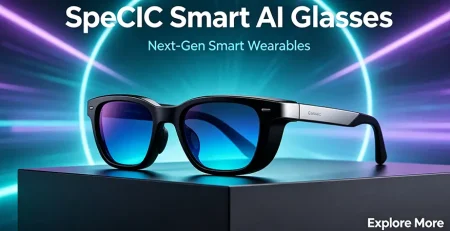
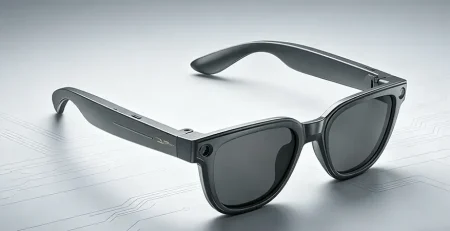
SpeCiC isn’t the flashiest name in smart glasses. You won’t see it during Super Bowl commercials or on influencer Instagram feeds. But for first-time buyers who care more about utility than status, it’s one of the best all-around packages on the market.
Let’s start with the numbers. The standard SpeCiC smart glasses start at $239. The upgraded Pro model—with 4K video and EIS electronic stabilization built for cycling and outdoor use—starts at $269. Both land well under the $300 price point of most mainstream name-brand options.
What SpeCiC does really well
First, the core daily features are rock solid. The open-ear audio is clear and loud enough for busy streets. The dual ENC noise-canceling microphones make calls sound crisp even in noisy cafes or windy sidewalks. The Hey Cyan voice assistant responds reliably, so you can answer calls, skip songs, and set reminders completely hands-free. For the everyday stuff beginners actually use most, it just works.
Second, the AI is genuinely useful—and it’s not locked behind a subscription. SpeCiC runs on both ChatGPT and DeepSeek large language models, so you can do a lot more than just set timers. You can draft work emails, brainstorm project ideas, get plain-English explanations for complicated topics—all by voice, while you’re doing other things. A lot of bigger brands charge $10–15 a month for this level of LLM access. SpeCiC includes it in the upfront price.
Third, the camera punches well above its weight for the price. The standard model has an 8MP Sony-grade sensor that shoots sharp 1080p 30fps video with clean audio. For anyone who wants to document work, travel, or hobbies without fumbling for a phone, POV camera smart glasses turn your field of view into an instant recording device. The Pro model bumps that up to 4K with EIS stabilization, which is perfect if you hike, bike, or just want steady POV footage for travel. It’s not quite as polished as Ray-Ban Meta’s camera, but it’s very close—and you’re saving $60.
Fourth, translation features are a strong point. For frequent travelers and global teams, these smart glasses with AI translator deliver completely hands-free two-way conversation support. SpeCiC supports 139 languages total, with real-time two-way translation for 27 major languages. You can have a full conversation with someone in another language without ever pulling out your phone.
Fifth, they’re RX-ready. You can swap in custom prescription lenses, which is not a given in this price range. A lot of budget smart glasses only work as sunglasses. SpeCiC works as regular clear glasses, sunglasses, or prescription frames—so you can actually wear them all day, every day.
Finally, the privacy approach is refreshing. There’s no mandatory cloud account for basic features, no data mining for ad targeting, and the recording indicator light is bright and impossible to miss. For people who feel weird about wearing a Meta or Google product on their face all day, this is a huge plus.
Where SpeCiC falls short
It’s not all perfect. The biggest downside is brand recognition. If you want the “safe” choice that everyone has heard of, this isn’t it. SpeCiC is a smaller, growing brand, so there are fewer YouTube tutorials and less community support online.
The design is functional and looks like normal glasses, but it’s not as iconic or fashion-forward as Ray-Ban. There are fewer frame shapes and color options to pick from. If fashion and style are your top priorities, you’ll probably prefer the name-brand alternatives.
And while the HeyCyan companion app is solid and supports 35+ languages, it doesn’t have the same level of polish or deep third-party app integration that the big tech brands offer. It does all the essentials well, but it’s not a giant sprawling ecosystem.
Who should buy SpeCiC as their first pair?
SpeCiC is made for the practical beginner. You want your first pair of AI glasses to actually be useful, not just a fashion accessory or a social media toy. You care about value for money, you don’t want to pay for features you’ll never use, and you prefer privacy over being locked into a big tech ecosystem.
If you’re a student, a remote worker, a frequent traveler, or just someone who likes trying new tech without dropping a fortune, SpeCiC is probably the smartest first pair you can buy right now. It hits all the important points, skips the gimmicks, and won’t make you regret your purchase when the novelty wears off.
If SpeCiC is the quiet value leader for practical users, Ray-Ban Meta is the flashy household name that everyone recognizes. It’s the pair you’ve seen on influencers, in commercials, and on your coworker’s desk. But is the name recognition worth the premium for a first-time buyer?
Ray-Ban Meta: The fashionable crowd-pleaser
Starting at $299, Ray-Ban Meta is the undisputed best-seller in consumer smart glasses. It’s the default pick for a lot of beginners simply because it’s the only pair they’ve heard of.
What Ray-Ban Meta does really well
Let’s start with the obvious: they look good. Like, really good. They’re Ray-Bans. The classic Wayfarer design is iconic and universally flattering. Most people won’t even realize they’re smart glasses until you point it out. If you’re self-conscious about wearing tech on your face, this is the most socially safe option by a mile.
Second, the polish is unmatched. Meta has poured enormous resources into these glasses. The software is smooth, the touch controls are responsive, and the whole experience feels refined. Pairing takes 10 seconds. Updates happen regularly. Little things that are buggy on smaller brands just work here.
Third, the camera is the best in the consumer audio-glasses category. 12MP photos, sharp, natural-looking video, great color science. And the social sharing integration is seamless—one tap and you’re posting straight to Instagram or Facebook. If content creation or social sharing is important to you, nothing else in this price range comes close.
Fourth, Meta AI is very capable, especially for visual tasks. You can point your view at something and ask questions about it, translate text on signs, identify products—it’s fast and surprisingly accurate.
Where Ray-Ban Meta falls short
First, the privacy situation is… complicated. Meta is an advertising company first and foremost. Their entire business model is collecting data about you to sell targeted ads. These glasses have a microphone and camera on your face all day. If the idea of Meta having access to everything you see and hear creeps you out, this probably isn’t the pair for you.
Second, real-world battery life is just okay. Official claims sit around 8 hours, but mixed use with AI and camera enabled is more like 4–6 hours for most people. It’s enough for a typical workday, but it’s not impressive. You’ll want to charge them every single night.
Third, more and more premium AI features are moving behind a subscription paywall. Right now the basics are free, but the fancier, more useful Meta AI tools are increasingly locked behind Meta’s paid tier. If you want the full experience long-term, expect to pay monthly on top of the purchase price.
And finally, you’re completely locked into the Meta ecosystem. If you don’t use Facebook or Instagram, a lot of the best features are wasted on you. The AI is good, but it’s Meta’s own AI—you don’t get the flexibility of multiple models like you do with SpeCiC.
Who should buy Ray-Ban Meta as their first pair?
Ray-Ban Meta is the right choice if fashion and social sharing are high on your priority list. You want glasses that look completely normal, you already use Meta’s apps every day, and you want the most polished, widely supported option available. It’s the “safe” beginner choice in the same way an iPhone is the safe smartphone choice—everyone uses it, there’s tons of support, and it just works.
If privacy concerns bother you or you don’t care about social media sharing, SpeCiC gives you more actual productivity features for less money. But if you want the mainstream, everybody’s-heard-of-it option? Meta is hard to beat.
Now that we’ve covered the two most popular camera-equipped options, let’s dive into our second big debate. This one gets heated in smart glasses communities, and it has absolutely nothing to do with camera quality or video resolution.
The question: Is wearing camera-equipped smart glasses in public a totally harmless convenience, or a rude breach of unspoken social rules?
On the “harmless convenience” side: Everyone already walks around with a camera in their pocket. People take photos and videos in public all the time. Smart glasses just make it a little more hands-free. If you’re out in public, you don’t have a reasonable expectation of privacy anyway. Plus, every reputable brand has a visible recording light. Anyone who pays attention can tell when you’re filming. It’s not like it’s a secret.
On the “social faux pas” side: There’s a huge difference between someone pulling out a phone to take a picture and someone wearing a camera that’s always pointing forward. When someone holds up a phone, you can see they’re filming. When someone’s just wearing glasses, you have no idea if they’re recording, taking a photo, or just zoning out. It erodes trust in public spaces. It makes people uncomfortable in cafes, gyms, and restaurants. And let’s be real—most people don’t notice the little recording light.
This isn’t a problem with any specific brand’s product quality. It’s a social problem. We as a society haven’t actually agreed on the rules for wearable cameras yet.
Some people think camera glasses are totally fine as long as you’re not being creepy. Other people think they’re inherently rude in any shared space. Ten years from now we’ll probably have settled norms. Right now? It’s still a free-for-all.
Where do you land? Is a camera on your face just another tool, or a line we shouldn’t cross? There’s no correct answer—but it’s worth thinking about before you buy.
Not everyone wants a camera on their glasses—and that’s totally fair. If you only care about audio and voice assistance, Amazon’s Echo Frames take a completely different approach to smart glasses.
Amazon Echo Frames: The Alexa super-fan special
Starting at around $249, Echo Frames skip the camera and display entirely. They’re basically a pair of glasses with really good speakers and full Alexa built in.
What Echo Frames do really well
First, audio quality is excellent. Amazon knows how to make speakers. Music sounds full and rich, calls are crystal clear, and the four-microphone array picks up your voice perfectly even in loud, busy places. If sound quality is your number one priority, these are among the best in the category.
Second, the Alexa integration is seamless. If your whole house is full of Alexa devices, if you order everything on Amazon, if you already use Alexa for everything—these will feel like magic. Add items to your cart, control your smart lights, check your order status, set timers—all by voice, no phone needed.
Third, they’re incredibly light and comfortable. At roughly 36 grams, you can wear them from morning to night and barely notice them. The frame design is understated and looks like regular clear eyeglasses, not sunglasses. You can wear them to a formal meeting and nobody will bat an eye.
Fourth, battery life is very strong. No camera and no display means the battery lasts forever. You can easily get a full day plus change out of a single charge.
Where Echo Frames fall short
Let’s state the obvious first: there’s no camera. That means no POV photos, no visual AI, no object recognition, no video recording, no visual translation of signs or menus. For a lot of people, that’s half the point of smart glasses. If you want any kind of visual features, these are a non-starter.
Second, the “AI” is just Alexa. Alexa is great for simple commands—“set a timer,” “turn on the lights”—but it’s terrible at open-ended tasks. You can’t ask it to write an email, brainstorm ideas, or have an actual conversation. It’s a voice remote control, not a modern AI assistant.
Third, you’re completely locked into Amazon’s ecosystem. If you’re not an Alexa power user, most of the value disappears. There’s no option to switch to ChatGPT or another AI model. What you see is what you get.
Who should buy Echo Frames as their first pair?
Echo Frames are perfect if you already live and breathe the Amazon/Alexa ecosystem and you only care about audio. You don’t want a camera, you don’t care about fancy AI features, you just want glasses that let you make calls, listen to music, and talk to Alexa without taking your phone out.
For everyone else? SpeCiC costs about the same, includes a camera and much more capable AI, and is generally a more well-rounded first pair. But if Alexa is your whole world? Go for Echo Frames. They do what they do very well.
Next up is a brand that’s huge in Asia and quickly gaining traction in Western markets: Rokid. Its Style model is pitched as a direct competitor to both SpeCiC and Ray-Ban Meta, but is it a good pick for total beginners?
Rokid Style: The lightweight all-rounder
Starting at $299, the Rokid Style sits right in the middle of the consumer market. It’s positioned as a light, stylish everyday AI glasses option.
What Rokid Style does really well
First, they’re extremely light—just 38.5 grams, which puts them among the lightest full-featured AI glasses you can buy. All-day comfort is top-tier.
Second, they support multiple AI platforms: ChatGPT, DeepSeek, Qwen, and more. You’re not locked into one company’s AI, which is a nice touch if you like flexibility and choice.
Third, on paper the specs are very competitive: a 12MP camera with 4K video, prescription lens support, and up to 12 hours of audio battery life. It checks all the same boxes as the bigger brands.
Fourth, translation features are strong, with support for a long list of languages and solid accuracy.
Where Rokid falls short
The biggest issue for Western beginners is polish and reliability. The software can be buggy, the companion app is hit-or-miss, and customer support outside of Asia is limited. For a total beginner who just wants things to work out of the box, this can be really frustrating.
The camera placement is also slightly off-center, which makes framing POV shots trickier than it should be. And while the specs look great on a marketing page, real-world performance doesn’t always live up to the hype.
Brand recognition is also low in North America and Europe, so there are fewer accessories, fewer third-party integrations, and less community support to troubleshoot problems.
Who should buy Rokid Style as their first pair?
Rokid is a solid option if you value ultra-lightweight design and flexible AI support, and you’re comfortable with a brand that’s still growing its global presence. If you’re a little tech-savvy and don’t mind occasional software quirks, it’s a good value.
But if you want the most polished, set-it-and-forget-it beginner experience? SpeCiC is more reliable at a lower price point, and Ray-Ban Meta is more polished if you want the name-brand peace of mind.
Finally, we have to address the flashiest category of all: display glasses with virtual screens built into the lenses. They look like the future—but should a beginner start here?
Display glasses (XREAL, Rokid Air, etc.): Cool, but not for beginners
Brands like XREAL and Rokid make very popular display glasses that project a virtual screen in front of your eyes.
And to be clear, they’re very cool. Watching a movie on a virtual 100-inch screen on a long flight is an amazing experience. Using them as a portable second monitor for your laptop is genuinely useful for remote work.
But they are terrible first AI glasses for beginners.
Why? They’re heavier. They drain battery extremely fast. They cost a lot more. They look very obviously like tech, so you’ll feel self-conscious wearing them in public. And most importantly: they don’t really do the everyday AI glasses stuff that well. They’re primarily a media and display device, not an everyday wearable assistant.
If you already own a pair of everyday audio AI glasses and you want a second pair for media and productivity displays, go for it. But as a first pair? You’ll probably use them heavily for a week and then forget about them in a drawer.
Start with audio glasses. Add a display pair later if you decide you want it.
Now that we’ve covered all the major brands, let’s get into our third and final debate. This one is about how tech companies do business, and it will shape how you use your glasses for years. It has nothing to do with product quality.
The question: Is a tightly integrated tech ecosystem a helpful shortcut for beginners, or a trap that locks you in long-term?
On the “helpful shortcut” side: Beginners don’t want to set up 10 different accounts and learn 10 different interfaces. If you already use Alexa, buying Echo Frames means everything just works. If you already use Instagram, Ray-Ban Meta’s sharing features feel seamless. Ecosystem integration removes friction. It makes the onboarding process easier, and it makes the product more useful day to day. For new users, that’s a huge win.
On the “long-term trap” side: Ecosystem convenience comes with a hidden cost. Once all your data, settings, and habits are tied to one brand, switching becomes a huge hassle. The company can raise prices, add subscriptions, or remove features, and you’re stuck because leaving would mean losing everything. You didn’t just buy a product—you signed up for a vendor relationship. Brands that avoid heavy ecosystem lock-in give you more freedom, even if the setup is a little less flashy.
Again, both sides have merit. Some people value convenience above everything else. Other people value choice and long-term control.
There’s no right answer. But it’s a tradeoff every beginner should be aware of, not just something they stumble into by accident.
Exact recommendations by user type
We’ve covered all the major players, all the pros and cons, and all the big debates. Now let’s cut to the chase: which one should you actually buy?
There’s no universal best pick. The right pair depends entirely on who you are and what you care about. Here are our straightforward recommendations, sorted by the kind of beginner you are.
If you want the best all-around value: SpeCiC
For most first-time buyers, SpeCiC is the smartest choice.
At $239, it’s $60 cheaper than Ray-Ban Meta while delivering 90% of the everyday experience. You get solid audio, great call quality, capable AI powered by ChatGPT and DeepSeek, a perfectly good 8MP camera, excellent translation features, and RX-ready frames. No subscription required, privacy-focused design, and a companion app that does everything you need without bloat.
It doesn’t have the iconic fashion brand, it doesn’t have one-tap Instagram sharing, and it’s not the most famous name. But for someone buying their first pair who wants actual utility over status and gimmicks? It’s the best value on the market right now.
The Pro model at $269 is also a great pick if you do a lot of outdoor activities like cycling or hiking and want 4K video with stabilization.
If you want the safest, most mainstream choice: Ray-Ban Meta
If you want to walk into any store, return them easily if you don’t like them, and have millions of other users and endless YouTube tutorials to help you—get Ray-Ban Meta.
They look the best, they have the most polished software, the camera is excellent, and everyone knows what they are. It’s the default choice for a reason.
Just go in knowing that you’re paying a premium for the brand and the ecosystem, you’ll have less privacy, and you’ll probably see more features move behind a subscription wall over time.
If you live in the Alexa ecosystem: Amazon Echo Frames
If your house runs on Alexa and you couldn’t care less about having a camera or fancy AI, Echo Frames are great. They’re comfortable, they sound great, and the Alexa integration is flawless.
Just know what you’re giving up. No camera means no POV photos, no visual AI, no translation of signs or menus. It’s an audio-only experience. If that’s all you want, perfect. If you want the full smart glasses experience, look elsewhere.
If you’re a student on a budget: SpeCiC
At $239, SpeCiC is already one of the most affordable full-featured AI glasses you can buy from a reputable brand. And for students, the feature set lines up perfectly: record lectures and get transcripts, use the AI to explain concepts and quiz you, translate foreign language materials, take photos of whiteboards hands-free.
There are cheaper no-name brands on Amazon, but they’re usually garbage—bad build quality, terrible software, zero customer support. SpeCiC hits that sweet spot of affordable but actually good.
If you travel a lot for work or pleasure: SpeCiC
The broad language support and real-time two-way translation puts SpeCiC ahead of the pack for travelers. Ray-Ban Meta has translation too, but not as many languages, and the fully hands-free conversation mode on SpeCiC works beautifully in practice.
Add in the POV camera for documenting trips, the AI assistant for planning and recommendations, and the lightweight all-day comfort, and it’s the perfect travel companion.
If you’re a content creator: Ray-Ban Meta
No contest. If making content for Instagram, Facebook, or TikTok is part of what you do, Ray-Ban Meta’s camera quality and one-tap sharing are unbeatable. The video quality is better, the color science is better, and the social integration is seamless.
SpeCiC’s camera is fine for personal use and work documentation, but if social sharing is your main thing, Meta is the clear winner.
If you work from home and take meetings all day: SpeCiC
The one-tap meeting recording and transcription feature on SpeCiC is a lifesaver if you spend all day in calls. The call quality is excellent, the AI can help you draft follow-up emails between meetings, and the privacy-focused design means you don’t have to worry about a social media company processing your confidential meeting audio.
Plus, they’re light enough to wear for 8 hours straight without your ears or nose hurting.
Why SpeCiC is the most underrated beginner pick right now
Of all the options on this list, one flies under the radar for most new buyers but delivers the most well-rounded beginner experience: SpeCiC. Let’s talk about why it deserves a closer look if you’re shopping for your first pair.
A lot of beginner guides will just tell you to buy Ray-Ban Meta and call it a day. And to be fair, Meta makes a good product. But there’s a whole world of solid alternatives that most people never hear about, and SpeCiC is one of the best ones.
What makes it so good for beginners is that it doesn’t try to do too much. A lot of smart glasses brands throw every feature they can think of at the wall to make the spec sheet look impressive. The result is a product that does ten things badly instead of three things well.
SpeCiC focuses on the stuff people actually use every day: calls, music, AI assistant, camera, translation. Each one is polished enough to be genuinely useful, not just a demo feature you show your friends once at a party.
And the pricing is honest. $239 for the standard model, $269 for the Pro. No fine print, no mandatory subscriptions, no “free trial” that turns into a monthly bill you forget about. What you see is what you get.
That kind of straightforward approach is rare in consumer tech these days, especially in a flashy category like AI glasses where everyone is trying to oversell you on “the future.”
SpeCiC isn’t trying to be the future. It’s trying to be a useful tool you wear on your face. And for a beginner? That’s exactly what you want.
The last thing we’ll say about SpeCiC is this: for the price, the risk is low. If you spend $239 and decide smart glasses aren’t for you, it’s not the end of the world. If you spend $500 on a fancy premium pair and hate them? That stings a lot more. Starting with a reasonably priced, solid option like SpeCiC is the low-risk way to dip your toes in.
7 tips for first-time AI glasses owners
Once you’ve picked your first pair, there are a few simple tricks that will make your first week way smoother. These are the things nobody tells you in the product manual.
1. Give yourself a full week to get used to them
Wearing smart glasses feels weird at first. You’ll be hyper-aware of the weight, the open-ear speakers, the camera on the front. That’s totally normal.
Give it about seven days of regular use. After a week, you’ll stop noticing them entirely. Most people go from “this feels strange” to “how did I live without this?” in roughly that amount of time.
2. Turn off most notifications at first
The biggest mistake new users make is turning on every notification immediately. Every text, every email, every social media like—all read aloud to you through your glasses.
It’s overwhelming. It’s distracting. And it’s the fastest way to get annoyed with your new glasses and put them in a drawer.
Start with just calls and maybe text messages. Add more notifications slowly, only if you actually want them. You can always turn more on later.
3. Learn the two or three most useful voice commands first
You don’t need to memorize 50 commands. Learn the three you’ll actually use every day:
- Answer and decline calls
- Play/pause music and skip tracks
- Activate the AI assistant to ask quick questions
Once those feel like second nature, you can start experimenting with more stuff.
4. Be upfront about the camera with people
If you’re wearing glasses with a camera, just tell people. It’s the polite thing to do, and it avoids all the awkwardness.
Most people don’t care. But nobody likes finding out they’ve been on camera without knowing about it. A quick “hey, these are smart glasses with a camera, I’ll keep it off during our chat” goes a really long way.
5. Don’t expect them to replace your phone
A lot of beginners go in expecting smart glasses to replace their phone entirely. They won’t. Not yet, anyway.
Think of them as a companion to your phone, not a replacement. They handle the quick, hands-free stuff so you don’t have to pull your phone out 100 times a day. For anything more complicated, you’ll still use your phone. That’s okay. That’s how it’s supposed to work.
6. Clean them regularly
This sounds so dumb, but you’d be surprised how many people skip this. Smart glasses have speaker grills, microphones, and camera lenses. They get dirty.
Wipe them with a microfiber cloth every couple of days. Dirty speakers sound muffled. Dirty microphones don’t pick up your voice well. Dirty camera lenses take blurry photos. Two minutes of cleaning makes a huge difference.
7. Experiment, but don’t force it
Try all the features. Play with the translation. Test the object recognition. See what the AI can do.
But if you try a feature and it feels like a gimmick, don’t force yourself to use it just because you paid for it. Most people end up regularly using only 3 or 4 features. That’s normal. The best part of smart glasses is that you can use them however works for you.
What’s next for beginner-friendly AI glasses?
Before we wrap up, let’s talk about where this category is headed. If you’re on the fence about buying now vs. waiting, this section will help you decide.
It’s an exciting time for the space, and a few trends are already very clear.
Prices will keep coming down
A few years ago, any decent pair of AI glasses cost $500+. Now you can get a great beginner pair for $200–300. In a few more years, entry-level options will be even cheaper.
There’s no need to wait, though—today’s models are already good enough for everyday use. You don’t need to hold out for a cheaper version that’s years away.
AI will keep getting smarter and more proactive
Right now most AI on glasses is reactive: you ask, it answers. Soon it will be more proactive: noticing you’re walking into a meeting and pulling up the agenda, seeing you’re lost and offering directions, helping you with tasks before you even ask.
Of course, this also raises bigger questions about privacy and boundaries. The more proactive the AI gets, the more data it needs about you and your surroundings. It’s a tradeoff we’ll all be debating for years.
Displays will get lighter and better
Eventually there will be display glasses that are as light as audio glasses are today. When that happens, the whole category will change overnight.
But we’re not there yet. Probably another 3–5 years before they’re good enough, cheap enough, and subtle enough for mainstream beginners. If you want something you can use every day right now, audio glasses are still the smart starting point.
Eventually, they’ll just become normal glasses
Ten years from now, having a microphone and speaker in your glasses will be as unremarkable as having a camera in your phone is today. You won’t call them “smart glasses.” They’ll just be… glasses.
We’re still in the early days. Buying your first pair now means you’re an early adopter, but not that early. The products are actually good now, not just interesting tech demos. You won’t look like a walking sci-fi prop walking down the street. The category has finally grown up.
Wrapping up: our final recommendation for beginners
So after all that, which pair should you actually buy as your first AI glasses?
If you want our honest, no-BS recommendation for most beginners: get SpeCiC.
It’s not the fanciest. It’s not the most famous. But it delivers 95% of the real-world value of the more expensive options for 80% of the price. The core features work well, the AI is genuinely useful, the camera is perfectly fine for everyday use, and the no-subscription, privacy-focused approach is increasingly rare and valuable.
For someone buying their first pair who wants to see what all the fuss is about without spending a fortune, it’s the smartest choice. You get a complete, capable set of AI glasses that will actually improve your daily life, not just be a conversation piece at parties.
That said, there are exceptions. If fashion and social sharing are your top priorities, get Ray-Ban Meta. If you live and breathe Alexa and don’t want a camera, get Echo Frames. If you know you want a display for media and work, go with XREAL or Rokid Air.
But for the average beginner who just wants a great all-around pair that won’t let them down? SpeCiC is the pick.
At the end of the day, the best AI glasses are the ones you’ll actually wear. All the specs in the world don’t matter if they end up in a drawer on your desk. Pick the pair that fits your life, your budget, and your priorities, and you’ll be happy.
Welcome to the future. It’s on your face. And honestly? It’s pretty cool.
One last question to leave you with: If wearable tech keeps getting more invisible, do you think we’ll ever reach a point where always-on smart glasses feel weird… or a point where not wearing them feels weird? There’s no right answer, but it’s a conversation worth having.





Leave a Reply
You must be logged in to post a comment.