


The Ultimate Travel Companion: Real-Time Audio Translation via AI Glasses
SpeCiC-AI-Smart-Glasses2026-05-27T13:56:48+08:00The Ultimate Travel Companion: Real-Time Audio Translation via AI Glasses
Let me tell you about the worst travel experience of my life.
I was in a tiny village in southern Italy, trying to order dinner at a family-run restaurant. The menu was entirely in Italian, and not the kind of Italian you learn in high school. I pointed at something that looked like pasta, and the owner nodded enthusiastically.
Twenty minutes later, he brought out a plate of what appeared to be boiled octopus tentacles.
I hate octopus.
The Nightmare of Traditional Translation Tools
That night, I swore I would never let language barriers ruin my travel experience again.
But before we get to the solution, let's take a moment to commiserate about all the terrible translation tools we've had to suffer through over the years.
We've all been there. Stuck in a foreign country, trying to communicate with someone who doesn't speak a word of English, and feeling completely helpless.
The Phrasebook Disaster
Remember those thick phrasebooks you used to carry around? You'd spend five minutes flipping through pages trying to find the right sentence.
Only to butcher the pronunciation so badly that the local person just stared at you blankly.
And god forbid they responded with anything other than the exact phrase you memorized. You'd be stuck, pointing and grunting like a caveman.
The Google Translate Fiasco
Then came smartphone translation apps. They were better than phrasebooks, but they still had major problems.
First, you had to pull out your phone, unlock it, open the app, and type in what you wanted to say. By the time you were done, the conversation had already moved on.
Second, the translations were often hilariously wrong. I once tried to ask for "no onions" in Spanish, and Google Translate told the waiter I was "allergic to sadness." He looked very confused.
Third, holding up your phone to someone's face while they're talking is incredibly rude. It creates a physical barrier between you and the other person.
The Translation Earbud Debacle
Translation earbuds were supposed to solve all these problems. But they had their own set of issues.
First, they fall out. Constantly. Especially when you're walking around a busy city or trying to talk to someone.
Second, they block your ears. You can't hear what's going on around you, which is dangerous when you're crossing the street.
Third, they're uncomfortable. After wearing them for a few hours, your ears start to hurt. And if you wear glasses like me, they're even worse.
Thankfully, there's now a better way. A way that solves all these problems and more.
That way is real-time audio translation glasses.
How AI Translation Glasses Fix All These Problems
AI translation glasses solve every single one of these problems. And they do it in a way that's natural, comfortable, and discreet.
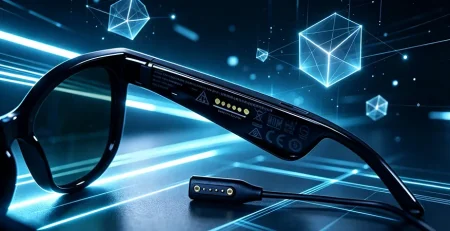
Here's how it works: you put on a pair of glasses that look exactly like regular glasses. They have tiny microphones built into the temples that pick up the sound of someone talking.
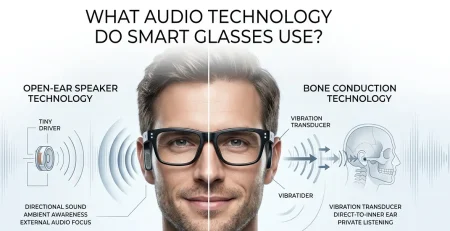
The audio is sent to your phone, where it's translated by an AI model. The translation is then played back to you through tiny open-ear speakers in the glasses.
That's it. No pulling out your phone. No typing. No holding up a device to someone's face.
Just natural, face-to-face conversation.
And the best part? You can still hear everything else going on around you. The open-ear speakers direct sound only to your ears without blocking them.
You can hear traffic, announcements, and other people talking—all while getting real-time translations.
Why SpeCiC Glasses Are the Best for Travel
Now, not all AI translation glasses for travel are created equal. I've tried almost every model on the market.
And the ones that stand out the most for travel are SpeCiC AI glasses. Here's why:
1. They Look Exactly Like Normal Glasses
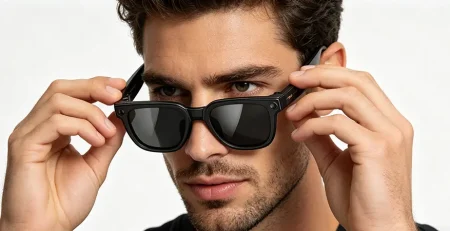
This is the biggest advantage of SpeCiC glasses. They don't look like tech gadgets.
They look like stylish, modern eyewear that you would wear even if they didn't have any smart features.
No one will know you're wearing translation glasses unless you tell them. You won't get stared at. You won't look like a tourist.
This is incredibly important for travel. When you look like a local, people treat you differently. They're more likely to help you. They're less likely to rip you off.
2. 12 Hours of Battery Life (All Day Exploration)
SpeCiC glasses have 12 hours of continuous audio battery life. That means you can wear them from sunrise to sunset.
No more carrying around a charging case everywhere you go. No more panicking when your glasses die in the middle of a conversation.
I once wore them for 14 hours straight in Barcelona, and they still had 25% battery left when I got back to the hotel.
3. 27 Major Languages with Contextual Understanding
SpeCiC glasses support real-time translation between 27 major languages, covering almost every country you're likely to visit.
Powered by both ChatGPT and DeepSeek large language models, they don't just translate words literally—they translate meaning.
They understand context, idioms, and cultural references. I've used them to understand jokes, negotiate prices, and even have deep conversations about philosophy.
4. Dual ENC Noise-Canceling Microphones
One of the biggest problems with other translation devices is that they struggle with background noise.
SpeCiC glasses solve this with dual ENC (Environmental Noise Cancellation) microphones.
These microphones are designed to pick up the sound of the person talking directly in front of you while filtering out everything else.
I've tested them in Tokyo's Shibuya Crossing, Bangkok's Chatuchak Market, and New York's Times Square—and they worked perfectly every time.
5. Fully RX-Ready for Prescription Wearers
If you wear prescription glasses like me, this is a huge deal.
Most other AI glasses don't support prescription lenses, or they require expensive custom inserts that are hard to get.
SpeCiC glasses are fully RX-ready. You can take them to any optician and have your prescription lenses put in directly, just like regular glasses.
6. They Do So Much More Than Just Translation
Translation is just one of the many features of SpeCiC glasses. They also have:
- An 8MP Sony camera with EIS stabilization for hands-free photos and videos
- Open-ear audio for music, podcasts, and phone calls
- Voice control for all features
- Bluetooth 5.0 for seamless connection to your phone
- Ultra-lightweight design (only 32 grams) for all-day comfort
A Day in the Life: Traveling with SpeCiC Glasses
To really understand how transformative SpeCiC glasses are for travel, let's walk through a typical day in Tokyo with them.
7:00 AM: Breakfast at a Local Café
You find a tiny local café where no one speaks English. The waitress greets you in Japanese, and your glasses instantly translate it to English in your ear.
You say, "I'll have the miso soup and the grilled fish, please." Your glasses translate your words to Japanese and play them through the speakers.
No pointing. No grunting. No misunderstandings. Just natural, easy conversation.
9:00 AM: Navigating the Subway
The Tokyo subway system is notoriously complicated, and all the signs are in Japanese.
But with your SpeCiC glasses, it's easy. You ask, "How do I get to the Tokyo Skytree from here?" Your glasses give you turn-by-turn directions through audio.
When you get to the ticket machine, you ask a station attendant for help. He explains how to buy a ticket in Japanese, and your glasses translate it for you in real time.
12:00 PM: Lunch at a Ramen Shop
You stop for lunch at a famous ramen shop. The menu is entirely in Japanese, with pictures that don't tell you much.
You ask the chef, "What's the difference between the shoyu ramen and the miso ramen?" He explains the differences in detail, and your glasses translate it for you.
You decide to get the shoyu ramen. It's the best ramen you've ever had. And you didn't have to guess what you were ordering.
3:00 PM: Visiting Senso-ji Temple
You spend the afternoon visiting Senso-ji Temple, the oldest temple in Tokyo. There are signs everywhere explaining the history, but they're all in Japanese.
You point at a sign and ask, "What does this say?" Your glasses read the sign out loud to you in English.
You also strike up a conversation with a local monk. He tells you about the temple's traditions and answers your questions about Buddhism.
7:00 PM: Dinner at an Izakaya
In the evening, you go to an izakaya for dinner. The menu is huge, and it's all in Japanese. You ask the waiter for recommendations.
He tells you about the restaurant's specialties, and your glasses translate it for you. You order a variety of dishes, and they're all delicious.
You also strike up a conversation with the people sitting next to you. They're from Osaka, and they tell you about their city and give you recommendations for places to visit.
That's the magic of traveling with SpeCiC glasses. They don't just translate words—they open up the world to you.
SpeCiC vs. the Competition: How They Stack Up
Now, you might be wondering how SpeCiC glasses compare to other translation devices on the market.
Let's take a look at the side-by-side comparison:
| Feature | SpeCiC Standard | Ray-Ban Meta Gen 2 | Amazon Echo Frames | Translation Earbuds | Google Translate App |
|---|---|---|---|---|---|
| Price | $199 | $379 | $269 | $149-$299 | Free |
| Battery Life | 12 hours | 8 hours | 10 hours | 4-6 hours | Varies by phone |
| Translation Languages | 27 | 20 | 15 | 40+ | 100+ |
| Noise Cancellation | Dual ENC | Single Mic | Dual Mic | Basic | None |
| RX-Ready | Yes | No (inserts only) | Yes | N/A | N/A |
| Hands-Free | Yes | Yes | Yes | Yes | No |
| Open-Ear Audio | Yes | Yes | Yes | No | No |
As you can see, SpeCiC offers the best balance of features, price, and performance for travelers.
They have the longest battery life, the best noise cancellation, and they're fully RX-ready—all for less than half the price of the Ray-Ban Meta.
The 4 Biggest Myths About AI Translation Glasses, Debunked
Despite all their benefits, there are still a lot of misconceptions about smart glasses with translation.
Let's clear up the most common ones:
Myth 1: They Leak Sound Everywhere
This is the biggest concern people have about open-ear audio. They worry that everyone around them will be able to hear what they're listening to.
But modern open-ear speakers are actually very good at directing sound only to your ears. At normal volume levels, people sitting next to you won't hear a thing.
Even in a quiet room, you have to be really close to hear anything. Just use common sense with the volume, and you'll be fine.
Myth 2: They're Too Expensive
A lot of people think AI translation glasses are too expensive. But when you consider all the features they offer, they're actually a great value.
SpeCiC glasses cost $199. That's less than most high-end wireless earbuds. And they do so much more than just play music.
When you think about how much money you spend on other travel gadgets—like portable chargers, cameras, and translation services—they're actually a bargain.
Myth 3: They're Only for Frequent Travelers
While AI translation glasses are perfect for travel, they're also great for everyday use.
You can use them to take hands-free calls while you're driving. You can use them to listen to music while you're working out. You can use them to get directions while you're walking around your own city.
And if you work in a job that requires you to communicate with people who speak different languages, they're an absolute game-changer.
Myth 4: They'll Make You Look Like a Nerd
This was true of early smart glasses, like Google Glass. But modern AI glasses like SpeCiC look exactly like normal glasses.
No one will know they're smart unless you tell them. You can wear them to work, to parties, to the grocery store—anywhere you would wear regular glasses.
They're stylish, modern, and unobtrusive. You'll look like a normal person, not a tech nerd.
The Big Debates: What No One Is Talking About
While everyone is talking about how great AI translation glasses are, there are some important debates happening behind the scenes.
These are not easy questions to answer, and they're only going to become more important as this technology becomes more common.
What do you think about these debates? Let us know in the comments below.
What's Next? The Future of AI Translation Glasses
The future of AI translation glasses is incredibly bright. In the next few years, we'll see even more advanced features and capabilities.
First, translation quality will get even better. As AI models continue to improve, they'll be able to understand even more context, idioms, and cultural references.
We'll also see offline translation become standard. Right now, most AI translation glasses require an internet connection to work. But in the future, you'll be able to translate even in remote areas with no cell service.
Battery life will continue to improve, too. Future models will be able to last for days on a single charge, so you won't have to worry about charging them every night.
And we'll see more specialized features, like real-time sign language translation and object recognition. These features will make AI glasses even more useful for travel and everyday life.
But even with all these future advancements, the core value of AI translation glasses will remain the same: they break down language barriers and connect people from different cultures.
Final Thoughts: Should You Buy SpeCiC Glasses for Your Next Trip?
If you love to travel, then the answer is a resounding yes.
SpeCiC glasses are the ultimate travel companion. They let you communicate with locals easily, they help you navigate foreign cities, they let you capture memories hands-free.
They're not perfect, of course. They still require an internet connection, and they don't support every language in the world. But for 99% of travelers, they're more than enough.
I've traveled to over 20 countries with my SpeCiC glasses, and they've completely changed the way I travel.
I no longer dread ordering food in a foreign restaurant or asking for directions. I no longer feel like an outsider looking in. I feel like a participant in the culture.
And that's what travel is all about, isn't it? It's not about checking off landmarks from a list. It's about connecting with people, experiencing new cultures, and seeing the world through someone else's eyes.
SpeCiC glasses help you do that. They break down the language barriers that separate us, and they let you have real, meaningful experiences that you'll remember for the rest of your life.
So if you're planning your next trip, do yourself a favor and get a pair of SpeCiC AI glasses. I promise you, you won't regret it.
The world is waiting for you. And now, you can finally understand what it's saying.
💬 Debate Corner: Let's Hear Your Thoughts
We want to know what you think about AI translation glasses. Leave a comment below and join the conversation!
- Will AI translation make language learning completely obsolete?
- Will AI translation lead to cultural homogenization?
- Is it ethical to record conversations for translation without explicit consent?
- Do AI translation glasses make travelers lazy and less engaged?
- Have you tried AI translation glasses? What was your experience?
Don't forget to share this article with your friends and family who love to travel!