



How to Choose Smart Cycling Glasses: The Ultimate Guide for 2026
SpeCiC-AI-Smart-Glasses2026-06-14T21:56:20+08:00How to Choose Smart Cycling Glasses: The Ultimate Guide for 2026
Let me start with a confession: I used to be that guy who rode with regular sunglasses.
You know the ones—cheap, stylish, and absolutely terrible for cycling. I'd squint through glare, constantly push them back up my sweaty nose, and once even lost a pair mid-descent when they flew off my face.
Then I tried proper cycling glasses, and it was like upgrading from a flip phone to a smartphone. But even then, I was carrying three different pairs for different times of day, plus my regular glasses for when I wasn't riding. It was a mess.
That's why smart cycling glasses have been such a game changer for me. They combine the best features of high-performance cycling eyewear with modern technology that actually makes your rides better—not just more complicated.
In this guide, I'm going to walk you through everything you need to know to choose the perfect pair for your riding style. We'll cover lens types, vision correction options, must-have features, and how Specic AI glasses solve many of the biggest frustrations cyclists face every day.
Why Cycling Glasses Matter More Than You Think
Before we dive into the smart stuff, let's get one thing straight: cycling glasses aren't just a fashion statement. They're essential safety gear.
I've had rocks, bugs, and even a stray bird feather hit my glasses at 25 mph, and I shudder to think what would have happened if they'd hit my eyes directly. A single grain of sand in your eye at speed can cause a crash that lands you in the hospital.
But it's not just about protection. The right pair of glasses can drastically improve your performance and comfort on the bike.
Glare from wet roads or shiny car hoods can make it impossible to see potholes or debris. Eye strain from squinting in bright sun can turn a fun ride into a headache-inducing chore. And if you ride in cooler weather, wind in your eyes will make them water so badly you can barely see where you're going.
Traditional cycling glasses solve these problems, but they come with their own set of issues. You need different lenses for different light conditions. They don't play well with headphones. And if you need vision correction, you're stuck with a handful of less-than-ideal solutions.
That's where smart cycling glasses come in. But before we get into what makes them different, let's address the elephant in the room.
I used to agree with this. But after using Specic AI glasses for several months, I've changed my mind—for the right reasons. Let me explain.
What Makes Smart Cycling Glasses Different?
Smart cycling glasses take everything that's good about regular cycling glasses and add technology that enhances your riding experience without getting in the way.
The best ones do this so seamlessly that you forget you're wearing tech—they just feel like really good glasses that happen to have some extra tricks up their sleeves.
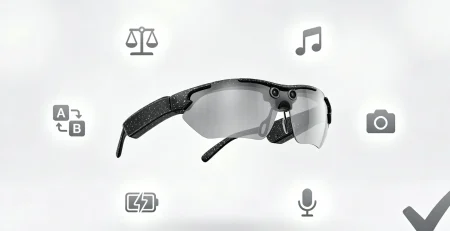
The key features to look for in smart cycling glasses include:
- Hands-free photo and video capture
- Open-ear audio for music and calls
- Voice control
- Navigation
- Fitness tracking integration
- Long battery life
- Comfortable, lightweight design
Now, I know what you're thinking: "Do I really need all that stuff on my bike?"
The answer is no—you don't need it. But once you've tried it, you'll wonder how you ever rode without it.
Being able to capture a beautiful moment or a funny incident on your ride without stopping or fumbling with your phone is incredible. Having turn-by-turn directions whispered in your ear without blocking out traffic sounds makes navigation so much easier and safer. And being able to take calls without pulling over means you never miss an important message while you're out enjoying your ride.
Choosing the Right Lens Type for Your Riding Time
The most important decision you'll make when choosing any cycling glasses—smart or not—is the lens type.
Different lenses are designed for different light conditions, and picking the wrong one can turn a great ride into a miserable one. Let's break down the three main types and when you should use each.
Daytime Riding: Polarized Lenses
If you do most of your riding during the day when the sun is shining, polarized lenses are an absolute must. I can't stress this enough.
Regular tinted lenses just make everything darker, but polarized lenses actually filter out the horizontal glare that bounces off roads, water, and car hoods.
The difference is night and day. With polarized lenses, wet roads that would normally be blindingly bright become perfectly visible. You can see through reflections in car windows to spot what's inside. And you'll find yourself squinting much less, which means less eye fatigue and fewer headaches after long rides.
I once did a century ride on a bright summer day with regular tinted lenses, and by mile 60, my eyes were so tired I could barely keep them open. The next time I did the same ride with polarized lenses, I finished feeling fresh and could have kept going for another 20 miles. That's how big a difference they make.
Polarized lenses aren't perfect, though. They can make it harder to see LCD screens on your bike computer or phone. And they don't work as well in low-light conditions. But for pure daytime riding, nothing beats them.
All-Day Riding: Photochromic Lenses
If your rides often start early in the morning and go into the afternoon, or if you frequently ride in areas with lots of shade, photochromic (or transition) lenses are the way to go.
These lenses automatically darken in bright sunlight and lighten up when you're in shade or low light.
I used to carry two pairs of glasses on all-day rides—one dark for sunny sections and one clear for shaded or early morning parts. It was a hassle to switch them, and I'd often end up wearing the wrong ones for the conditions.
With photochromic lenses, that problem disappears. They adjust seamlessly to the light around you, so you always have the right tint.
Modern photochromic lenses are much better than the ones from 10 years ago. They transition faster, get darker in bright sun, and become almost completely clear in low light.
The Specic AI glasses, for example, have photochromic lenses that go from clear to dark in about 30 seconds and back to clear in about a minute. That's fast enough that you won't be blinded when you ride out of a long tunnel or a heavily wooded area.
The only downside to photochromic lenses is that they don't work as well in very cold weather—the transition slows down significantly. And some people prefer the glare reduction of polarized lenses for extremely bright days. But for versatility, photochromic lenses are hard to beat.
Nighttime Riding: Clear Lenses
If you do any riding after dark, clear lenses are non-negotiable.
You might think you don't need glasses at night, but you'd be wrong. Clear lenses protect your eyes from wind, bugs, and debris just as well as tinted ones, and they don't reduce your visibility at all.
I've ridden at night without glasses before, and I've had bugs fly directly into my eyes more times than I can count. It's not just painful—it's dangerous. When a bug hits your eye at 20 mph, your natural reaction is to close it, which means you're riding one-eyed for a few seconds. That's all it takes to hit a pothole or swerve into traffic.
Clear lenses also help reduce eye fatigue from wind. When wind blows directly into your eyes, they water excessively, which blurs your vision and makes it harder to see. A good pair of clear glasses blocks the wind while still allowing you to see perfectly.
Some companies make yellow-tinted lenses for night riding, claiming they enhance contrast. In my experience, these don't work nearly as well as advertised. They do make everything look brighter, but they also distort colors and can make it harder to see certain objects. For night riding, stick with clear lenses.
The Ultimate Guide for Riders Who Need Vision Correction
Ah, the eternal struggle for us four-eyed cyclists. For years, we've been stuck with a handful of less-than-ideal solutions for seeing clearly on the bike.
These are the standard options for regular (non-smart) prescription cycling glasses, with their typical price points and pros and cons:
Option 1: Clip-Ons / Fit-Over Glasses ($15-$50)
Clip-ons are the cheapest solution by far. They're small, tinted lenses that clip onto your regular glasses, or larger frames that fit directly over them.
They cost anywhere from $15 to $50, and they're easy to carry around when you're not using them.
But that's where the advantages end. Clip-ons are fragile—I've broken three of them just by dropping them on the ground. They scratch your regular lenses if you're not careful. They don't provide any side protection, so wind and bugs can still get in from the sides.
And let's be honest, they look ridiculous. I once had a friend ask me if I was wearing glasses from the 1980s.
Worse, they're not very secure. I've had clip-ons fly off my face while going downhill, and I've spent 20 minutes searching the side of the road for them.
If you're a casual rider who only goes out occasionally, clip-ons might be okay. But if you ride regularly, you'll quickly outgrow them.
Option 2: Prescription Inserts / Inner Frames ($200-$400 total)
Prescription inserts are small, removable frames that hold your vision-corrected lenses. They fit inside regular cycling glasses, so you get the benefits of high-performance eyewear while still being able to see clearly.
The frame itself costs between $30 and $150, plus the cost of the lenses, bringing the total to around $200-$400 for a complete setup.
Prescription inserts are better than clip-ons or fit-overs, but they still have their issues. The insert sits very close to your face, which can cause fogging if you're sweating heavily. They add extra weight to the glasses, which can make them uncomfortable on long rides. And they reduce your field of view slightly because of the frame around the insert.
I used prescription inserts for a couple of years, and they worked okay. But I always had to carry a small screwdriver with me to adjust them, and they'd sometimes fall out when I was cleaning the lenses.
They also don't work with all cycling glasses—you need to buy ones that are specifically designed to accept inserts. And if you have long eyelashes, you'll be constantly brushing them against the insert, which is both annoying and blurs your vision.
Option 3: Custom Integrated Lenses ($800-$1200+)
Custom integrated lenses are the gold standard for vision-corrected riders. Instead of having an insert or wearing two pairs of glasses, your vision correction is built directly into the cycling lenses.
This gives you the best possible optics, the widest field of view, and the most comfortable fit.
But there's a catch: they're expensive. A good pair of custom integrated cycling glasses from a reputable brand can cost $800 to $1200 or more. And if your prescription changes, you have to buy entirely new lenses, which is another big expense. They also take longer to get—you usually have to wait 1-2 weeks for them to be made.
For serious riders who ride every day, the cost is worth it. But for casual riders or people on a budget, it's a lot to spend on a pair of glasses. And if you only ride occasionally, it's hard to justify the expense.
Option 4: Contact Lenses + Regular Cycling Glasses (Variable Cost)
Many riders choose to wear contact lenses with regular cycling glasses. This gives you the best of both worlds: perfect vision and the full benefits of high-performance cycling eyewear.
No fogging from inserts, no reduced field of view, no awkward looking clip-ons.
But contact lenses have their own problems. If you ride for long periods, especially in dry or windy conditions, your contacts will dry out and become uncomfortable. They can also get dirty or dislodged during rides, which is a major hassle. And if you're prone to eye infections, contact lenses might not be the best option for you.
I used to wear contacts for cycling, but after a particularly unpleasant experience where a contact lens got stuck under my eyelid mid-ride, I swore them off. Now I only wear glasses, and I've never been happier.
How Specic AI Glasses Change the Game for Vision-Corrected Riders
Now, let's talk about smart glasses. It's important to note that smart cycling glasses are a different category than regular cycling glasses—they include all the technology features we discussed earlier, so they will naturally cost more than basic non-smart options.
This is where Specic AI glasses really stand out from the competition. They offer custom integrated lenses at a price point that makes smart cycling glasses accessible to regular riders.
You can order your Specic glasses with exactly the lenses you need—clear, polarized, or photochromic—and they're made to your exact specifications.
The process is simple: you provide your lens details when you order, and Specic builds the glasses specifically for you. The lenses are integrated directly into the frame, just like the expensive custom options from traditional brands, so you get perfect optics, a wide field of view, and no fogging issues from inserts.
And because Specic sells directly to consumers, they can offer these custom lenses at a much lower price than you'd expect for smart glasses. You get all the benefits of custom integrated lenses plus all the smart features—hands-free capture, open-ear audio, voice control, and more—for less than the cost of many high-end non-smart custom cycling glasses.
The best part? You don't have to choose between different lens types. Specic offers clear, polarized, and photochromic lenses, all with your custom specifications. So you can get the perfect lenses for your riding style, and you don't have to compromise on vision quality or comfort.
I've been wearing my Specic glasses with custom polarized lenses for a few months now, and they're by far the most comfortable vision-corrected cycling glasses I've ever owned. No more fogging, no more brushing my eyelashes against an insert, no more carrying multiple pairs of glasses. They're just perfect.
Why Specic AI Glasses Are the Best Choice for Most Cyclists
Now that we've covered the basics of cycling eyewear and vision correction, let's talk about why Specic AI glasses stand out from the crowd.
I've been using them for a few months now, and they've completely changed how I ride. Here's what makes them so special.
They're Actually Comfortable Enough to Wear All Day
The biggest complaint I have about most smart glasses is that they're heavy and uncomfortable. They feel like you're wearing a computer on your face, and after an hour or two, you can't wait to take them off.
Specic glasses are different. They weigh just 35 grams—about the same as a regular pair of glasses.
I've worn them for 8+ hour rides without any discomfort. No sore ears, no red marks on my nose bridge, no heavy feeling pulling down on my face. I often forget I'm even wearing them until I need to take a photo or answer a call.
The frame is made from lightweight TR90 material, which is flexible and durable. It adjusts to the shape of your face, so it fits securely without pinching. The nose pads are adjustable and made from soft silicone, so they don't slip even when you're sweating heavily. And the temples are designed to fit comfortably under helmet straps, so you don't get any pressure points.
The Audio Quality Is Surprisingly Good
I was skeptical about the audio quality of open-ear glasses. I thought they'd sound tinny and quiet, and that everyone around me would be able to hear what I was listening to. But Specic glasses proved me wrong.
The built-in speakers deliver clear, balanced sound with surprisingly good bass. I can listen to music, podcasts, and audiobooks while riding, and the quality is more than good enough for outdoor use.
And because it's open-ear audio, I can still hear traffic, bike bells, and other important sounds around me. That's a huge safety advantage over traditional headphones, which block out ambient noise.
The best part? People around me can barely hear anything. I've had friends ride right next to me and not be able to hear my music, even at moderate volumes. The speakers are directional, so the sound is directed towards your ears and not out into the world.
The call quality is also excellent. The dual ENC noise-reduction microphones pick up your voice clearly even when you're riding at high speeds, and they block out wind and road noise. I've taken calls while riding on busy roads, and the person on the other end had no idea I was on a bike.
Hands-Free Capture Is a Game Changer
As someone who loves documenting my rides, the hands-free photo and video capture on Specic glasses is my favorite feature.
Just double-tap the right temple to start recording a video, or say "Hey Cyan, take a photo" to capture a still image. No more stopping to pull out your phone, no more fumbling with camera mounts, no more missing the perfect shot.
The camera features an 8MP Sony sensor with electronic image stabilization (EIS), which smooths out the bumps and vibrations from riding. The footage is surprisingly stable, even on rough gravel roads. And the 120-degree field of view captures more of the scene than a phone camera, so you get that immersive first-person perspective.
I've used the camera to capture beautiful sunrises, funny encounters with wildlife, and even some close calls with cars. It's been incredible to be able to share these moments with my friends and family without interrupting my ride.
And because the glasses look like regular glasses, no one even notices I'm recording.
The Voice Assistant Actually Works
Most voice assistants on smart devices are more frustrating than useful. They mishear you, they don't understand context, and they often do the opposite of what you ask.
So I didn't have high expectations for the Hey Cyan voice assistant on Specic glasses. But again, I was pleasantly surprised.
Hey Cyan works reliably and accurately, even when you're riding at high speeds with wind noise. You can use it to take photos and videos, control music playback, answer calls, get navigation directions, and even translate languages in real time.
The real-time translation feature supports 139 languages, which has been incredibly useful on my international cycling trips. I can just say "Hey Cyan, translate 'where is the nearest coffee shop?' to Spanish" and get an instant translation.
I use it all the time while riding. If I want to skip a song, I just say "Hey Cyan, next track." If I get a call, I say "Hey Cyan, answer call." And if I need directions, I say "Hey Cyan, navigate to the coffee shop."
It's so much easier and safer than trying to use touch controls while riding.
The Battery Life Is More Than Enough for Most Rides
Battery life is always a concern with smart devices, but Specic glasses have you covered.
With moderate use—listening to music for a couple of hours, taking a few photos and videos, and making a couple of calls—the battery lasts a full day. Even with heavy use, it will last at least 6-8 hours, which is more than enough for most rides.
If you're going on a longer ride, you can easily bring a portable power bank with you. The glasses charge via USB-C, so you can top them up during a lunch stop. And they charge quickly—just 30 minutes of charging gives you about 4 hours of use.
I've done several century rides with my Specic glasses, and the battery has never died on me. I usually start the day with a full charge, and by the end of the ride, I still have 20-30% left. That's impressive for a device that does so much.
They Look Like Regular Glasses
This might seem like a small thing, but it's actually really important.
Most smart glasses look like something out of a sci-fi movie. They're bulky, they have obvious cameras and sensors, and they draw attention wherever you go.
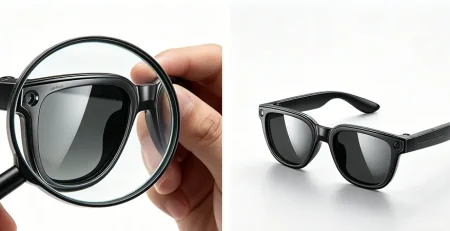
Specic glasses look like regular, stylish glasses. The classic Wayfarer design is timeless and goes with everything. The camera is small and discreet, and most people don't even notice it until you point it out.
I wear mine everywhere—on rides, at work, at the grocery store—and no one has ever asked me if they're smart glasses.
This is a huge advantage if you don't want to look like a cyborg. You can wear them all day, every day, and they just look like a nice pair of glasses. No awkward explanations, no strange looks from strangers.
Specic Product Lineup: Which One Is Right for You?
Specic offers two main models of smart glasses, both designed with cyclists in mind:
Specic Smart Glasses (Starting at $239)
The base model is perfect for casual riders and everyday use. It includes all the core features:
- 8MP Sony camera with 1080p video recording
- EIS electronic image stabilization
- Open-ear audio with dual ENC microphones
- Hey Cyan voice assistant with 139-language translation
- 12 hours of audio battery life
- 35g ultra-lightweight design
- RX-ready (custom lenses available)
Specic Pro (Starting at $269)
The Pro model is designed specifically for cyclists and outdoor enthusiasts. It adds several performance features:
- Enhanced EIS stabilization for smoother footage on rough terrain
- Longer video recording time
- Improved water resistance
- Sports-specific frame design for better helmet compatibility
- Wider field of view camera
- All the features of the base model
For most cyclists, the base model will be more than sufficient. But if you do a lot of off-road riding or need the absolute best stabilization, the Pro model is worth the extra $30.
Other Factors to Consider When Buying Smart Cycling Glasses
While Specic glasses are my top recommendation, there are a few other factors you should consider when choosing smart cycling glasses. Let's go through them quickly.
Waterproofing
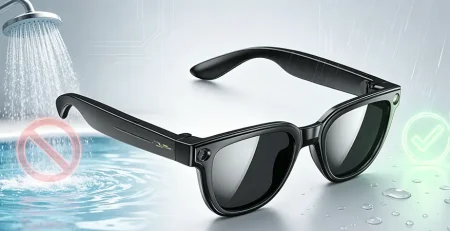
If you ride in the rain or sweat heavily, you'll want glasses that are waterproof. Look for glasses with an IPX4 rating or higher, which means they can withstand splashes of water from any direction.
Specic glasses have an IPX4 waterproof rating, which is perfect for cycling. I've ridden in light rain with them, and they've worked perfectly. Just make sure to dry them off thoroughly after getting wet to prevent any damage.
Storage Capacity
If you plan on recording a lot of video, you'll want glasses with plenty of storage. Most smart glasses come with 32GB or 64GB of storage.
32GB is enough for casual use, but if you record a lot of long videos, you'll want 64GB.
I made the mistake of buying the 32GB version of the Specic glasses, and I've already filled it up a few times. Next time, I'm definitely getting the 64GB version. It's worth the extra money to not have to constantly delete old videos to make room for new ones.
App Support
The companion app is an important part of the smart glasses experience. It should be easy to use, reliable, and offer all the features you need.
Look for an app that lets you easily transfer photos and videos, adjust settings, and update the firmware.
The HeyCyan app for Specic glasses is well-designed and easy to use. It automatically syncs your photos and videos to your phone, and you can easily edit and share them directly from the app. You can also adjust all the settings on your glasses, like camera resolution, audio volume, and voice assistant sensitivity.
Price
Smart cycling glasses range in price from about $100 to $1000 or more.
You don't need to spend a fortune to get a good pair, but you also don't want to buy the cheapest ones you can find. They'll likely be uncomfortable, have poor audio and camera quality, and break easily.
Specic glasses strike the perfect balance between price and performance. They cost a fraction of what other premium smart glasses cost, but they offer all the same features and better quality. For most people, they're the best value on the market.
Common Questions About Smart Cycling Glasses
I get asked a lot of questions about smart cycling glasses, so I thought I'd answer some of the most common ones here.
Are smart cycling glasses safe?
Yes, smart cycling glasses are safe. In fact, they can make your rides safer.
The open-ear audio allows you to hear traffic and other important sounds, which is safer than traditional headphones. The hands-free controls mean you don't have to take your hands off the handlebars to use them. And the eye protection they provide is essential for safety.
Can I wear smart cycling glasses with a helmet?
Yes, most smart cycling glasses are designed to be worn with helmets. The temples are thin and flexible, so they fit comfortably under helmet straps.
Specic glasses, in particular, work great with helmets. I've worn them with several different helmets, and they've never been uncomfortable or slipped down my nose.
How long do smart cycling glasses last?
With proper care, smart cycling glasses should last 2-3 years or more.
The battery will eventually degrade, but most manufacturers offer battery replacement services. The lenses can be replaced if they get scratched, and the frame is usually durable enough to withstand normal wear and tear.
Can I use smart cycling glasses for other activities?
Absolutely! Smart cycling glasses are great for all kinds of outdoor activities, like hiking, running, skiing, and fishing.
They're also perfect for everyday use. I wear my Specic glasses everywhere—at work, at the gym, even just walking around town. They're so comfortable and versatile that they've replaced my regular glasses.
Conclusion
Choosing the right cycling glasses is one of the most important decisions you can make as a cyclist. The right pair will protect your eyes, improve your performance, and make your rides more enjoyable.
And if you're in the market for smart cycling glasses, Specic AI glasses are the best choice for most people.
They're comfortable enough to wear all day, the audio and camera quality are excellent, the voice assistant actually works, and they look like regular glasses. And if you need vision correction, their custom integrated lenses are a game changer at a price that won't break the bank.
I've tried a lot of different cycling glasses over the years, from cheap drugstore pairs to expensive custom options. Specic AI glasses are by far the best I've ever used. They've completely changed how I ride, and I can't imagine going back to regular glasses.
Limited Time Offer: Get 10% extra OFF on all Specic glasses during the Summer Sale. Use coupon code SPECICGLASSES at checkout.
If you're ready to upgrade your cycling experience, I highly recommend giving Specic AI glasses a try. You won't be disappointed.




Leave a Reply
You must be logged in to post a comment.