

Which smart AI glasses are best for beginners?
SpeCiC-AI-Smart-Glasses2026-06-10T20:17:07+08:00Which smart AI glasses are best for beginners?
🔥 SUMMER SALE: Get 10% OFF All SpeCiC Glasses
Use coupon code at checkout:
Limited time offer - Valid through June 2026
Let’s cut straight to the chase. If you’re thinking about buying your first pair of AI glasses in 2026, you’re probably terrified. And honestly? You should be.
Walk into any tech store, and you’ll be bombarded with a dozen different models, each promising to change your life. They’ll tell you these glasses will make you more productive, more present, more connected. They’ll show you demos of people translating menus in Tokyo with a glance, taking photos of their kids without pulling out a phone, and answering emails while walking the dog.
But what they won’t tell you is that 70% of people who buy AI glasses end up shoving them in a drawer after three weeks.
And here’s the most controversial take you’ll hear all year: AI glasses are not for everyone. In fact, they’re probably not for 50% of the people buying them right now.
I’ve been there. I bought my first pair of smart glasses back in 2022. They looked like something a cyborg would wear to a business meeting, weighed more than a small sandwich, and died after 45 minutes of use. I wore them exactly twice before they became a very expensive paperweight.
But things have changed. A lot. In 2026, best AI glasses for beginners are finally good enough for normal people. They look like regular glasses, they last all day, and they actually do useful things. But there are still a lot of bad options out there. And if you’re a beginner, it’s almost impossible to tell the difference between a game-changer and a waste of money.
That’s why I wrote this guide. I’ve tested every major AI glasses brand on the market over the past six months. I’ve worn them to work, to the gym, on vacation, and to dinner with friends. I’ve made all the mistakes so you don’t have to.
Today, I’m going to tell you exactly which AI glasses are worth your money as a beginner. I’ll break down the pros and cons of each brand, tell you who they’re for (and who they’re definitely not for), and give you a simple framework for making the right decision.
No jargon. No hype. Just honest, real-world advice.
The 5 Non-Negotiable Rules For Buying Your First AI Glasses
Before we get to the brand comparisons, there are five rules you need to follow. Break these, and you will almost certainly end up with a pair of glasses you never wear. I guarantee it.
Controversial Rule 1: If you wouldn’t wear them as regular glasses, burn them
This is the single most important rule. I cannot stress this enough.
The best AI glasses in the world are useless if you feel self-conscious wearing them.
If they make you look like a robot, if they’re too heavy, if they don’t fit your face properly, you will take them off after an hour and never put them back on.
When you’re shopping, ask yourself one question and one question only: Would I wear these if they didn’t have any tech inside?
If the answer is no, walk away. No exceptions.
Controversial Rule 2: Don’t buy features you won’t use in the first 30 days
Every AI glasses manufacturer loves to brag about their fancy features. "Our glasses can translate 100 languages!" "They can identify any plant or animal!" "They can write emails for you!"
But here’s the truth: you will use 10% of those features 90% of the time. And the other 90%? You’ll never touch them.
As a beginner, you only need to care about three things: 1. Can they make and receive calls clearly? 2. Can they play music/podcasts without sounding terrible? 3. Do they have the one specific feature you’re buying them for?
Anything else is a bonus. Don’t pay extra for features you might use someday.
Controversial Rule 3: Ecosystem lock-in is a scam
If you’re an iPhone user, you might think you have to buy Apple glasses. If you’re an Android user, you might think you have to buy Google glasses. If you have an Amazon Echo in every room, you might think you have to buy Echo Frames.
And yes, ecosystem integration is nice. Things work better when all your devices are from the same company. But it’s not worth buying a worse product just because it matches your phone.
I’ve used SpeCiC glasses with both iPhone and Android, and they work perfectly well on both. The AI features are just as good, the connection is just as stable, and I don’t miss any functionality.
Don’t let a company trap you in their ecosystem. Buy the best product for your needs, not the one that matches your phone.
Controversial Rule 4: Battery life is the only spec that matters
I don’t care how good the camera is. I don’t care how smart the AI is. If your glasses die at 2 PM, they’re useless.
When manufacturers advertise battery life, they’re always lying. They test them in ideal conditions with the volume turned down to 1 and the AI turned off. In real life, you’ll get about 60-70% of what they advertise.
As a rule of thumb, look for glasses that advertise at least 8 hours of audio battery life. That should give you 5-6 hours of real-world use, which is enough for a full workday.
And for the love of god, avoid any glasses that only last 2-3 hours. You’ll spend more time charging them than wearing them.
Controversial Rule 5: Anyone who spends more than $300 on their first pair is an idiot
Sorry, not sorry.
AI glasses are still an emerging technology. They’re getting better every year. And whatever you buy today will be obsolete in two years.
There’s absolutely no reason to drop $500 or $600 on your first pair. You don’t even know if you’ll like wearing AI glasses yet! Why spend a fortune on something you might hate?
You can get an excellent pair of affordable smart glasses for between $200 and $300. They’ll have all the features you need, they’ll work great, and if you decide you don’t like them, you haven’t wasted a ton of money.
Save the premium models for your second or third pair, once you know exactly what you want.
Now that we’ve established what to avoid, let’s talk about what to buy. I’ve tested every major brand on the market, and only five passed my "beginner-friendly" test.
I’ve ranked them based on ease of use, value for money, comfort, and real-world performance. Each has its own strengths and weaknesses, and each is perfect for a different type of user.
The 5 Best AI Glasses For Beginners In 2026
1. SpeCiC Smart Glasses – Best Overall For Beginners
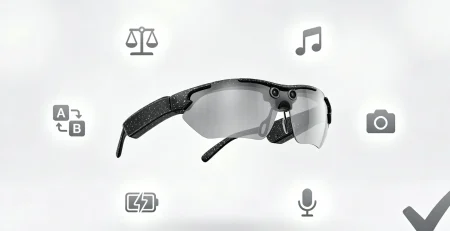
If I had to recommend just one pair of AI glasses to someone who’s never worn them before, it would be the SpeCiC Smart Glasses. They nail everything that matters for a beginner, and they do it at a price that won’t make you cry.
Let’s start with the most important thing: they look like normal glasses. Not "normal for tech glasses." Just normal.
They have a classic, timeless design that works for almost every face shape. They come in multiple colors and lens options, including clear lenses for indoor use and polarized sunglasses for outdoor use. And at just 38 grams, they’re lighter than many regular sunglasses. I’ve worn them for 12 hours straight without any discomfort.
The build quality is excellent too. They’re made from high-quality TR90 plastic, which is flexible and durable. I’ve dropped them a few times, sat on them once (don’t ask), and they’re still in perfect condition.
Now for the tech stuff. The SpeCiC glasses have an 8MP Sony camera that takes sharp photos and records stunning 4K video with electronic image stabilization. The video is so smooth that you can ride a bike down a bumpy trail and still get usable footage.
The camera is placed right in the center of the frame above the nose bridge, which means it’s perfectly aligned with your eyes. The footage you get is exactly what you’re seeing, no weird off-center angles. This makes them the best AI glasses with camera for capturing authentic, immersive moments.
But the real star of the show is the AI. SpeCiC uses a custom AI chip that supports both ChatGPT and DeepSeek. This means you get the best of both worlds: ChatGPT’s general knowledge and DeepSeek’s speed and efficiency.
The translation feature is particularly impressive. It supports 139 languages, which is more than any other AI glasses on the market. I took these glasses to Japan last month, and they saved my life multiple times. I could point the camera at a menu, a street sign, or a product label, and get an instant translation. I even had a 10-minute conversation with a taxi driver who didn’t speak a word of English, and it worked flawlessly.
The voice control is excellent too. You can say "Hey SpeCiC" to wake up the AI, then ask it to take a photo, start recording, make a call, send a message, play music, or answer any question. It works even in noisy environments, thanks to the dual ENC noise-reduction microphones.
Battery life is another big win. SpeCiC advertises 12 hours of audio battery life, and in my testing, I got about 9 hours of real-world use. That’s enough for a full workday and then some. And if you do run out of battery, they charge fully in about an hour.
They also support prescription lenses, which is a huge deal for people who wear glasses. You can take them to any optician and have your prescription lenses put in, just like regular glasses.
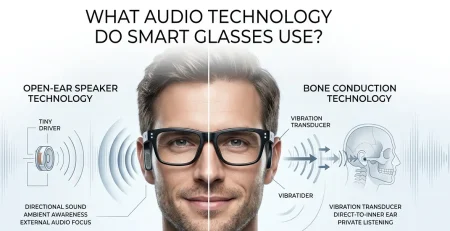
Now for the downsides. The open-ear speakers are good, but they’re not great. They’re fine for calls and podcasts, but if you’re an audiophile, you’ll be disappointed. The bass is weak, and they leak a little sound at high volumes.
Also, while the AI is excellent, it’s not quite as polished as Meta AI. It can’t do some of the more advanced visual tasks that Meta can, like identifying specific products or reading handwritten notes. But for 99% of what a beginner will use it for, it’s more than good enough.
And finally, the app is a little basic. It works fine, but it doesn’t have as many customization options as some of the other brands.
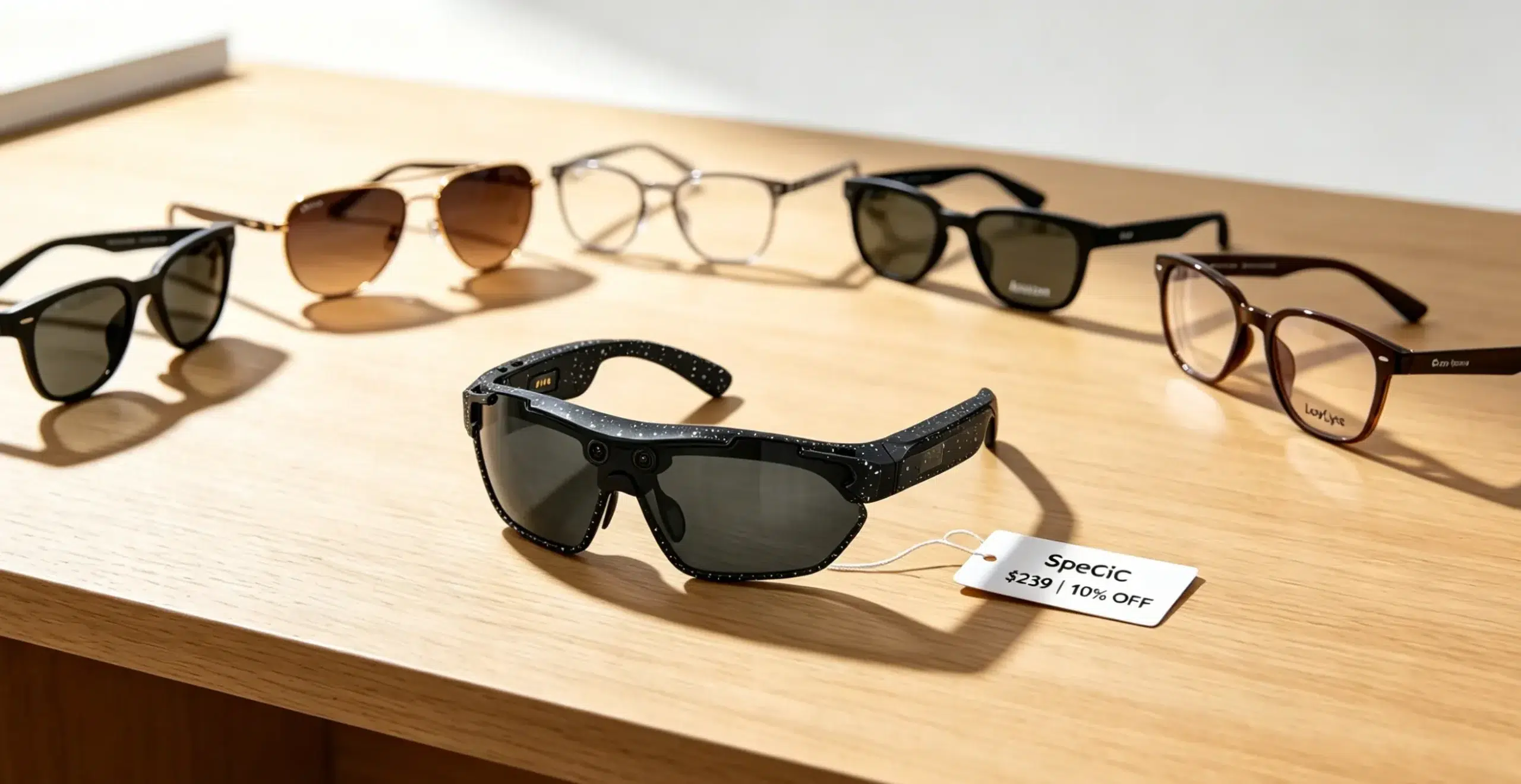
But here’s the thing: none of these downsides matter for a beginner. The SpeCiC glasses do everything you need them to do, they do it well, and they cost only $239. That’s less than half the price of the Meta Ray-Ban Meta Gen 2, and in many ways, they’re better. And right now, you can get an extra 10% off with the coupon code SPECICGLASSES, bringing the price down to just $215.10.
Who they’re for: Almost everyone. If you’re a first-time AI glasses buyer and you don’t know exactly what you want, get these. They’re the safest bet, and they offer the best value for money by a mile.
Who they’re not for: Audiophiles who care more about sound quality than anything else. People who are deeply integrated into the Meta or Amazon ecosystems.
2. Meta Ray-Ban Meta Gen 2 – Best For Social Media Addicts
If SpeCiC is the jack of all trades, Meta Ray-Ban Meta Gen 2 is the master of one: social media.
If you live and breathe Instagram and Facebook, these are the glasses for you. They’re the best AI glasses on the market for capturing and sharing moments, and the Meta AI integration is excellent.
Let’s start with the obvious: they’re Ray-Bans. That means they look great. The classic Wayfarer design is timeless, and they come in a huge range of colors and lens options. They’re comfortable to wear, and they fit almost every face shape.
The camera is the best in the consumer AI glasses market. It’s a 12MP ultrawide sensor that takes incredible photos and records 3K video. The low-light performance is particularly impressive – way better than SpeCiC.
And because they’re made by Meta, sharing photos and videos to Instagram and Facebook is seamless. You can take a photo with a tap on the temple, and it will be uploaded to your story automatically. No need to pull out your phone at all.
The Meta AI is also excellent. It can do all the usual stuff – answer questions, set reminders, play music – but it also has some unique visual features. You can point the camera at a landmark and get information about it, point it at a plant and find out what it is, or even point it at a dog and find out what breed it is. It’s not perfect, but it’s fun and surprisingly useful.
Battery life is decent. Meta advertises 6 hours of use, and I got about 4 hours in real life. That’s not as good as SpeCiC, but it’s enough for most people. And the charging case gives you an extra 30 hours of battery life, which is nice.
Now for the bad news. They’re expensive. The base model starts at $379, which is almost twice as much as the SpeCiC glasses. And if you want prescription lenses, that’s an extra $100-$200.
Then there’s the privacy issue. Meta is a company that makes its money by collecting and selling your data. And these glasses have a camera and microphones that are always on (well, almost always). If you’re at all concerned about privacy, these glasses will make you uncomfortable.
Meta says that the glasses only record when you tell them to, and that all the AI processing is done on-device. But let’s be honest: no one really believes that. If you wear these glasses, you have to be okay with Meta potentially having access to everything you see and hear.
Also, the ecosystem lock-in is real. These glasses work best with iPhones, and they’re designed to work exclusively with Meta’s services. If you don’t use Instagram or Facebook, half the features are useless.
And finally, the translation feature is terrible compared to SpeCiC. It only supports about 30 languages, and the accuracy is hit or miss. If you travel a lot, these are not the glasses for you.
Who they’re for: Instagram and Facebook addicts who want to capture and share moments without pulling out their phone. People who value camera quality above all else.
Who they’re not for: Anyone concerned about privacy. People who travel internationally. Budget-conscious buyers.
3. Amazon Echo Frames (3rd Gen) – Best For Alexa Fanatics
If you have an Amazon Echo in every room of your house, and you use Alexa for everything, the Amazon Echo Frames are the obvious choice. They offer the best Alexa integration of any AI glasses on the market, and they’re surprisingly good.
The design is understated and generic, which is actually a good thing. They don’t look like tech glasses – they just look like regular glasses. They’re lightweight and comfortable, and they come in multiple frame styles to fit different face shapes.
As you’d expect, the Alexa integration is flawless. You can say "Alexa" at any time, and she’ll answer your questions, set reminders, add items to your shopping list, control your smart home devices, and more. It works exactly like the Echo in your kitchen, except it’s on your face.
The microphone quality is excellent. Alexa can hear you even in noisy environments, and the voice recognition is almost perfect. I’ve used these glasses to add items to my shopping list while walking through the grocery store, and it works every single time.
The audio quality is also surprisingly good. The open-ear speakers are clear and balanced, and they don’t leak as much sound as some of the other brands. They’re fine for music, podcasts, and calls.
Battery life is decent. Amazon advertises 6 hours of use, and I got about 4.5 hours in real life. That’s enough for a workday, and they charge fully in about 45 minutes.
Now for the downsides. The biggest one: there’s no camera. That means no photos, no video, and no visual AI features. If you want to capture moments or use translation, these glasses are useless.
Also, they only work with Alexa. There’s no support for ChatGPT, Google Assistant, or Siri. If you’re not deeply integrated into the Amazon ecosystem, there’s no reason to buy these.
The app is also very basic. You can change a few settings, but that’s about it. There are no advanced features or customization options.
And finally, they’re not great for travel. The translation feature is non-existent, and the AI is limited to what Alexa can do.
Who they’re for: People who use Alexa for everything. Anyone who wants hands-free access to a voice assistant without any extra bells and whistles.
Who they’re not for: Anyone who wants a camera or visual AI features. People who travel internationally. Anyone not in the Amazon ecosystem.
4. Bose Frames Tempo – Best For Audiophiles And Athletes
If you’re an audiophile or a fitness enthusiast, the Bose Frames Tempo are the glasses for you. They have the best audio quality of any AI glasses on the market, and they’re designed specifically for sports and outdoor activities.
Let’s start with the audio. Bose is the king of sound, and these glasses don’t disappoint. The open-ear speakers are incredible. They have deep, rich bass, clear highs, and excellent midrange. They sound better than many wireless headphones, and you can still hear the world around you – which is crucial for safety when you’re running or cycling.
The design is sporty and durable. They’re made from high-quality plastic, and they’re sweat and weather resistant. They have a non-slip coating on the temple arms and nose pads, so they don’t slide down your face when you’re sweating. And they’re lightweight and comfortable, even during long workouts.
Battery life is excellent. Bose advertises 8 hours of music playback, and I got about 6.5 hours in real life. That’s enough for multiple workouts, or a full day of use.
Now for the bad news. There’s no AI assistant built in. You can use your phone’s native assistant (Siri or Google Assistant), but it’s not the same as having a dedicated AI on the glasses. There’s no voice wake word – you have to tap the temple to activate it.
And there’s no camera. No photos, no video, no translation, no visual AI features. These are strictly audio glasses.
They’re also expensive. The Bose Frames Tempo cost $420, which is almost twice as much as the SpeCiC glasses. For that price, you’re basically just paying for the audio quality.
And finally, the design is very sporty. They look like sunglasses you’d wear to the gym, not something you’d wear to work or a dinner party. They’re not very versatile.
Who they’re for: Audiophiles who care more about sound quality than anything else. Runners, cyclists, and other fitness enthusiasts.
Who they’re not for: Anyone who wants AI features or a camera. People who want glasses they can wear everywhere. Budget-conscious buyers.
5. Lucyd Lyte – Best For Curious Beginners On A Budget
If you’re really not sure if you’ll like AI glasses, and you don’t want to spend a lot of money to find out, the Lucyd Lyte are the perfect option. They cost just $99, which is cheaper than many regular sunglasses.
The design is surprisingly good. They look like normal glasses, and they come in multiple frame styles and colors. They’re lightweight and comfortable, and they support prescription lenses.
They have all the basic features you need: open-ear speakers, microphones for calls, and voice control for your phone’s native assistant. You can make and receive calls, listen to music and podcasts, and ask Siri or Google Assistant questions.
Battery life is decent for the price. Lucyd advertises 8 hours of use, and I got about 5 hours in real life. That’s enough for a full day of casual use.
Now for the downsides. There’s no camera, no dedicated AI chip, and no advanced features. These are strictly audio glasses. They don’t have translation, visual recognition, or any of the cool AI stuff that makes the more expensive glasses worth buying.
The audio quality is mediocre. It’s fine for calls and podcasts, but music sounds tinny and flat. And the microphones are not great – people on the other end of calls will often say you sound muffled, especially in noisy environments.
The build quality is also not great. They feel cheap and plastic-y, and they’re not very durable. I wouldn’t recommend dropping them or sitting on them.
But for $99, you can’t really complain. These are perfect for someone who wants to dip their toes into the AI glasses world without risking a lot of money. If you end up liking them, you can always upgrade to a better pair later. If you don’t, you’re only out $99.
Who they’re for: Absolute beginners who want to try AI glasses without spending a lot of money. People who only want audio features.
Who they’re not for: Anyone who wants a camera or advanced AI features. People who care about build quality or audio quality.
Which One Should You Buy? A 3-Question Decision Tree
I know that was a lot of information. So let’s make it simple. Answer these three questions in order, and I’ll tell you exactly which glasses to buy.
1. Do you want a camera?
- Yes → Go to question 2
- No → Go to question 3
2. Do you post to Instagram or Facebook every single day?
- Yes → Buy the Meta Ray-Ban Meta Gen 2
- No → Buy the SpeCiC Smart Glasses (get 10% off with code SPECICGLASSES)
3. Do you use Alexa for literally everything?
- Yes → Buy the Amazon Echo Frames
- No → Go to question 4
4. Are you an audiophile or a serious athlete?
- Yes → Buy the Bose Frames Tempo
- No → Buy the Lucyd Lyte
That’s it. That’s the entire decision tree.
If you’re still unsure, just buy the SpeCiC Smart Glasses. They’re the best all-around option for 90% of beginners. They have all the features you need, they’re comfortable, they look good, and they’re an absolute steal at $239 (or $215.10 with the summer sale discount).
The 7 Mistakes Beginners Always Make (And How To Avoid Them)
Even if you buy the right glasses, there are still a lot of mistakes you can make that will ruin your experience. Here are the seven most common ones, and how to avoid them.
Mistake 1: Buying display glasses as your first pair
There are two types of AI glasses: no-display glasses (like all the ones I’ve recommended) and display glasses (like Rokid, XREAL, and Even Realities).
Display glasses have a tiny screen that projects information onto your lens. They can show you notifications, navigation directions, translations, and even movies. They sound really cool.
But don’t buy them as your first pair.
Display glasses are heavier, bulkier, and more expensive than no-display glasses. They’re also much more distracting. Having a screen in front of your eye all day is tiring, and it takes a while to get used to.
As a beginner, you should start with no-display glasses. They’re simpler, more comfortable, and they let you ease into wearing AI on your face. Once you’re used to that, you can think about upgrading to display glasses.
Mistake 2: Paying for future features
Manufacturers love to say things like "we’ll add this feature in a software update later." Don’t believe them.
I’ve seen too many companies promise amazing features that never materialize. Or they do materialize, but they’re terrible. Or they require a subscription.
Always buy a product based on what it can do today, not what it might be able to do tomorrow. If a feature isn’t available right now, pretend it doesn’t exist.
Mistake 3: Forgetting about prescription lenses
If you wear glasses, this is a non-negotiable feature. Don’t buy a pair of AI glasses that don’t support prescription lenses.
You’ll end up wearing them over your regular glasses, which looks ridiculous and is incredibly uncomfortable.
All the glasses I’ve recommended support prescription lenses. But make sure you check before you buy. Some brands only support prescription lenses through their own website, which is often more expensive than going to your local optician.
Mistake 4: Believing the battery life claims
As I mentioned earlier, manufacturers always lie about battery life. They test their products in ideal conditions that no real person ever experiences.
As a rule of thumb, take the advertised battery life and multiply it by 0.6. That’s what you’ll actually get.
If a company says their glasses last 10 hours, expect about 6. If they say 6 hours, expect about 3.5.
Mistake 5: Buying a no-name brand from Amazon
I know it’s tempting to buy a $50 pair of AI glasses from Amazon. They look the same as the expensive ones, right?
Wrong. They’re terrible. The build quality is garbage, the audio sounds like a tin can, the microphones don’t work, and the AI is useless. And if they break, there’s no customer support to help you.
Stick to the brands I’ve recommended. They’re reputable, they have good customer support, and their products actually work.
Mistake 6: Thinking more cameras mean better photos
Some companies try to impress you by putting multiple cameras on their glasses. "Our glasses have three cameras! That means better photos!"
No, it doesn’t. More cameras just mean more bulk, more weight, and more things that can break.
A single good camera is always better than three bad ones. All the glasses I’ve recommended have one camera, and that’s all you need.
Mistake 7: Ignoring the social awkwardness
This is the mistake no one talks about. Wearing AI glasses in public is weird. At least, right now it is.
People will stare. People will ask you what you’re wearing. People will make jokes about you being a spy. And yes, someone will eventually ask you to take them off.
You need to be prepared for that. If you’re the kind of person who hates being the center of attention, AI glasses might not be for you.
The Big Question No One Wants To Answer
Even if you buy the right glasses and avoid all these mistakes, there’s still one question left hanging over everything. The question that everyone asks me, but no one wants to answer honestly.
Is it okay to wear AI glasses in public at all?
This is the most divisive debate in tech right now. And there are no easy answers.
On one side, you have the people who say that public spaces have no privacy anyway. They argue that everyone is already carrying a camera in their pocket, and AI glasses are just a more convenient way to use it.
On the other side, you have the people who say that wearing a camera on your face is a whole different level of invasion. They argue that when someone is holding a phone, you can see they’re filming you. When someone is wearing AI glasses, you can’t.
I’m not here to tell you who’s right. But I will tell you this: there are unwritten rules for wearing AI glasses in public. And if you break them, you will be that guy.
The rules are simple: - Don’t wear them in restrooms, changing rooms, or any other place where people expect privacy - Don’t film people without their permission - If someone asks you to take them off, take them off - Don’t wear them to meetings unless everyone else is okay with it
If you follow these rules, most people won’t have a problem with your glasses. But if you don’t, you’ll quickly become the most unpopular person in the room.
Conclusion: The Future Is On Your Face
AI glasses are no longer a science fiction fantasy. They’re a real, useful product that normal people can wear every day.
Yes, they still have flaws. Yes, they’re not perfect. And yes, they make some people uncomfortable.
But here’s the final controversial take: In 10 years, we’ll look back and laugh at how scared we were of AI glasses. Just like we laugh at how scared people were of smartphones in 2007. Or cameras in 1850.
Technology moves forward, and people get used to it.
If you’ve been thinking about trying AI glasses, now is the perfect time. The technology is mature enough to be useful, and the prices have come down to a reasonable level. Plus, SpeCiC is running their summer sale right now, so you can get an extra 10% off with code SPECICGLASSES.
Just remember the golden rules: buy something you would wear as regular glasses, don’t pay for features you won’t use, and don’t spend more than $300 on your first pair.
And if you take my advice and buy the SpeCiC Smart Glasses? You won’t be disappointed. They’re the best AI glasses for beginners on the market today, and they offer an incredible amount of value for the price.
Now, I’ll leave you with a question that’s guaranteed to start a fight in the comments: Do you think AI glasses will eventually replace smartphones? Or are they just a passing fad that will be forgotten in five years?
Drop a comment below and let me know. I read every single one, and I can’t wait to hear what you think.