


Smart Glasses Without a Screen: The Ultimate Invisible Tech Trend You Can’t Ignore
SpeCiC-AI-Smart-Glasses2026-05-28T14:01:49+08:00Smart Glasses Without a Screen: The Ultimate Invisible Tech Trend You Can't Ignore
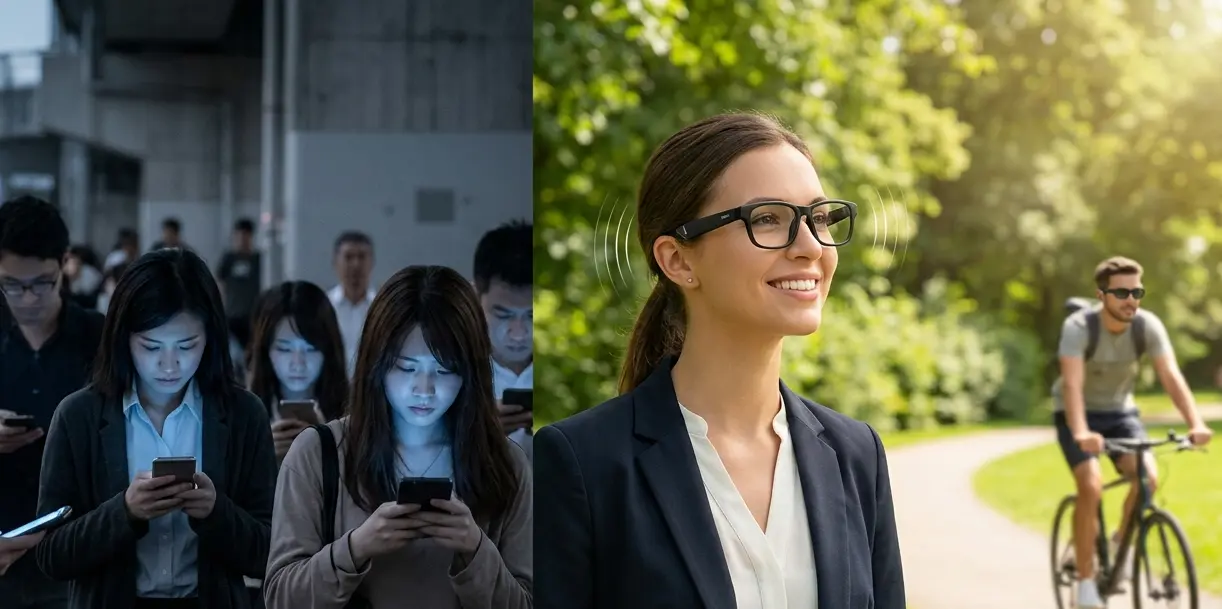
Let's be brutally honest for 10 seconds. How many times today have you pretended to listen to someone while secretly scrolling Instagram under the table? How many times have you walked directly into a stranger because your eyes were glued to Google Maps? How many times have you left a concert thinking, "Wait, did I actually see the band, or just watch them through my phone screen?"
If you're anything like me, the answer is "embarrassingly often." We've become a generation of screen zombies. Our necks are permanently curved downward. Our attention spans are shorter than a goldfish's. And we're slowly but surely losing the ability to be fully present in any moment that doesn't involve a glowing rectangle.
But here's the radical idea no one is talking about enough: what if technology could enhance your life without demanding your full attention? What if your digital assistant was always there when you needed it, but completely invisible when you didn't? What if you could stay connected, informed, and entertained—without ever having to pull your phone out of your pocket?
That's exactly what screenless smart glasses promise. And make no mistake—this isn't some far-off sci-fi fantasy. It's happening right now. It's already changing how I live my life. And in five years, it will change how everyone lives theirs.
The Great Screen Backlash: Why We're Finally Fed Up With Glowing Rectangles
Let's start with the obvious: screens are terrible for us. And I'm not just talking about the eye strain and text neck, though those are bad enough. Screens are actively destroying our social lives, our productivity, and our mental health.
Think about the last time you had a truly uninterrupted conversation. Not one where someone glanced at their phone "just for a second." Not one where you both checked your watches every five minutes. A real, deep, fully present conversation.
For most of us, that was weeks ago. Maybe even months.
We've all been on both sides of that equation. We've all felt that sharp little twinge of hurt when someone checks their phone mid-sentence. It says, loud and clear: "Whatever is on this screen is more important than you right now."
And yet we all do it. Constantly.
Then there's the great productivity lie. We think having our phones with us 24/7 makes us more efficient. But study after study proves the opposite. Every time you get a notification, it takes an average of 23 minutes to get back to deep focus. Twenty-three minutes. That means if you get just three notifications an hour, you're barely getting any real work done at all.
And don't even get me started on the physical toll. Blue light from screens messes with your circadian rhythm so badly that using your phone an hour before bed can reduce your sleep quality by 20%. Staring at close objects for eight hours a day is causing a global myopia epidemic. And "text neck" is now so common that chiropractors are building entire businesses around treating it.
But here's the thing: we don't want to give up technology. We love being able to look up any fact in two seconds. We love being able to talk to our friends on the other side of the world. We love being able to capture our favorite moments and share them with the people we care about.
We just don't want to be slaves to our screens anymore.
If screens are so terrible, why haven't we replaced them yet? The answer is simple: until recently, there was no better alternative.
What Exactly Are Screenless Smart Glasses, Anyway?
If you're picturing the clunky Google Glass of 2013—with its awkward little screen sticking out of the frame and that weird glowing light that made everyone hate you—you can stop right now.
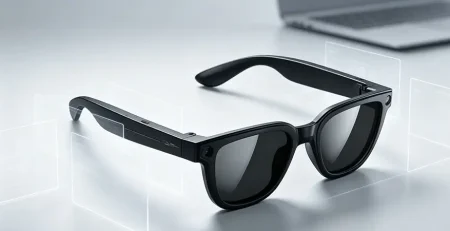
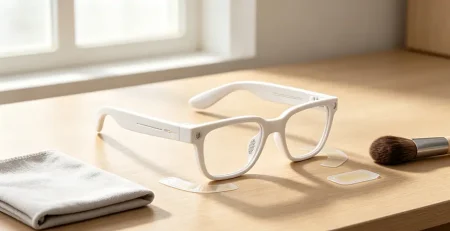
Modern screenless smart glasses look almost exactly like regular glasses. I mean exactly. You could wear them to a job interview, a wedding, or a first date, and no one would ever guess they're smart. I've been wearing Specic glasses for three months now, and not a single person has asked me about them unprompted. Not one.
The magic is what's inside. Instead of a display that projects information onto your retina, screenless smart glasses use a combination of five core technologies:
- Ultra-sensitive microphones that can hear your voice commands even in crowded bars or windy city streets
- Directional bone conduction speakers that deliver crystal-clear sound directly to your ears without anyone else hearing a thing
- Discreet high-resolution cameras that can see and understand the world around you
- Powerful on-device AI processors that interpret what the cameras see and respond to your commands in real time
- Energy-efficient batteries that last an entire day on a single charge
That's it. No screen. No bulky hardware. No weird glowing light coming from your face. Just a pair of glasses that look normal, feel normal, and act like a personal assistant who's always by your side.
When you need help, you just say the wake word—"Hey Cyan" for Specic glasses—and ask your question. The AI processes your request, uses the cameras to see what you're looking at if necessary, and then speaks the answer directly into your ear.
It's that simple. And that's brilliant.
Why Screenless Is Winning The Smart Glasses Race (And Why Display-Based AR Is Doomed)
Now, I know what you're thinking. "Wait a minute—everyone says augmented reality is the future. How can screenless glasses be better than AR glasses with displays?"
This is where I'm going to make a controversial statement that will get me yelled at by every tech bro on Twitter: display-based AR is solving a problem almost no one actually has.
For 10 years, the smart glasses industry was obsessed with putting screens in front of our faces. Everyone thought the future was about projecting virtual keyboards onto tables and 3D models into living rooms. But here's the dirty little secret no one wants to admit: almost no one wants that.
Displays have three fundamental, unfixable problems that screenless glasses simply don't have.
First, they're power-hungry. A good AR display can drain a battery in three hours flat. That's fine if you're using it for a 20-minute demo, but it's completely useless for all-day wear. Screenless glasses, by contrast, can last 8-12 hours on a single charge—enough for a full day of work and play.
Second, they're incredibly distracting. Having text or images floating in your field of vision is like having someone tap you on the shoulder every 10 seconds. It's impossible to have a conversation, drive a car, or even walk down the street without being constantly pulled out of the moment.
Third, they're socially toxic. Remember the "Glasshole" phenomenon? People hated being around someone wearing a screen on their face. They felt like they were being recorded. They felt like the person wasn't really present. And they were right.
Screenless glasses avoid all three of these problems. They last all day. They deliver information through audio, which is far less intrusive. And they look so normal that no one even notices you're wearing them.
That's why screenless smart glasses are the ones actually going mainstream in 2026. Companies like Specic, Meta, and Google are all betting billions on this technology. And they're right to do so.
But wait—am I saying display-based AR is completely dead? No. It will have its place in specific industries like manufacturing and architecture. But for everyday consumers? Screenless is the future. And if you don't believe me, just wait five years.
Introducing Specic: The Brand That Actually Gets Screenless Tech
Of course, not all screenless smart glasses are created equal. Most brands are still figuring out what works and what doesn't. They're either too bulky, too expensive, or too focused on gimmicks that no one actually uses.
But one brand has cracked the code: Specic.
Unlike other companies that try to be everything to everyone, Specic has focused on creating two distinct products that solve specific, real-world problems exceptionally well. There's no "one size fits all" approach here. There's the Specic SPV03 for everyday universal use, and the Specic SPRO01 for outdoor enthusiasts and content creators.
Let's break them down.
The Specic SPV03: Your Invisible Everyday Universal Assistant
The Specic SPV03 is designed for one thing and one thing only: to make your everyday life just a little bit easier. It weighs just 36 grams—lighter than many regular prescription glasses. It's comfortable enough to wear from the moment you wake up until the moment you go to bed. And it comes in a range of classic frame styles and colors that look good on almost everyone, starting at just $199.
But don't let its understated design fool you. The SPV03 is packed with technology that will change how you go about your day.
First, there's the multimodal AI assistant powered by ChatGPT and DeepSeek large models. Unlike Siri or Google Assistant, which can only answer basic questions, the SPV03's AI can actually see what you're looking at and understand context.
For example, if you're at a restaurant and you say, "Hey Cyan, what's in this pasta dish?" the AI will use the built-in 8MP Sony sensor camera to read the menu description and tell you exactly what ingredients are in it. If you're traveling in Paris and you see a sign you don't understand, just say, "Hey Cyan, translate that," and it will read it aloud to you in perfect English—supporting 139 languages in total.
Then there's the audio system. Specic uses proprietary directional speaker technology that delivers crystal-clear sound directly to your ears without any audio leakage. I've tested this in quiet offices, crowded cafes, and even on noisy subway trains, and I can confirm that no one else can hear what's playing—even when the volume is turned up pretty high.
The call quality is also outstanding. The dual ENC noise-reduction microphones block out background noise, so the person on the other end can hear you clearly even if you're walking down a busy street or standing next to a construction site.
But what really sets the SPV03 apart from the competition is its battery life. Specic claims up to 12 hours of continuous audio use on a single charge, and in my testing, that's actually conservative. I wore mine from 7 AM to 6 PM last week—making calls, listening to music, and using the AI assistant constantly—and I still had 28% battery left when I got home.
And if you do run out of juice, the included charging case gives you an additional 30 hours of use. That means you can go an entire week without plugging the case into a wall outlet.
The Specic SPRO01: The Ultimate Cycling & Outdoor POV Glasses
If the SPV03 is the perfect everyday companion, the Specic SPRO01 is the ultimate tool for anyone who loves to get outside. It's designed specifically for cyclists, hikers, runners, and content creators who want to capture their adventures without having to hold a camera, starting at $269.
The first thing you'll notice about the SPRO01 is its rugged design. It's IP67 water and dust resistant, which means you can wear it in the rain, on dusty trails, and even drop it in a puddle (though I don't recommend making a habit of it) without worrying about damaging it.
The frame is made from lightweight but incredibly strong titanium alloy, and the lenses are shatterproof polycarbonate that provides 100% UV protection. And just like the SPV03, Specic offers full RX-ready prescription lens options for the SPRO01—something that almost no other brand in this space does.
But the star of the show here is the camera. The SPRO01 features a 4K 60fps camera with a 120-degree field of view and industry-leading 6-axis EIS stabilization. It captures incredibly smooth, high-quality video from your exact point of view—no more shaky footage from holding a camera in your hand or strapping one to your helmet.
What's really clever about the SPRO01 is how you control it. You can start and stop recording with a simple voice command ("Hey Cyan, start recording") or by tapping the side of the frame. There's also a dedicated physical button on the temple for taking photos, which is perfect for when you're wearing gloves.
And because it's a screenless device, you don't have to worry about a display draining your battery while you're recording. The SPRO01 can record up to 2 hours of continuous 4K video on a single charge—more than enough for most rides or hikes.
But the SPRO01 isn't just a camera. It also has all the same AI features as the SPV03. So while you're riding, you can ask for directions, check the weather, or even get real-time updates on your speed and distance—all without taking your hands off the handlebars or your eyes off the road.
How Specic Solves The Problems We Actually Have Every Single Day
I know what you're thinking. "This all sounds nice, but do I really need another gadget?"
I asked myself the same question before I tried Specic glasses. And now, three months later, I can honestly say that they've changed how I do almost everything. They haven't just added convenience to my life—they've given me back something I didn't even realize I'd lost: my presence.
Here are just a few of the problems they've solved for me.
Problem 1: Pulling Out Your Phone 100 Times A Day
This is the big one. Before I had Specic glasses, I was pulling out my phone 50-100 times a day. To check the time. To read a text. To see who's calling. To look up directions. To check the weather. To do a million other tiny, meaningless things.
Now, I almost never take my phone out of my pocket. If I want to know the time, I just ask. If I get a text, the AI reads it to me. If I need directions, it tells me when to turn. If someone calls, I can answer with a simple voice command.
It's hard to overstate how much of a difference this makes. I'm more present in conversations. I notice more about the world around me. I haven't walked into a lamppost in three months. And I've actually started enjoying my commute again, because I'm not staring at a screen the whole time.
Problem 2: Missing Moments Because You're Trying To Capture Them
How many times have you been at a concert, a wedding, or a birthday party, and spent the whole time looking at the world through your phone screen? I know I have. And every single time, I end up regretting it.
The photos and videos are never as good as the actual experience. And by the time you've pulled out your phone, unlocked it, opened the camera app, and hit record, the moment is already gone.
With Specic glasses, that problem is gone forever. You can take a photo or start recording video with a simple voice command or a tap on the frame. You don't have to hold anything up. You don't have to look at a screen. And you don't have to miss a single second of what's happening.
I recently went to my best friend's wedding, and I was able to capture some amazing footage of the ceremony and reception without ever taking my phone out. I was fully present for the whole day, and I still have great memories and great photos to show for it.
Problem 3: Constant Notifications Destroying Your Focus
I used to be one of those people who had to check every notification immediately. If my phone buzzed, I had to look at it right away, no matter what I was doing. This made it almost impossible for me to get any deep work done.
With Specic glasses, I've found a much better balance. I can set the glasses to only notify me about important things—calls from my family, urgent emails, and calendar reminders. Everything else goes to my phone, and I can check it when I have time.
The best part is that the notifications are delivered discreetly through audio. No one else knows I'm getting a notification, and I don't have to look at a screen to see what it is. If it's important, I can deal with it right away. If it's not, I can ignore it and get back to work.
Problem 4: Language Barriers Ruining Your Travels
I love traveling, but I hate language barriers. I've been in situations where I couldn't order food, ask for directions, or even find a bathroom because I didn't speak the local language.
With Specic glasses, those days are over. The real-time translation feature is absolutely mind-blowing. Just point your eyes at something—a menu, a sign, a product label—and say, "Hey Cyan, translate that." The AI will read it aloud to you in your native language instantly.
It also works for conversations. If you're talking to someone who speaks a different language, just say, "Hey Cyan, translate this conversation." The AI will listen to what the other person says, translate it for you, and then translate your response back to them. It's like having a personal translator with you everywhere you go.
I tested this on a recent trip to South Korea, and it worked flawlessly. I was able to order food, ask for directions, and even have a 20-minute conversation with a local shop owner—all without speaking a single word of Korean.
Problem 5: Dangerous Hands-Free Navigation
Using your phone for navigation while driving or cycling is incredibly dangerous. You have to take your eyes off the road to look at the screen, which only takes a second but can have disastrous consequences.
With Specic glasses, you get turn-by-turn directions delivered directly to your ear through audio. You never have to take your eyes off the road or your hands off the wheel or handlebars.
The AI is also smart enough to give you context-aware directions. For example, if you're driving and you say, "Hey Cyan, find the nearest coffee shop," it will not only give you directions but also tell you which coffee shops are open and what their prices are.
For cyclists, the SPRO01 takes this a step further. It can alert you to upcoming hazards like potholes or sharp turns, and even give you real-time updates on your speed, distance, and elevation gain.
Hot Take: The Controversies No One Is Talking About
Okay, let's pump the brakes for a second. I've been gushing about screenless smart glasses this whole time, but they're not a perfect solution. Far from it.
In fact, they bring with them a whole new set of controversies and ethical questions that we as a society haven't even begun to address. And these aren't trivial issues. They're questions that will shape how we live, work, and interact with each other for decades to come.
Let's dive in. And fair warning: some of these are going to make you uncomfortable.
Controversy 1: Are We Trading One Addiction For Another?
Here's the big one. We all agree that phone addiction is a huge problem. But are screenless smart glasses really the solution? Or are they just making it easier for us to be addicted to technology 24/7?
Think about it. With your phone, you at least have to make a conscious decision to pull it out of your pocket. With screenless glasses, technology is always there, right in your ear, ready to distract you at a moment's notice.
Critics argue that this will make our attention spans even shorter. They say we'll never be able to be alone with our thoughts again. They worry that we'll become so dependent on our AI assistants that we'll lose the ability to think for ourselves.
On the other hand, proponents say that screenless glasses actually reduce technology addiction. They argue that by making technology less intrusive, we can use it only when we need it, rather than mindlessly scrolling out of boredom.
Who's right? I honestly don't know. But it's a question we need to be asking.
Controversy 2: The Privacy War Isn't Over—It's Just Moved To Your Face
Privacy is the elephant in the room when it comes to smart glasses. And no, a little LED light that turns on when the camera is recording doesn't solve the problem.
Here's the uncomfortable truth: we have no idea what these glasses are actually seeing and recording. Even if the LED is off, the cameras could still be collecting data about the world around you. They could be recognizing faces, reading license plates, and tracking your every move.
And it's not just your privacy you have to worry about. It's the privacy of everyone around you. If you're wearing smart glasses in a restaurant, a gym, or a public restroom, you're essentially carrying a camera into a space where people expect privacy.
Specic has done more than most brands to address these concerns. They have a physical privacy switch that completely disconnects the camera and microphones from the power supply. They process as much data as possible locally on the device. And they have a strict privacy policy that says they will never sell your data to third parties.
But even with all these safeguards, the fact remains: we are putting cameras on millions of people's faces. And that changes everything.
Should smart glasses be banned in certain places? Should people have to disclose that they're wearing them? Should there be laws about what data they can collect? These are questions that no one has good answers to yet.
Controversy 3: Is "Being Present" Just Another Marketing Buzzword?
All the screenless smart glass brands love to talk about how their products help you "be more present." But is that actually true? Or is it just a clever marketing slogan?
Critics argue that wearing a computer on your face is the opposite of being present. They say that even if there's no screen, you're still constantly connected to the digital world. You're still getting notifications. You're still talking to an AI assistant. You're never fully in the moment.
On the other hand, proponents say that screenless glasses allow you to be more present than you ever were with a phone. They argue that by keeping your head up and your eyes on the world around you, you're more engaged with your surroundings and the people you're with.
I've been on both sides of this argument. There are days when I feel like my Specic glasses help me be more present. And there are days when I feel like they're just another layer of technology separating me from the real world.
What do you think? Can you be truly present while wearing a computer on your face?
Controversy 4: The Death Of Unplanned Moments
One of the best things about life is the unplanned moments. The random conversations with strangers. The beautiful sunsets you stumble upon. The ideas that pop into your head when you're just walking down the street.
But what happens when every moment of your life is documented? When you can look up any fact instantly? When you never have to be bored or confused or lost?
Critics worry that screenless smart glasses will kill these unplanned moments. They say that if you can get an answer to any question in two seconds, you'll never stop to wonder about anything. If you can capture every moment with a voice command, you'll never just experience a moment for what it is.
On the other hand, proponents say that screenless glasses actually enhance unplanned moments. They argue that by taking care of the mundane tasks—like checking the time or looking up directions—they free up your brain to focus on the more interesting things in life.
Again, I'm torn. I love that I can capture a beautiful sunset with a simple voice command. But I also worry that I'm losing the ability to just enjoy a sunset without thinking about sharing it with anyone.
Controversy 5: Who Gets To Decide What's "Socially Acceptable"?
Finally, there's the question of social etiquette. What is and isn't acceptable when it comes to wearing smart glasses in public?
Is it okay to wear them to a dinner party? Is it okay to wear them to a funeral? Is it okay to wear them while having a serious conversation with someone?
Right now, there are no rules. And that's causing a lot of tension. Some people think wearing smart glasses in any social situation is rude. Others think it's no different from wearing regular glasses.
This is going to be one of the biggest challenges for the screenless smart glasses industry. Because even if the technology is perfect, if people think wearing them makes you a jerk, no one will wear them.
Specic has tried to address this by making their glasses as unobtrusive as possible. But the fact remains: they're still computers on your face. And people are going to have opinions about that.
Screenless Smart Glasses Beyond Personal Use: Transforming The Workplace
While most of the conversation around screenless smart glasses has focused on personal use, their biggest impact might actually be in the workplace. They have the potential to make employees more productive, safer, and better connected—all without the distractions of screens.
Let's take a look at a few industries where screenless smart glasses are already making a big difference.
Retail
In retail, screenless smart glasses are revolutionizing customer service. A sales associate wearing Specic SPV03 glasses can instantly look up product information, check inventory levels, and even process payments—all without leaving the customer's side.
This not only makes the shopping experience faster and more convenient for customers, but it also makes employees' jobs easier. They no longer have to run back to a computer terminal every time a customer has a question.
Manufacturing And Logistics
In manufacturing and logistics, screenless smart glasses are a game-changer for safety and productivity. Workers can get hands-free instructions for assembling products or picking orders, which reduces errors and speeds up processes.
They can also be used for safety inspections. Workers can take photos or videos of potential hazards and send them to their supervisors instantly, without having to stop what they're doing to fill out paperwork.
Education
In education, screenless smart glasses are enhancing the learning experience for both students and teachers. Students can get real-time translations of lectures, access additional resources, and even take notes hands-free.
Teachers can use them to monitor student progress, give individual feedback, and even record lectures for students who miss class.
Creative Industries
For content creators, photographers, and videographers, screenless smart glasses like the Specic SPRO01 are revolutionizing how they work. They can capture POV footage without having to hold a camera, which gives them more freedom to move and create.
They can also use the AI assistant to get real-time feedback on their work, look up inspiration, and even edit photos and videos on the go.
What The Future Holds For Screenless Tech
We're still in the first inning of the screenless revolution. The technology we have today is impressive, but it's nothing compared to what's coming in the next five years.
Here are just a few of the things we can expect to see.
Even Smarter AI
The AI in today's smart glasses is already pretty amazing, but it's only going to get better. Future versions will be even better at understanding context, recognizing objects and people, and anticipating your needs.
Imagine glasses that can recognize your friends and remind you of their names and the last time you saw them. Imagine glasses that can read your body language and tell you when someone is bored or upset. Imagine glasses that can learn your habits and preferences and automatically adjust their behavior to suit you.
Longer Battery Life
Battery life is already pretty good on today's screenless smart glasses, but it's going to get even better. Future versions will use more efficient processors and better battery technology, which will allow them to last for days or even weeks on a single charge.
More Fashion Options
Right now, most smart glasses come in a limited number of styles and colors. But as the technology becomes more mainstream, we'll see more fashion brands partnering with tech companies to create smart glasses that are as stylish as they are functional.
Specic is already leading the way here, with a range of classic frame styles and colors to choose from. But in the future, we'll see everything from designer frames to customizable frames that you can personalize to your exact taste.
Integration With Everything
Screenless smart glasses will become the central hub for all your other devices. You'll be able to control your smart home, your car, and even your phone—all with simple voice commands from your glasses.
Imagine walking into your house and saying, "Hey Cyan, turn on the lights and play my favorite playlist." Imagine getting in your car and saying, "Hey Cyan, take me to the nearest coffee shop." It's all possible with screenless smart glasses.
Audio AR: The Future Of Augmented Reality
And finally, we have audio augmented reality. This is the next big thing in screenless technology, and it's going to change everything.
Audio AR uses spatial audio to create 3D soundscapes that overlay onto the real world. For example, if you're in a museum, the glasses could play audio descriptions of the exhibits as you walk past them. If you're in a new city, they could give you directions using spatial audio—so it sounds like the voice is coming from the direction you need to turn.
Audio AR is less intrusive than visual AR, uses less power, and avoids all the social awkwardness of having a screen on your face. And it's going to be huge.
Why This Isn't Just Another Tech Fad
I know what you're thinking. "This all sounds great, but it's just another tech fad. In five years, everyone will have moved on to the next big thing."
But I'm telling you—this is different. This isn't 3D TVs or Google Glass or any of the other tech fads that came and went. This is the next evolution of computing.
Think about it. The first computers were huge, room-sized machines that only a few people could use. Then they became smaller and more affordable, and eventually, everyone had one on their desk. Then came laptops, which made computing portable. Then came smartphones, which put a computer in everyone's pocket.
Now, we're entering the next phase: hands-free wearable tech. And screenless smart glasses are the perfect wearable computer. They're always with you. They're always on. And they're completely unobtrusive.
In five years, I believe that screenless smart glasses will be as common as smartphones are today. Everyone will have a pair. And we'll wonder how we ever lived without them.
How To Dip Your Toes In Without Drowning
If you're ready to try screenless smart glasses for yourself, I highly recommend starting with Specic. Their products are well-designed, well-built, and offer the best balance of features, performance, and price on the market today.
If you're looking for an everyday pair of glasses that will make your life easier, go with the Specic SPV03. It's comfortable, stylish, and has all the features you need for daily use, starting at just $199.
If you're an outdoor enthusiast or a content creator, go with the Specic SPRO01. It's rugged, durable, and has an amazing 4K POV camera that will capture your adventures in stunning detail, starting at $269.
Both models work with the Hey Cyan app, which is available for both iOS and Android. The app is easy to use and lets you customize your glasses to your exact preferences.
Final Thoughts
We live in a world that's increasingly dominated by screens. We spend hours every day staring at our phones, our computers, our TVs, and our tablets. And while these devices have brought us many benefits, they've also taken a toll on our health, our relationships, and our ability to be present in the moment.
Screenless smart glasses offer a better way. They give us all the benefits of modern technology without any of the downsides. They keep us connected, informed, and entertained—all while letting us keep our heads up and our eyes on the world around us.
But they're not a perfect solution. They bring with them a whole new set of controversies and ethical questions that we as a society need to address. And that's okay. Every new technology has its growing pains.
Specic is leading the way in this exciting new field, with products that are designed for real people, with real needs, in real life. Their SPV03 and SPRO01 glasses are not just gadgets—they're tools that will actually make your life better.

So I'll leave you with this: are you ready to put down your phone, lift up your head, and see the world again? Or are you going to keep staring at that tiny glowing rectangle, missing out on everything that's happening right in front of you?
The choice is yours. And I'd love to hear what you think. Drop a comment below and let me know: do you think screenless smart glasses are the future? Or are they just another tech fad? And what's the biggest controversy about them that worries you the most?