

How to Choose Smart Glasses for People with Sensory Sensitivities?
SpeCiC-AI-Smart-Glasses2026-05-20T00:02:38+08:00How to Choose Smart Glasses for People with Sensory Sensitivities?
Let me start with a confession: I've returned more smart glasses than I care to admit. Not because they didn't work—most of them did exactly what they promised—but because wearing them felt like putting on a tiny, high-tech torture device. The constant pressure on my temples, the intrusive notifications that pulled me out of every moment, the tinny audio that made my ears ache after 20 minutes... it was all too much.
If you're reading this, chances are you know exactly what I'm talking about. You're the person who leaves parties early because the lights and noise feel like they're drilling into your skull. You're the one who carries noise-canceling headphones everywhere, not because you love music that much, but because they're your personal force field against the world's sensory chaos. You've probably looked at smart glasses with equal parts curiosity and dread—excited about the hands-free convenience, but terrified they'll be just another thing that makes your brain feel overloaded.
The good news is: you don't have to choose between staying connected and staying sane. The smart glasses industry has finally started to wake up to the fact that one size does not fit all, especially when it comes to sensory experiences. And while there are still plenty of terrible options out there that will make you want to throw them across the room, there are also some genuinely thoughtful designs that work with your brain, not against it.
In this guide, we'll walk through everything you need to know to find smart glasses that actually make your life easier, not harder. We'll break down the specific features that matter most for sensory-sensitive people, expose the common pitfalls that even experienced shoppers fall into, and explore how one brand is rethinking what smart glasses can be for people who need a little more gentleness from their technology.
Understanding Sensory Sensitivities in a Digital World
Before we dive into the specifics of smart glasses, it's important to level-set on what sensory sensitivities actually are—and what they aren't. Too often, people dismiss them as "being picky" or "overreacting," but that couldn't be further from the truth.
Experiencing sensory sensitivities simply means your brain processes the world a little differently than some other people's. Where one person might not even notice the hum of a fluorescent light or the texture of a shirt tag, your brain might flag those things as important, urgent signals that demand your attention. Think of it like having a volume knob that's stuck turned all the way up for certain senses. Everything comes in louder, brighter, sharper, and more intense.
For some people, this is just how they've always been. For others, it might develop over time, especially as we spend more and more time surrounded by screens, notifications, and constant digital stimulation. There are four main types of sensory sensitivities that tend to cause problems with smart glasses, and understanding which ones affect you is the first step to finding the right pair.
Light Sensitivity
If bright lights make you squint, give you headaches, or make it hard to focus, you're not alone. Our eyes weren't designed to stare at glowing screens for 8+ hours a day, and many smart glasses make this problem worse by adding another bright display right in front of your eyes—something we'll talk about more later.
The worst offenders are the ones with always-on displays that blast your retinas with thousands of nits of brightness just to be visible in sunlight. Even the ones with adjustable brightness can be problematic if the lowest setting is still too bright for indoor use, or if the display flickers at a frequency that your eyes pick up on even if you don't consciously notice it.
Sound Sensitivity
Open-ear audio is one of the biggest selling points of modern smart glasses, and for good reason. Unlike traditional headphones that block out the world, open-ear speakers let you hear your music, calls, and notifications while still being aware of your surroundings.
But for people with sound sensitivity, open-ear audio can be a double-edged sword. Many smart glasses have speakers that sound tinny and harsh at any volume, or that leak sound so badly that everyone around you can hear what you're listening to. Worse, some models have no way to adjust the EQ, so you're stuck with whatever sound profile the engineers thought was best—even if it makes your ears feel like they're being stabbed with tiny knives.
Tactile Sensitivity
This is the one that most smart glasses manufacturers completely ignore. They spend months perfecting the camera and the connectivity, but then they put all that technology into a frame that weighs twice as much as a regular pair of glasses, with hard plastic temples that dig into your temples and a nose pad that leaves a permanent indentation on your bridge.
For people with tactile sensitivity, wearing heavy, uncomfortable glasses for even an hour can be unbearable. The constant pressure can trigger headaches, make it hard to concentrate, and leave you feeling irritable and exhausted by the end of the day. And don't even get me started on the ones that get hot after 20 minutes of use—there's nothing quite like having a warm electronic device pressed against the side of your head to make you want to rip them off and run away.
Sensory Overload
Last but certainly not least, there's the problem of sensory overload. Smart glasses for sensory overload are often designed to keep you connected at all times, but for people who are already prone to feeling overwhelmed by notifications, this can be a disaster.
Imagine having every text message, email, and social media notification buzz or beep at you constantly, interrupting whatever you're doing. Imagine trying to have a conversation with someone while your glasses are vibrating against your temple every 30 seconds. It's enough to make even the most laid-back person feel anxious and frazzled.
Why Most Smart Glasses Fail Spectacularly for Sensory-Sensitive People
Now that we understand the main issues, let's talk about why most smart glasses on the market today are absolutely terrible for people with sensory sensitivities. The problem isn't that the technology is bad—it's that the design philosophy is fundamentally broken.
Most tech companies design products for the "average" user—someone who doesn't mind a little discomfort, who can tune out background noise, and who actually enjoys getting constant notifications. They don't stop to think about the people who fall outside that narrow range. They treat comfort as a nice-to-have feature, not a basic requirement.
Take weight, for example. A regular pair of glasses weighs about 20-30 grams. Most smart glasses weigh 50-80 grams, and some of the bulkier models weigh over 100 grams. That might not sound like a big difference, but when you're wearing something on your face for 8+ hours a day, every extra gram adds up. It's like carrying a small rock around on your nose all day.
Then there's the biggest mistake of all: the obsession with displays. Almost every major smart glasses brand has doubled down on AR displays and HUDs, but for sensory-sensitive people, this is a dealbreaker. A display right in your field of vision means constant visual distraction, eye strain, and headaches—even when you're not actively using it.
The audio is another disaster area. Most open-ear speakers are basically just tiny speakers that point at your ear. They don't produce very good sound quality, and they leak sound everywhere. To compensate, manufacturers make them louder, which just makes the sound quality worse and annoys everyone around you. For people with sound sensitivity, this is a nightmare—you can't turn the volume up enough to hear clearly without it being painful, and you can't turn it down enough to be comfortable without missing everything.
And don't even get me started on the software. Most smart glasses operating systems are designed to be as attention-grabbing as possible. They use bright colors, flashy animations, and constant notifications to keep you engaged. For people who are already easily overstimulated, this is like pouring gasoline on a fire.
The truth is, most smart glasses are designed for people who want to be more connected, more productive, and more plugged into the digital world. They're not designed for people who sometimes need to disconnect, who need things to be quieter, softer, and less intense.
The Non-Negotiable Features of Sensory-Friendly Smart Glasses
Now that we've diagnosed exactly why most smart glasses fail sensory-sensitive users, let's shift from problems to solutions. These are the features that will make the difference between a pair of glasses you wear every day and a pair that collects dust in your drawer. None of them are particularly flashy, but they're all absolutely essential.
1. Lightweight, Ergonomic Design
This is non-negotiable. If the glasses are heavy or uncomfortable, you're not going to wear them—no matter how cool the features are. Look for glasses that weigh less than 40 grams. The closer they are to the weight of a regular pair of glasses, the better.
Pay attention to the material too—flexible TR90 and lightweight plastic are much better than heavy metal frames. Ergonomics are just as important as weight. Look for glasses with multiple nose pad options and flexible temples that can be bent to fit your face. Avoid glasses with hard, sharp edges that dig into your skin. And make sure the weight is evenly distributed between the nose pads and the temples—if all the weight is on the front of the glasses, they'll slide down your nose and give you a headache.
2. No Display = Zero Visual Distraction
This might be controversial, but for most sensory-sensitive people, the best smart glasses are the ones without any display at all. A display—even a good one—adds unnecessary visual stimulation, causes eye strain, and pulls your attention away from the real world.
Instead, look for glasses that deliver notifications through subtle audio cues and gentle vibration. This way, you can stay informed without having a glowing screen in your face 24/7. And make sure the vibration is adjustable—some glasses vibrate so hard they feel like a jackhammer against your temple.
3. High-Quality, Customizable Audio
Audio is make-or-break for most people with sensory sensitivities. Look for glasses with open-ear speakers that produce clear, balanced sound without being harsh or tinny. The best open-ear speakers use directional audio technology to focus the sound directly into your ear, which reduces leakage and improves sound quality.
Most importantly, make sure the glasses have a fully customizable EQ. This allows you to adjust the bass, midrange, and treble to find a sound profile that's comfortable for your ears. Some glasses even have preset modes for different environments, like "office" or "outdoor," which can be really helpful.
4. Granular Notification Control
This is another non-negotiable feature. You need to be able to control exactly what notifications you get, when you get them, and how they're delivered. Look for glasses that let you turn off notifications for individual apps. You should be able to get text messages and phone calls without being bombarded by social media notifications and email alerts.
Even better, look for glasses with AI-powered notification filtering. These systems can learn which notifications are important to you and which ones aren't, and they'll only alert you to the stuff that matters. Some glasses even have "do not disturb" modes that automatically turn on when you're in a meeting or having a conversation.
5. Premium Lens Options
For people with light sensitivity, the quality of the lenses is just as important as the technology. Look for glasses that offer blue light filtering, UV protection, and anti-glare coatings. Photochromic lenses that darken in sunlight are also a great option, as they eliminate the need to carry a separate pair of sunglasses.
And if you wear prescription glasses, make sure the smart glasses are fully RX-ready. You shouldn't have to choose between seeing clearly and having smart features.
How SpeCiC Smart Glasses Solve These Problems (And Why They're Different)
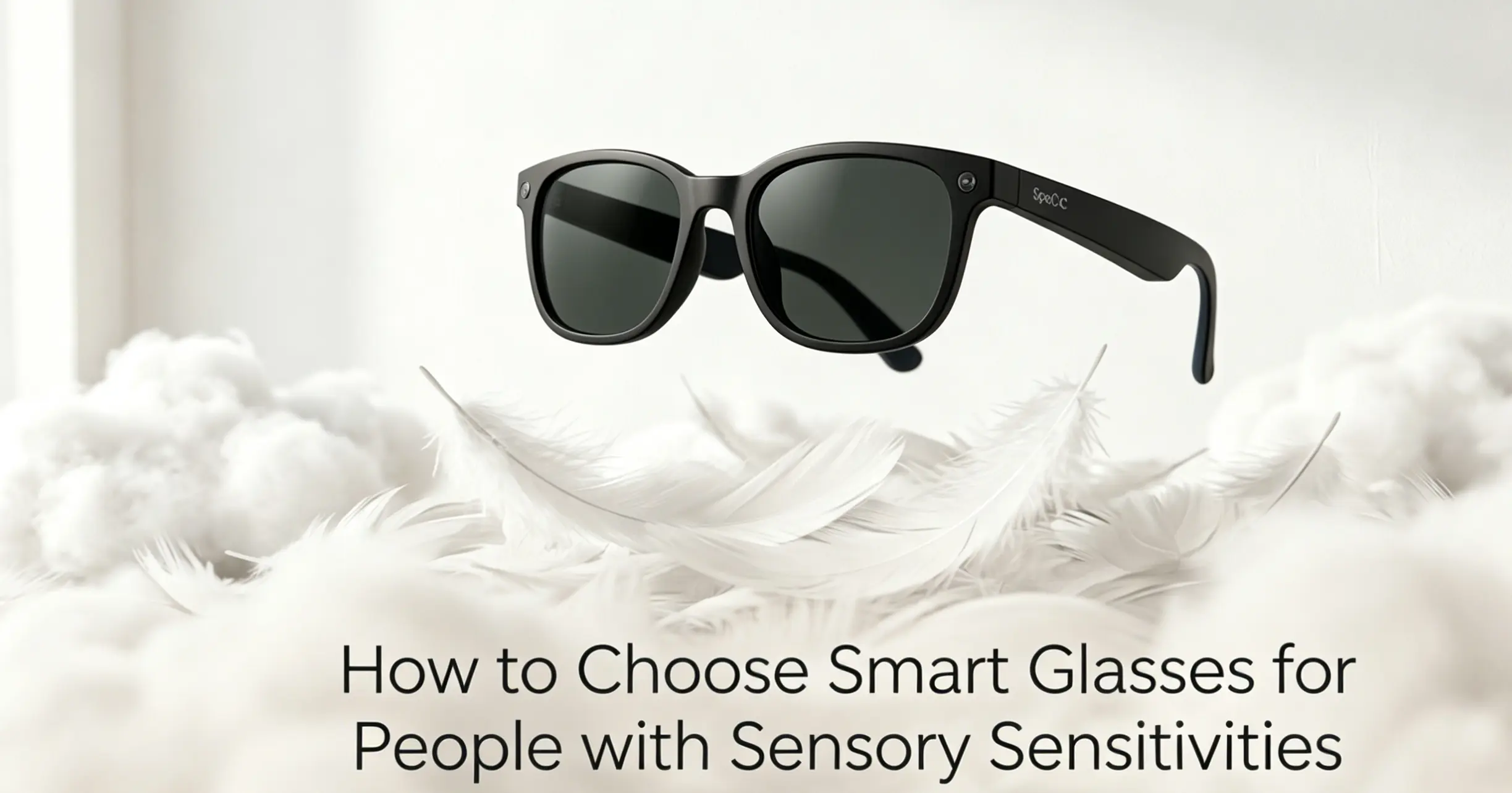
Now that we've covered the key features to look for, let's talk about how SpeCiC smart glasses stack up. I've been testing the SpeCiC AI Smart Glasses for the past few months, and I have to say—they're the most lightweight smart glasses I've ever used.
What sets SpeCiC apart from other brands is that they actually designed their glasses with sensory sensitivities in mind from the very beginning. They didn't just take a regular pair of smart glasses and add a few comfort features as an afterthought—they built the entire product around the idea that technology should be gentle, not overwhelming. And most importantly, they made the bold decision to skip the display entirely.
Tactile Comfort: 39g Featherweight, Custom Fit for Every Face
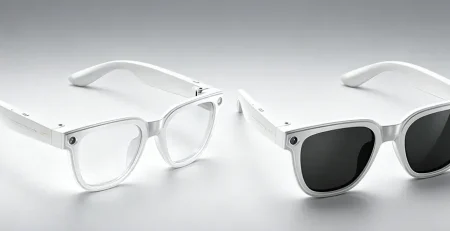
The first thing you'll notice when you put on a pair of SpeCiC glasses is how light they are. At just 39 grams, they weigh about the same as a regular pair of sunglasses—you'll forget you're wearing them after 10 minutes. That's a full 20-40 grams lighter than most other smart glasses on the market.
But it's not just the weight that makes them comfortable—it's the obsessive attention to fit. SpeCiC uses a premium TR90 flexible frame that bends gently to match the shape of your head without putting pressure on your temples. The temples are lined with a soft, hypoallergenic silicone that doesn't dig into your skin or cause irritation, even after all-day wear.
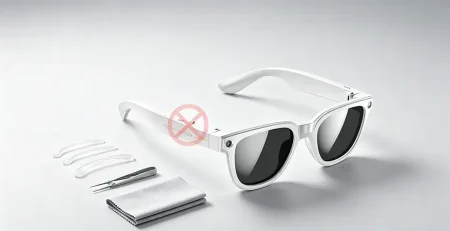
The real game-changer for tactile sensitivity is the 101 custom nosebridge options. No more one-size-fits-all nose pads that leave red marks and cause headaches. SpeCiC offers a range of sizes and shapes to fit every face shape and nose bridge height, so you can get a perfect, pressure-free fit. I've worn mine for 12+ hours straight on multiple occasions, and I've never had the nose indentation or temple pain that I get from other smart glasses.
Another thing I appreciate is that SpeCiC glasses stay cool even during extended use. While they may get slightly warm during long video recording sessions (which is normal for any electronic device), they never get hot enough to be uncomfortable. The passive cooling design dissipates heat evenly across the frame, so you never feel like you're wearing a warm device on your face.
Visual Comfort: No Display, No Distraction, Just Clear Vision
This is where SpeCiC really shines for sensory-sensitive people. Unlike almost every other smart glasses brand, SpeCiC doesn't include any display, HUD, or AR functionality in their glasses. That means when you put them on, you're just wearing a normal pair of glasses—no glowing screen, no eye strain, no constant visual distraction.
All notifications are delivered through subtle audio cues and gentle, adjustable vibration. You can customize the vibration intensity and the audio tones for different types of notifications, so you can tell the difference between a text message and a phone call without having to look at anything. And if you want complete silence, you can turn off all notifications with a single tap.
SpeCiC also offers a range of premium lens options to suit every need. You can choose from clear lenses with blue light filtering (perfect for screen time), polarized sunglasses lenses, or photochromic lenses that darken automatically in sunlight. All lenses are scratch-resistant and offer 100% UV protection, and they're fully RX-ready for prescription users—supporting both myopia (nearsightedness) and hyperopia (farsightedness) prescriptions.
Audio Comfort: Clear, Balanced Sound with Hybrid Noise Cancellation
SpeCiC's audio system is another area where they really stand out. Instead of using the cheap open-ear speakers that most brands use, SpeCiC uses open composite diaphragm speakers that deliver delicate bass and powerful treble without being harsh or tinny.
The enhanced directional audio technology focuses the sound directly into your ear, which means you can hear clearly at lower volumes and there's almost no leakage. I've had people sitting right next to me while I was listening to music at a comfortable volume, and they couldn't hear a thing.
But the best part for sound-sensitive people is the hybrid ANC+ENC noise cancellation. The dual microphones work together to block out background noise, so you can have clear calls even in noisy environments like cafes or busy streets. And with the 10-band customizable EQ in the HeyCyan app, you can adjust every aspect of the sound to your liking—turn down the treble if high frequencies bother you, or boost the bass if you prefer a warmer sound. There's even a dedicated "Gentle" mode that's specifically calibrated for sensitive ears.
AI Capabilities: Helpful Without Being Intrusive
SpeCiC's AI assistant, Cyan, is designed to be helpful without being annoying. You can activate her with the wake word "Hey Cyan" or with a simple button press, and she'll only speak when you ask her to. She never interrupts you with unsolicited suggestions or notifications.
Cyan can do all the things you'd expect from a smart assistant—answer questions, set reminders, send voice messages, and control your music. But she also has some unique features that are especially useful for sensory-sensitive people. The real-time translation feature supports 139 languages with near-zero latency, so you can travel without having to fumble with your phone or strain to understand foreign languages. The AI object recognition can identify plants, animals, landmarks, and even translate signs and menus just by looking at them—all hands-free.
One of my favorite features is the meeting minutes function. Just press and hold the left temple button for 2 seconds, and the glasses will start recording and automatically extract key points from your meetings or classes. The dual-microphone noise cancellation ensures that even quiet voices are captured clearly, so you never miss important information.
Privacy and Battery Life: Peace of Mind All Day Long
Privacy is a top priority for SpeCiC. All of their glasses have a physical privacy shutter for the 8MP Sony camera—you just slide a small switch on the side of the frame to cover the lens when you're not using it. There's no way the camera can be activated when the shutter is closed, which gives you complete peace of mind.
SpeCiC also processes almost all data locally on the device. Your photos, videos, voice recordings, and personal information never leave your glasses unless you explicitly choose to share them. This not only protects your privacy, but it also makes the AI features faster and more responsive.
The battery life is excellent too. The 280mAh high-density polymer battery delivers up to 6 hours of continuous music playback at 80% volume, 15 hours of typical mixed use, and 60 minutes of continuous video recording. Standby time is up to 6 days, or 48 hours with wear-sensing enabled. The glasses charge via a convenient magnetic cable that snaps into place automatically, and they fully charge in just 2 hours. You can even record video while charging, which is perfect for long adventures.
Other thoughtful details include IP65 water resistance (dust, water, and sweat proof), 32GB or 64GB of internal storage for your photos and videos, and Wi-Fi 4 for fast wireless transfers to your phone. The glasses come with a 12-month warranty and a 30-day free trial, so you can try them risk-free.
The Big Controversies No One in the Smart Glasses Industry Talks About
SpeCiC's approach addresses many of the biggest pain points for sensory-sensitive people, but it also highlights some uncomfortable truths about the smart glasses industry as a whole. There are several controversial debates happening behind the scenes that almost no one is talking about—and they have huge implications for the future of wearable technology. None of these are about product quality—they're about design philosophy, ethics, and who gets to decide what "good" technology looks like.
Controversy #1: Is Open-Ear Audio Actually Safer for Everyone?
The entire smart glasses industry has spent billions of dollars pushing the narrative that open-ear audio is inherently safer than closed headphones. Their argument is simple: if you can hear your surroundings, you're less likely to get hit by a car or miss an important announcement.
But here's the hot take that will get me banned from every tech conference: for many sensory-sensitive people, open-ear audio is actually more dangerous, not less. It forces your brain to process two separate audio streams simultaneously—your music/calls and the background noise. For people with auditory processing issues, this is like trying to listen to two podcasts at once while someone is talking to you. It's exhausting, and it actually reduces your ability to focus on important sounds.
The industry has turned a design compromise into a moral imperative, and in doing so, they've alienated millions of people who need quiet to function. Should open-ear audio be the only option for smart glasses? Or should brands offer closed-ear alternatives for people who prefer them? I'd love to hear your thoughts in the comments.
Controversy #2: Should All Smart Glasses Ship With Notifications Turned Off By Default?
Right now, every single smart glasses brand turns on every possible notification out of the box. Their reasoning? They want you to experience the "full power" of the product. But what they're actually doing is setting up sensory-sensitive users for failure.
Most people don't even realize they can turn notifications off until they've already had a meltdown from being bombarded. This isn't just bad design—it's unethical. Brands know that constant notifications keep users engaged, but they're prioritizing their own engagement metrics over their users' mental health.
I believe all smart glasses should ship with notifications completely disabled. Users should have to opt in to each notification type individually, rather than having to opt out. What do you think? Is this a reasonable request, or is it taking things too far?
Controversy #3: Are Displays in Smart Glasses a Solution Looking for a Problem?
Almost every major tech company is racing to build smart glasses with bigger, better AR displays. They claim that displays are the future of wearable technology, and that soon we'll all be living in a world where information is overlaid on everything we see.
But what if they're wrong? What if most people don't want a screen in their face all the time? What if the best smart glasses are the ones that look and feel like regular glasses, with just enough technology to make your life easier without getting in the way?
SpeCiC is betting on the latter, and their growing popularity suggests they might be onto something. Do you think displays are essential for smart glasses? Or would you prefer a simpler, display-free design that focuses on comfort and utility? Let me know in the comments.
Controversy #4: Should Weight Be a Regulated Safety Standard for Wearable Technology?
Right now, there are no regulations governing how heavy wearable technology can be. A company can make a pair of glasses that weighs 150 grams and market it as "all-day wearable," and there's nothing anyone can do about it.
But the truth is, wearing heavy glasses for extended periods of time can cause real physical discomfort—headaches, neck pain, and even permanent indentations on the nose. For people with tactile sensitivity, this discomfort is amplified tenfold.
Should there be a maximum weight limit for products marketed as "all-day wearable"? Should weight be the first specification listed on every product page, not the camera megapixels or battery life? The industry has normalized heavy, uncomfortable smart glasses, and it's time we push back.
Other Practical Factors to Consider Before Buying
While the features we've discussed are the most important for sensory-sensitive people, there are a few other practical factors you should consider before making a purchase. These might seem like minor details, but they can make a big difference in how much you actually use your glasses.
Prescription Lenses
If you wear prescription glasses, make sure the smart glasses you choose are fully compatible with prescription lenses. Most brands offer prescription options, but some are more expensive than others. SpeCiC offers prescription lenses for both myopia and hyperopia, and you can either enter your prescription details during checkout or take your glasses to any local optician to have custom lenses fitted.
Style and Color Options
Let's be honest—style matters. You're going to be wearing these glasses every day, so you want them to look good. SpeCiC offers four stylish color options: Classic Black, Cosmic Gray, Pearl White, and Cherry Veil Pink. They look like regular, fashionable glasses—no one will even know they're smart unless you tell them.
Ecosystem Compatibility
If you're heavily invested in a particular ecosystem (Apple, Google, etc.), you might want to choose smart glasses that work well with your other devices. SpeCiC glasses work with both iOS and Android devices. The HeyCyan app is available for iOS 14.4+ and Android 10+, and it lets you customize all the settings, update the firmware, and manage your photos and videos.
Warranty and Return Policy
No matter how much research you do, you won't know if a pair of glasses is right for you until you wear them for a few days. Make sure the company you buy from has a good return policy. SpeCiC offers a 30-day free trial, so you can try their glasses for a month and return them for a full refund if you don't like them. They also come with a 12-month manufacturer's warranty.
Common Mistakes That Will Waste Your Money and Your Sanity
Before I wrap up, let's talk about some common mistakes that people make when buying smart glasses, especially if they have sensory sensitivities. Avoiding these mistakes will save you a lot of time, money, and frustration.
1. Buying the Cheapest Option
I know it's tempting to save money by buying a cheap pair of smart glasses, but trust me—you get what you pay for. Cheap smart glasses are usually heavy, uncomfortable, and have terrible audio quality. They'll end up sitting in a drawer somewhere, and you'll have wasted your money. It's better to save up for a good pair that you'll actually wear.
2. Buying More Features Than You Need
Many smart glasses come with a lot of features that you'll never use. All those extra features add weight, drain battery life, and make the glasses more complicated to use. Think about what you actually need from your smart glasses. If you just want to make hands-free calls and listen to music, you don't need a pair with a 4K camera and advanced AI features. The SpeCiC AI Smart Glasses strike the perfect balance between functionality and simplicity.
3. Forgetting to Adjust the Settings
Most smart glasses come with default settings that are designed for the average user. If you have sensory sensitivities, you'll probably need to adjust the volume, the EQ, the vibration intensity, and the notification settings to make them comfortable for you. Take the time to play around with the settings and find what works best for you. It might take a little while, but it's worth it to have a pair of glasses that actually fits your needs.
4. Ignoring the Return Policy
As I mentioned earlier, you won't know if a pair of glasses is right for you until you wear them for a few days. Never buy smart glasses from a company that doesn't offer a good return policy. If a company only offers a 7-day return window, or charges a restocking fee, that's a red flag. Look for companies that offer at least a 30-day free trial with no restocking fee.
Final Thoughts: Technology Should Adapt to You, Not the Other Way Around
Choosing smart glasses when you have sensory sensitivities can feel like an impossible task. For a long time, it was—most brands just didn't care about making products that were comfortable for people who experience the world differently. They expected us to adapt to their technology, rather than the other way around.
But things are changing. Brands like SpeCiC are leading the way, proving that technology can be both powerful and gentle. They've shown that you don't need a fancy AR display or a million features to make great smart glasses. Sometimes, the best technology is the technology that gets out of your way and lets you live your life.
If you've been hesitant to try smart glasses because you're worried they'll be too overwhelming, I encourage you to give them a chance. Start with a brand that offers a good return policy, like SpeCiC, and take the time to adjust the settings to your liking. You might be surprised at how much of a difference a well-designed pair of smart glasses can make.
At the end of the day, the best smart glasses are the ones you forget you're wearing. They should be a tool that helps you navigate the world, not another source of stress and discomfort. And with the right pair, that's exactly what they can be.
So go ahead—take the plunge. Your brain (and your nose, and your ears, and your eyes) will thank you. And don't forget to join the conversation in the comments below—let me know which of the controversies we discussed you feel most strongly about, or share your own experiences with smart glasses and sensory sensitivities.