

How do smart glasses record video without looking bulky?
SpeCiC-AI-Smart-Glasses2026-06-10T19:05:07+08:00How do smart glasses record video without looking bulky?
Let’s be honest for a second. We’ve all seen that guy. The one at the concert wearing what looks like construction safety goggles, nodding along while secretly filming the entire set. Or the tourist walking around with a tiny brick strapped to their face, taking photos of every landmark without ever touching their phone.
For years, that was the sad reality of video recording smart glasses. They either looked ridiculous, or they worked so poorly you might as well not bother. And here’s the controversial question that divides everyone: should we even be trying to make them look normal in the first place?
Some people say any device that can record video discreetly is inherently creepy and should be banned. Others say they’re the best memory-capturing tool since the smartphone. Today, we’re not going to settle that argument. But we are going to answer how engineers finally figured out how to fit a working video camera into something that doesn’t make you look like a cyborg extra from a bad 90s movie.
The Bulky Past: Why Old Camera Glasses Were Unwearable
Before we get to the good stuff, let’s take a quick trip down memory lane. Because to appreciate how far we’ve come, you have to understand just how bad things used to be.
The Camera That Screamed “I’m Filming You”
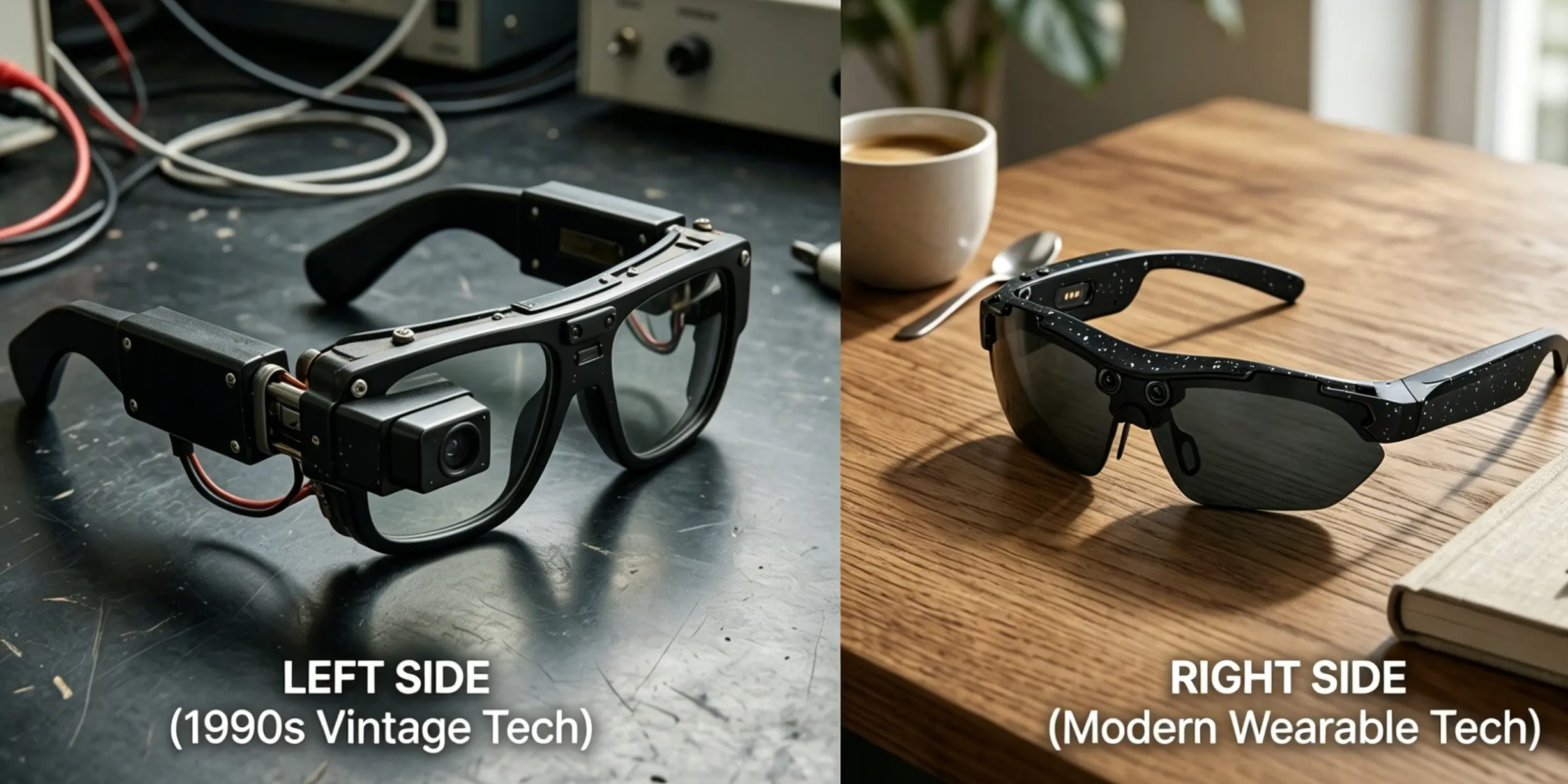
The biggest problem was always the camera. Early models used standard smartphone camera modules, which are designed to live inside a 6mm thick phone—not on the edge of a glasses frame.
Manufacturers had two terrible choices. They could make the frame huge to fit the camera, or they could use a garbage pinhole camera that produced footage worse than a 2005 flip phone. Most picked the first option.
The result? Frames that looked like they were made for someone with a head the size of a watermelon. The camera stuck out like a sore thumb in the upper corner, and everyone within 10 feet could see exactly what you were doing. Even worse, the one-sided weight gave you a headache after 30 minutes.
The Battery That Doubled As A Weapon
Then there was the battery problem. Video recording uses an absurd amount of power. A smartphone battery that lasts all day might die in 2 hours of continuous recording. Now try fitting that battery into something that weighs less than 50 grams.
Early manufacturers solved this by making the temple arms (the parts that go over your ears) ridiculously thick. We’re talking “could crack a walnut” thick. They stuffed a tiny lithium-ion battery in each arm, and even then, you’d be lucky to get 45 minutes of recording time.
And forget all-day wear. Those thick arms would dig into your ears, leaving bright red marks and making you want to rip them off by lunchtime.
The Frankenstein Electronics Mess
It wasn’t just cameras and batteries. You also needed a processor, memory, Wi-Fi, Bluetooth, microphones, speakers, and miles of tiny wiring to connect everything.
Early manufacturers didn’t even try to be clever. They just took all the parts from a cheap smartphone, glued them to a glasses frame, and crossed their fingers. The result was a lumpy, bumpy mess that felt cheap and fragile. And because everything was crammed in so tight, they got hot. Really hot. Wear them on a sunny day, and you’d swear you had a small space heater on your face.
The Social Death Sentence
But the worst problem of all wasn’t physical—it was social. Everyone knew what those bulky glasses were for. Wear them into a coffee shop, and you’d get side-eye from every single person. Wear them into a restroom, and you might get escorted out by security.
People hated being filmed without permission, and those old glasses screamed “I’m recording everything.” Even if you were just taking photos of your dog at the park, strangers would cross the street to avoid you. It was a social death sentence.
So how did we go from those bulky disasters to the sleek glasses we have today? It wasn’t one magic invention. It was five separate breakthroughs, all coming together at exactly the right time.
The 5 Breakthroughs That Killed Bulky Camera Glasses
1. Camera Miniaturization: Smaller Isn’t Just Better—It’s Invisible
The biggest game-changer has been the miniaturization of camera sensors. Ten years ago, a decent 1080p sensor was the size of your fingernail. Today, you can get a high-quality 8MP sensor that’s barely bigger than a pinhead.
But it’s not just the size that’s improved. Modern sensors are way more efficient too. They use less power, produce better low-light footage, and require way less processing power to get good results. That means manufacturers don’t need to include a huge, power-hungry processor just to handle video.
Here’s where things get really interesting. Some of the newest smart glasses, like the ones from SpeCiC, have completely reimagined where the camera goes. Instead of hiding it in the corner of the frame where everyone expects it, they put it right in the middle, above the nose bridge.
Wait, that sounds more obvious, right? Wrong. Because SpeCiC figured out something brilliant: if you design the frame around the camera, it stops looking like a camera and starts looking like a decorative element. Most people will glance at it, think “oh, that’s just part of the design,” and never give it a second thought.
2. Shaped Batteries: The Unsung Hero Of Slim Glasses
Even if you make the camera tiny, there’s still a bigger problem: batteries. For decades, batteries only came in boring shapes: cylinders, rectangles, coins. But glasses frames are curved, irregular, and full of tiny empty spaces that traditional batteries can’t fill.
That all changed with shaped stacked battery technology. Instead of winding battery materials into a rectangle, manufacturers now stack them in thin layers and cut the battery to exactly match the shape of the temple arm. This lets them use every single millimeter of available space, increasing capacity without making the arms any thicker.
Some companies have gone even further. SpeCiC uses fully custom curved batteries that perfectly follow the contour of the temple arm from hinge to tip. This not only gives them 30% more battery life than competitors, but it also makes the glasses way more comfortable. No sharp edges digging into your ear, even after 8 hours of wear.
3. All-In-One Chips: Fewer Parts = Less Bulk
Remember how old camera glasses had half a dozen separate components spread all over the frame? That’s a thing of the past. Modern smart glasses use highly integrated system-on-a-chip (SoC) designs that put the processor, memory, Wi-Fi, Bluetooth, and image processor onto a single tiny chip.
This has two huge benefits. First, it saves an enormous amount of space. Instead of needing room for six different parts, you just need room for one. Second, it uses way less power. All those separate parts used to waste energy talking to each other. With everything on one chip, that waste is gone.
SpeCiC takes this a step further with their custom-designed AI chip. Instead of using a generic off-the-shelf processor, they built their own chip specifically optimized for video recording and AI processing. This lets their glasses do real-time electronic image stabilization, object tracking, and automatic highlight editing—all without draining the battery or getting hot.
4. Weight Distribution: The Secret No One Talks About
Even if you make all the components tiny, you still have to put them somewhere. And if you put too much weight in one place, the glasses will be uncomfortable to wear.
The solution? Perfect weight distribution. Modern manufacturers spend months testing different component placements to make sure the weight is evenly balanced across the entire frame. The battery goes in one temple, the processor in the other. The camera goes in the middle, so it doesn’t pull the frame forward. Even the nose pads are designed to spread pressure evenly across your nose.
SpeCiC’s glasses are a masterclass in this. They weigh just 38 grams total—lighter than many regular sunglasses, setting a new benchmark for lightweight camera glasses. And because the weight is so perfectly balanced, you can wear them all day without even noticing they’re there. No headaches, no ear pain, no constantly pushing them back up your nose.
5. Design First, Technology Second
And now for the most controversial breakthrough of all: designers finally took over from engineers.
Here’s a hot take that will get me yelled at in tech forums: most early smart glasses were ugly not because the technology was too big, but because the companies making them didn’t care about fashion. They thought if they packed enough features into a device, people would tolerate looking like a dork.
They were wrong. Dead wrong.
Today’s best smart glasses are designed by fashion designers first, engineers second. The goal isn’t to make a tech product that happens to be glasses—it’s to make glasses that happen to have tech inside. That means no weird bulges, no exposed components, no obvious cameras. That means using the same materials and manufacturing techniques as regular eyewear.
All these breakthroughs moved the industry forward. But there’s one company that combined them better than anyone else: SpeCiC.
How SpeCiC Cracked The Code
While every company was copying each other’s corner-camera, full-rim designs, SpeCiC went in the complete opposite direction. And in doing so, they created what is arguably the most normal-looking video-recording smart glasses on the market.
The Invisible Central Camera System
Let’s start with the most obvious feature: the camera. As I mentioned earlier, everyone else puts a single camera in the corner where it’s impossible to miss. SpeCiC put their 8MP Sony sensor right in the center, above the nose bridge, perfectly aligned with your line of sight.
This isn’t just a design choice—it’s a usability choice too. Having the camera perfectly aligned with your eyes means the footage it records is exactly what you’re seeing, making them the ideal POV camera glasses for capturing authentic, immersive moments. No weird off-center angles, no cropped heads. It feels like you’re actually there experiencing the moment again.
And yes, this single camera does some pretty cool tech stuff too. It captures stunning 4K video with integrated electronic image stabilization, so even if you’re biking down a bumpy trail or running after your dog, the footage stays smooth and steady. The Sony sensor also produces incredibly sharp photos, even in low light.
The Rimless Lens Design That Changed Everything
Another thing that sets SpeCiC apart is their rimless lens design. Most smart glasses use full-rim frames because they’re easier to stuff electronics into. But full-rim frames are also thicker, bulkier, and block more of your peripheral vision.
SpeCiC’s glasses have no lower frame at all. The lenses are held in place only at the top and sides, giving them a sleek, modern look that’s perfect for sports and everyday wear. And without a lower frame blocking your view, you can see more of what’s happening around you—critical for activities like cycling or running.
This brings us to the question that splits the entire smart glasses community: is invisibility the ultimate goal?
Some people argue that smart glasses should look obviously like tech products. That way, everyone knows you’re wearing them, and there are no surprises. Others say the whole point is to make them look normal, so you can capture moments without pulling out your phone and ruining the vibe.
I’m not going to tell you which side is right. But I will say this: SpeCiC’s rimless design is so good that I’ve worn them to dinner with friends, and no one noticed they were smart glasses until I told them.
The Little Details That Make A Big Difference
What really impresses me about SpeCiC’s glasses is all the tiny details most people never notice.
- The nose pads are made from soft, flexible silicone that conforms to your nose shape. They’re adjustable too, so you can get the perfect fit no matter what your nose looks like.
- The temple arms are slightly flexible, so they fit comfortably on heads of all sizes. They have a non-slip coating on the ends, so they don’t slide down your nose when you’re sweating.
- The touch controls are subtle and intuitive. A single tap takes a photo, a double tap starts and stops recording, and a swipe adjusts the volume. You don’t have to look at the glasses to use them—you can do it all by feel.
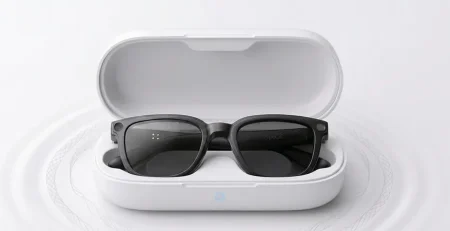
- The charging port is hidden under a small rubber flap, and the whole thing is waterproof enough to wear in the rain or while swimming.
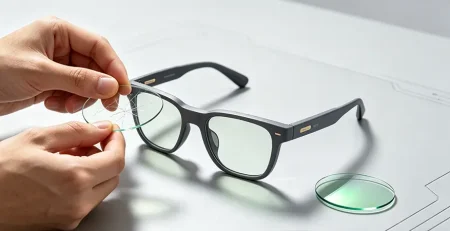
- They support prescription lenses, so you don’t have to choose between seeing clearly and capturing great video.
None of these features are flashy. None of them will make for a good TikTok demo. But together, they make the glasses feel like a natural extension of your face, not a gadget you’re wearing.
Of course, we can’t talk about camera glasses without addressing the elephant in the room: privacy.
The Privacy Debate That Won’t Go Away
I’ve had more arguments about smart glasses privacy than any other tech topic. And I’ve heard the two most extreme positions imaginable, both defended with religious fervor.
On one side, you have the people who say anyone wearing camera glasses in public is a creep and a pervert. They believe any device that can record video discreetly should be banned entirely.
On the other side, you have the people who say public spaces have no privacy. They argue that if you don’t want to be filmed, you should stay home. And they think anyone who complains about camera glasses is just a Luddite who hates technology.
Both positions are stupid.
The truth is somewhere in the messy, complicated middle. Yes, camera glasses can be abused. Yes, it’s creepy to film people without their permission. But they’re also an incredible tool for capturing memories that you would otherwise miss.
SpeCiC takes privacy very seriously. Their glasses have a bright LED indicator light that turns on whenever the camera is active. It’s impossible to turn off, and it’s clearly visible from the front. So even if someone doesn’t notice the camera, they’ll see the light and know they’re being recorded.
They also have a physical privacy switch on the temple arm. Slide it over, and the camera is completely disconnected from the power supply. No software hack can turn it on when the switch is off. That’s a non-negotiable feature for me, and it’s something every smart glasses manufacturer should include.
But at the end of the day, privacy isn’t a technology problem. It’s a people problem. It’s up to you to use your glasses responsibly. Don’t record people without their permission. Don’t wear them in places where people expect privacy. And if someone asks you to stop recording, stop recording.
So where do we go from here? The smart glasses industry is still in its early days, and the next few years are going to bring some incredible—and incredibly controversial—changes.
What’s Next? And Why It’s Going To Divide Us Even More
Even Smaller, Even More Invisible Cameras
Camera sensors will continue to get smaller and more efficient. In the next 3-5 years, we’ll probably see cameras that are completely hidden inside the frame itself. We might even see cameras built into the lenses, using transparent materials that don’t block your view.
This will make the glasses look even more normal. But it will also make the privacy debate even more heated. If no one can tell you’re wearing camera glasses, how do we protect people’s privacy?
All-Day Battery Life
Battery technology is improving every year. Solid-state batteries, which are safer and more energy-dense than traditional lithium-ion batteries, are already starting to appear in consumer electronics. Once they become affordable, we could see smart glasses that last an entire day on a single charge—even with continuous recording.
AI That Anticipates What You Want To Record
AI will play an increasingly important role. We’ll see glasses that can automatically detect when something interesting is happening—a kid’s first steps, a beautiful sunset, a funny moment with friends—and start recording a short clip before you even think to tap the temple.
But this brings us to the biggest, most philosophical question of all: if our glasses are automatically recording everything, will we ever actually live in the moment?
Or will we become permanent spectators in our own lives, always watching through the lens of a camera, always waiting for the next highlight reel?
I don’t have the answer to that question. No one does. But it’s something we’re all going to have to grapple with in the next decade.
AR Integration
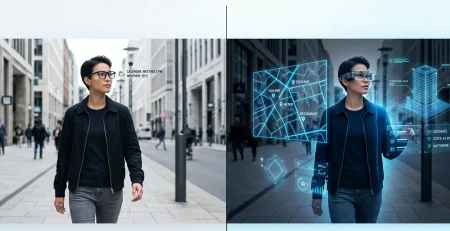
Eventually, camera glasses will merge with augmented reality glasses. We’ll have a single pair of glasses that can record video, show you notifications, give you directions, and overlay digital content onto the real world.
SpeCiC is already working on this. Their next generation of glasses will include a tiny AR display that can show you information without blocking your view. And because they’ve already solved the bulk problem, these AR glasses will look just as normal as their current model.
Conclusion: The End Of Bulky Camera Glasses
For years, camera glasses were a joke. They were bulky, they were ugly, and they were socially awkward. But thanks to hundreds of tiny innovations in camera technology, battery design, chip integration, and fashion design, that’s all changed.
Today, you can buy a pair of smart glasses that record high-quality 4K video, last all day on a single charge, and look exactly like a normal pair of sunglasses. Companies like SpeCiC have proven that you don’t have to sacrifice style for functionality. You can have both.
The key to their success is simple: they focused on making glasses first, and technology second. They didn’t try to cram every possible feature into a single device. They focused on doing a few things really well: recording great video, being comfortable to wear, and looking good.
And that’s the future of wearable technology. The best wearable devices are the ones you forget you’re wearing. They fade into the background, letting you live your life while quietly enhancing it.
Now, I’ll leave you with the question that started this whole article, and the one that still divides everyone: if there was a pair of smart glasses that looked completely normal, would you wear them in public? Or is there something inherently uncomfortable about wearing a camera on your face, no matter how good it looks?
Drop a comment below and let me know. I read every single one, and I can’t wait to hear what you think.