

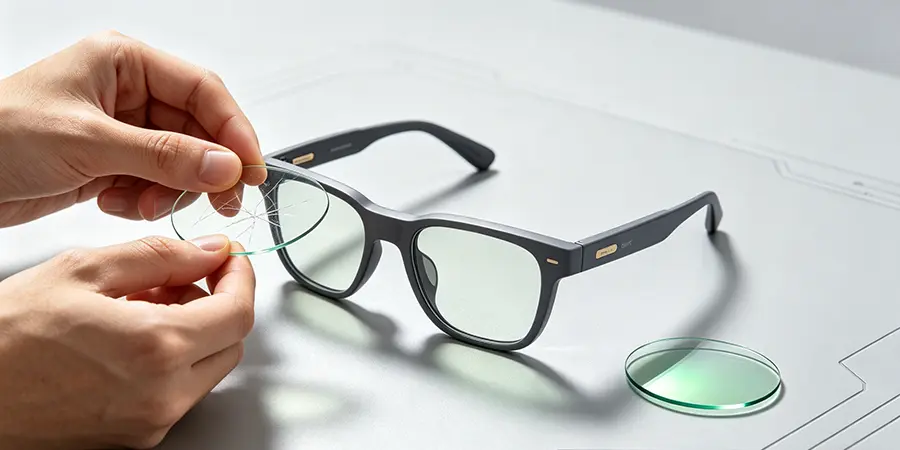
What’s the Average Lifespan of Smart Glasses Lenses? When to Replace?
SpeCiC-AI-Smart-Glasses2026-04-17T14:06:47+08:00What’s the Average Lifespan of Smart Glasses Lenses? When to Replace?
Critical Clarification Before We Start
This article focuses exclusively on your smart glasses’ optical lenses — the clear, prescription or plano lenses that sit in front of your eyes, the ones you look through. These are 100% separate from the tiny camera lens built into the frame of your smart glasses (the small glass cover over the image sensor). While they are both called “lenses”, they are entirely independent components. That said, the quality and condition of your optical lenses directly impacts the performance of your smart glasses’ camera, as we’ll explain in detail below.
Our #1 Promise For SpeCiC Owners
Unlike nearly every other smart glasses brand on the market, every single replacement lens for SpeCiC AI smart glasses is designed for 100% user self-installation. No need to ship your frames away, no expensive professional installation fees, no waiting weeks for your glasses to come back. You can order your custom lenses directly from SpeCiC, and swap them out at home in 10 minutes, with no tools and no technical expertise required.
Let’s be honest.
When you spent $200 or more on a pair of smart glasses, you obsessed over the camera quality, battery life, AI features, audio, and how they looked on your face.
Almost no one stops to ask two critical questions: How long will the optical lenses I look through actually last? And how easy is it to replace them when they wear out?
Have you ever had this moment?
You’re on a hike, you double-tap the temple of your SpeCiC AI smart glasses to capture a stunning golden-hour view, and later you realize every video and photo is covered in weird glare, soft blurriness, or washed-out spots you didn’t see with your naked eye.
Or you’re on a critical work video call, and a coworker messages you privately: “I can barely see your eyes — there’s a weird haze on your glasses.”
Or you’re driving at night, using your glasses’ hands-free navigation, and oncoming headlights create so much scattered glare through your lenses that you’re squinting like a grumpy cat, even though you swear the anti-reflective coating was perfect when you bought them.
If this sounds familiar, you’re not alone.
For regular eyeglasses, worn-out optical lenses are an annoyance. For AI-powered smart glasses like your SpeCiC frames, Ray-Ban Meta, or Bose Frames? They break every single core feature you bought the device for.
Your optical lenses aren’t just plastic to help you see.
They are the first barrier between the world and your smart glasses’ built-in camera — every bit of light that hits the camera’s sensor must first pass through your optical lenses. They block glare for video calls, reduce eye strain during screen time, and protect your eyes from UV rays. When they fail, your expensive smart glasses become a fancy plastic frame that doesn’t deliver on a single promise it made.
The worst part?
Most smart glasses brands make replacing lenses a total nightmare.
They’ll force you to ship your frames away for weeks, charge you hundreds of dollars for professional installation, or even tell you to just buy a whole new pair of glasses. It’s intentional, it’s frustrating, and it’s the #1 reason people give up on their smart glasses entirely.
In this guide, we’re fixing that. We’ll break down everything you need to know, with zero confusion between your optical lenses and your camera’s lens, and a clear, actionable path to fresh lenses — no hoops to jump through.
- Real-world average lifespan for every type of smart glasses optical lens
- 7 undeniable signs it’s time to replace your optical lenses right now
- Brand-by-brand breakdown: how easy (or impossible) it is to replace lenses for every major smart glasses brand
- Step-by-step guide to replacing your SpeCiC lenses at home, in 10 minutes, no tools required
- 10 pro tips to make your optical lenses last 2x longer
- The heated industry debate: why brands make lens replacement so hard (and what you can do about it)
We’re keeping it casual, funny, and judgment-free. We’ve all wiped our optical lenses with our shirt and panicked about the damage later.
By the end, you’ll know exactly when to replace your smart glasses optical lenses, how to do it yourself, and how to save hundreds of dollars in the process.
Quick question before we start: Have you ever tried to replace lenses on a pair of smart glasses? Was it easy, or a total nightmare? Drop your experience in the comments — we’re curious!
First: How Long Do Smart Glasses Optical Lenses Actually Last?
Let’s get one thing straight right out the gate.
Smart glasses optical lenses are NOT the same as regular eyeglass lenses — and it’s not because of the camera.
Regular glasses only need to help you see clearly. Smart glasses optical lenses have a much harder job to do, every single day:
- They sit directly in front of your smart glasses’ camera, so they must maintain perfect optical clarity to avoid ruining your photos and videos
- They need to block screen glare for back-to-back video calls
- They have to resist scratches, sweat, dust, and daily wear from being on your face 8+ hours a day
- They hold multiple critical coatings: anti-reflective, water-repellent, oil-repellent, blue light blocking, and UV protection
That extra workload means their lifespan looks different than your standard pair of eyeglasses.
Below are real-world averages based on daily, regular use — 8+ hours a day, 5+ days a week, for your standard daily driver smart glasses.
Standard Clear Plano (Non-Prescription) Lenses
Average Lifespan: 2–3 years
This is the default optical lens that comes with nearly all smart glasses right out of the box, including your SpeCiC AI frames. These are clear, non-prescription polycarbonate lenses, usually paired with a basic anti-reflective (AR) coating and a hydrophobic (water-repellent) top layer.
With proper care (we’ll cover this in detail later), these lenses can easily last 3–5 years. But for most people, who toss their glasses in their bag unprotected, wipe them with their shirt, or leave them face-down on desks, you’re looking at 2–3 years before scratches, coating wear, and haze start to ruin both your vision and your camera’s performance.
SpeCiC’s stock lenses are built with high-impact, scratch-resistant polycarbonate, which holds up far better to daily wear and tear than the cheap plastic lenses used in budget smart glasses. That means they’ll last longer, even with less-than-perfect care.
Blue Light Blocking Lenses
Average Lifespan: 2–3 years
Blue light blocking lenses are the most popular upgrade for anyone who wears their smart glasses in front of a screen all day (so, most of us). The blue light protection is either infused directly into the polycarbonate lens material itself, or applied as a thin coating on top of the lens.
If the filter is infused into the material, the lifespan is identical to standard clear lenses: 2–3 years, with proper care extending that to 5 years. The blue light protection will never fade or wear off, because it’s part of the lens itself.
If it’s just a surface coating, the lifespan is shorter — around 2 years — because the coating can wear off over time with regular cleaning and use, reducing the blue light blocking effectiveness and creating glare.
SpeCiC’s custom blue light blocking lenses use infused filter technology, not just a thin surface coating, so you get full blue light protection for the entire lifespan of the lens. And when it’s time to replace them? You can order a fresh set directly from SpeCiC, and swap them out yourself at home.
Photochromic (Transition) Lenses
Average Lifespan: 1.5–2 years
Photochromic lenses (the ones that darken automatically in sunlight and clear up when you go back indoors) are a fan favorite for smart glasses users who want one pair of glasses for both indoor and outdoor use. But here’s the catch: the photochromic molecules that make the lenses darken break down over time, especially with frequent exposure to direct UV sunlight.
If you wear your photochromic lenses outside every single day, you’ll notice that after 1.5–2 years, they don’t darken as much as they used to, or they take far longer to clear up when you go back indoors. They may also develop a permanent faint yellow or gray tint, even in complete darkness, which ruins both your night vision and your camera’s low-light performance.
With only occasional outdoor use, they can last up to 3 years, but for most daily users, 1.5–2 years is the sweet spot before they start to underperform.
Polarized Sunglass Lenses
Average Lifespan: 1.5–2.5 years
Polarized lenses are a must-have for anyone who wears their smart glasses outdoors, driving, hiking, or at the beach. They block blinding glare from horizontal surfaces like water, pavement, and snow, and protect your eyes from 100% of UV rays.
The problem? The polarized film and UV coating break down over time, especially with frequent exposure to harsh sunlight, salt water, sweat, and extreme heat. If you wear your polarized lenses every single day outdoors, you’re looking at 1.5–2 years before the polarization starts to fail, the UV protection diminishes, or the tint fades unevenly.
With occasional use, they can last up to 3 years. SpeCiC’s custom polarized sunglass lenses add an extra scratch-resistant hard coat and a backside AR coating to reduce glare from behind you, which extends the lifespan and makes them hold up far better to regular outdoor use. And when they wear out? You can swap them for a new set in minutes, no professional help needed.
Prescription Lenses (Myopia/Hyperopia)
Average Lifespan: 2–3 years
Prescription optical lenses for smart glasses have the same physical lifespan as standard clear lenses (2–3 years, up to 5 with proper care), but there’s a critical catch: your prescription can change over time. Even if the lenses are in perfect physical shape, if your vision changes, you’ll need to replace them to see clearly — and to ensure your camera is capturing footage through optically perfect lenses.
Most vision care professionals recommend updating your prescription every 1–2 years, which lines up perfectly with the average physical lifespan of the lenses, so it’s the perfect time to swap them out for a fresh set.
For SpeCiC owners, our custom prescription lens service makes this easy: just send us your updated prescription, and we’ll manufacture a brand new set of lenses tailored exactly to your vision, with all the coatings you need. And the best part? You can install them yourself, no need to visit an optician or ship your frames away.
The Biggest Factors That Shorten (Or Extend) Your Lens Lifespan
These numbers are just averages, of course. Your lenses could last 5+ years, or they could be ruined in 6 months, depending on how you use and care for them. Here are the biggest factors that make the biggest difference:
- How often you use them: A pair of glasses you wear every single day will wear out faster than a pair you only use on weekends.
- Where you use them: Regular outdoor use, beach days, gym sessions, or construction work will wear down your lenses and coatings far faster than indoor office use only.
- How you clean them: Wiping your lenses with your shirt, paper towels, or harsh chemicals will scratch the surface and wear down the coatings way faster than using a proper microfiber cloth and lens-safe cleaner.
- How you store them: Tossing your glasses in your bag with your keys, phone, and wallet, or leaving them face-down on a table, is the fastest way to scratch your optical lenses.
- The quality of the lenses and coatings: High-quality lenses (like the custom options for SpeCiC frames) with multi-layer, durable coatings will last way longer than the cheap, single-layer lenses used in budget smart glasses.
Controversial Hot Take
Most people think optical lenses “just wear out” over time. The truth? 70% of premature lens damage is caused by 2-second daily mistakes you can fix today. Smart glasses brands don’t want you to know how easy it is to double the life of your lenses, because they’d rather you buy a whole new pair of glasses when your lenses wear out — or pay them hundreds for a “professional” lens replacement you can do yourself in 10 minutes.
7 Undeniable Signs It’s Time to Replace Your Smart Glasses Optical Lenses
Now you know the average lifespan, but how do you know exactly when it’s time to replace your optical lenses? You don’t need a microscope or a degree in optical engineering to figure it out.
These 7 signs are easy to spot, and if you notice even one of them, your worn-out optical lenses are ruining both your vision and your smart glasses’ core features — including your camera’s performance. Remember: we’re still talking exclusively about your optical lenses (the ones you look through), not your camera’s built-in lens.
1. Your Camera Footage Is Full of Glare, Blurriness, or Washed-Out Spots
This is the #1 sign for smart glasses users, and it’s directly tied to the condition of your optical lenses.
Here’s why: your smart glasses’ camera is built into the frame, directly behind your optical lens. Every single photon of light that hits the camera’s sensor must first pass through your optical lens. If your optical lens has scratches, scuffs, haze, or worn-out coatings, that light gets scattered, refracted, and distorted before it even reaches the camera’s lens.
The result? Your photos and videos will have soft blurriness, weird light streaks, washed-out spots, or distracting glare — even if your camera’s built-in lens is completely clean and scratch-free. You might not even notice the tiny scratches on your optical lens with your naked eye, but the camera will pick up the distortion every single time, especially in bright sunlight or backlit conditions.
If you’ve noticed that your SpeCiC videos and photos don’t look as crisp and clear as they did when you first bought them, grab your glasses and hold them up to a bright light. Chances are, you’ll see scratches, scuffs, or haze on your optical lens that are ruining your footage. And once a polycarbonate optical lens is scratched, there’s no fixing it — you can’t buff out scratches without ruining the lens coatings and optical clarity. The only fix is to replace the lens.
2. Glare & Reflections Are Taking Over Your Video Calls & Daily Vision
The anti-reflective (AR) coating on your optical lenses is the unsung hero of your smart glasses. It stops light from bouncing off the front and back of your lenses, which eliminates the bright white screen reflection on your lenses during video calls, reduces blinding headlight glare when you’re driving at night, and makes your vision clearer in bright light.
But AR coating doesn’t last forever. Over time, it will wear down, scratch, or peel off with regular cleaning and use. When it does, the glare will come back with a vengeance.
You’ll notice it immediately: during Zoom calls, people will comment on the bright white reflection of your screen on your lenses, even when you’re looking straight at the camera. When you’re driving at night, oncoming headlights will create blinding streaks of light across your vision. When you’re outside in the sun, you’ll see distracting reflections of your own eyes in the lenses.
If you’re suddenly dealing with way more glare than you used to, even after cleaning your lenses thoroughly, that’s a sure sign your AR coating has worn out. And since the AR coating is critical for both your vision and the performance of your SpeCiC camera (it reduces lens flare in footage), it’s time to replace the lenses.
3. Your Lenses Are Permanently Hazy, Yellowed, or Discolored
Have you noticed that your lenses don’t look as crystal clear as they used to? That everything looks a little yellow, gray, or hazy, even after you’ve cleaned them multiple times? That’s a classic sign that your optical lenses are breaking down from UV exposure, heat, and general wear and tear.
This is especially common with photochromic lenses, which will start to look permanently yellow or hazy when the photochromic molecules break down. But it can happen to any lens, especially if you frequently leave your glasses in a hot car or in direct sunlight for long periods of time. The polycarbonate material will degrade over time, creating a permanent haze that can’t be cleaned off.
Hazy, discolored lenses don’t just look bad — they reduce the contrast and clarity of your vision, cause eye strain when you’re wearing them all day, and ruin the color accuracy and sharpness of your smart glasses’ camera footage. If your lenses don’t look perfectly clear when you hold them up to a bright white light, it’s time to replace them.
4. Your Lens Coatings Are Peeling, Flaking, or Bubbling
Take a close look at your lenses, especially around the edges where they meet the frame. Do you see any spots where the coating is peeling, flaking, or bubbling? Does it look like there’s a thin, clear film peeling off the surface of the lens? That’s a sure sign your lens coatings are failing, and it’s time to replace them.
Coating peeling usually happens from exposure to harsh chemicals (like window cleaner, alcohol, sunscreen, or insect repellent), extreme heat, or just regular wear and tear over time. Once the coating starts to peel, it will only get worse — there’s no way to reapply or fix it. The peeling will create uneven glare, haze, and blurry spots, and it will ruin both your vision and your camera’s performance.
This is why we always recommend using only the included microfiber cloth and clean, fresh water to clean your SpeCiC lenses — harsh chemicals are the #1 cause of coating peeling and premature failure. And when your coatings do fail? You can order a fresh set of lenses directly from SpeCiC, and install them yourself in minutes.
5. Your Prescription Has Changed
If you wear prescription lenses in your smart glasses, the most obvious sign it’s time to replace them is that your prescription has changed. If you’re squinting to see your computer screen, getting headaches after wearing your glasses all day, or your vision just doesn’t feel as clear as it used to, it’s time to update your prescription and get new lenses.
Even if your lenses are in perfect physical shape, wearing the wrong prescription will cause eye strain, headaches, and blurry vision — and it defeats the whole purpose of having prescription lenses in your smart glasses. Most people update their prescription every 1–2 years, which lines up perfectly with the average lifespan of the lenses, so it’s the perfect time to swap them out for a fresh set.
For SpeCiC owners, our custom prescription lens service makes this easy: just send us your updated prescription, and we’ll manufacture a brand new set of lenses tailored exactly to your vision, with all the coatings you need. No need to visit an optician, no need to ship your frames away — you can install the new lenses yourself, right at home.
6. Cracks, Chips, or Physical Damage to the Lens
This one is obvious, but it’s worth saying: if your optical lens has a crack, chip, or any other physical damage, you need to replace it immediately. Even a small chip or crack along the edge of the lens can spread across the entire lens over time, and it can ruin your vision, create distracting glare in your camera footage, and even pose a safety risk if the lens shatters.
Cracks and chips usually happen from dropping your glasses, or from something hitting the lens (like a ball, a tree branch, or a set of keys in your bag). Even a tiny crack that doesn’t block your vision will distort the light passing through to your camera, ruining your footage. It’s always better to replace it sooner rather than later.
7. You’re Constantly Cleaning Them (And They Still Look Dirty)
Do you feel like you’re wiping your lenses every 10 minutes? Do they get smudged, fingerprinted, and covered in oil immediately after you clean them? That’s a sure sign that the hydrophobic (water-repellent) and oleophobic (oil-repellent) top layer of your lens coating has completely worn off.
That top layer is what makes water bead up and roll off your lenses, and what stops fingerprints and skin oil from sticking to the surface. When it wears off, every little touch will leave a permanent-looking smudge, every drop of water will leave a streak, and you’ll be cleaning your lenses non-stop all day.
Not only is this incredibly annoying, but it also means your other critical coatings (AR, blue light, UV) are likely starting to wear off too. If you’re constantly cleaning your lenses and they still look dirty, it’s time to replace them with a fresh set that has a new hydrophobic/oleophobic top layer.
Which of these signs have you already noticed on your smart glasses? Scratches ruining your footage? Bad glare? Peeling coating? Be honest — we’ve all been there.
Brand-by-Brand Breakdown: Lens Replacement Options (And How Easy They Actually Are)
Now you know when to replace your lenses — but how do you actually do it? Every smart glasses brand has a different process for replacing optical lenses, and most make it way harder (and more expensive) than it needs to be.
We’ve broken down everything you need to know for every major brand on the market, with a clear focus on whether you can replace the lenses yourself, or if you’re forced to jump through hoops.
Controversial Industry Take
90% of big smart glasses brands intentionally make lens replacement difficult, expensive, or even impossible. Why? Because they want you to buy a brand new pair of glasses every 2–3 years, instead of just swapping out the lenses for $50–$150. It’s planned obsolescence, plain and simple — and it’s a ripoff for consumers. SpeCiC is one of the only brands that fights this, with 100% user-replaceable lenses for every frame model.
SpeCiC AI Smart Glasses
Average Optical Lens Lifespan: 2–3 years of daily use, up to 5 years with proper care
Available Lens Options: Clear plano, blue light blocking, photochromic, polarized sunglass, custom prescription (myopia/hyperopia)
Replacement Process: 100% User Self-Installation, No Tools Required
SpeCiC was built for real, long-term daily use — which is why every single frame is designed with user-replaceable lenses as a core feature, not an afterthought. Unlike nearly every other brand, we don’t force you to jump through hoops to get fresh lenses.
Here’s exactly how it works, step by step:
How to Replace Your SpeCiC Lenses At Home (10 Minutes, No Tools)
- Head to the official SpeCiC website and navigate to the Replacement Lenses page.
- Select your exact SpeCiC frame model from the dropdown menu.
- Choose the type of lens you want: clear plano, blue light blocking, photochromic, polarized sunglass, or prescription.
- If you’re ordering prescription lenses, enter your prescription details directly on the page, or upload a copy of your prescription from your eye care provider.
- Place your order, and we’ll manufacture your custom lenses to your exact specifications, with all standard premium coatings included, and ship them directly to your door.
- Once your lenses arrive, simply pop the old lenses out of your SpeCiC frame (the flexible frame design makes this easy, with no risk of breaking the frame), and snap the new lenses into place. That’s it.
No need to ship your frames away. No expensive professional installation fees. No waiting weeks to use your glasses again. You can go from worn-out lenses to a brand new viewing experience in 10 minutes, right from your couch.
All SpeCiC replacement lenses come with a 7-day prescription accuracy guarantee, and a 12-month limited warranty against defects in materials and workmanship. We use high-quality, impact-resistant polycarbonate for all our lenses, with multi-layer AR coating, hydrophobic/oleophobic top layer, and 100% UV protection, so your new lenses will last just as long as the original ones that came with your frames.
Ray-Ban Meta Smart Glasses
Average Optical Lens Lifespan: 2–3 years of daily use
Available Lens Options: Clear plano, blue light blocking, photochromic, polarized sunglass, custom prescription
Replacement Process: Professional Installation Only
Ray-Ban Meta offers an official Lens Replacement Program for their smart glasses, but there’s a big catch: you cannot install the lenses yourself. You must either visit a Ray-Ban store or authorized optical partner for professional installation, or ship your frames to Ray-Ban’s service center and wait 1–2 weeks for them to install the lenses and send them back.
The process is fairly straightforward, but it’s slow and expensive. Ray-Ban’s replacement lenses are significantly more expensive than SpeCiC’s, with prescription lenses costing upwards of $150–$200, plus installation fees. You’ll also be without your smart glasses for at least a week, if not longer, while they’re being serviced.
Bose Frames
Average Optical Lens Lifespan: 1.5–2.5 years of daily use
Available Lens Options: Clear plano, polarized sunglass (official), very limited prescription options (third-party only)
Replacement Process: User-Installable for Official Lenses, Professional Only for Prescription
Bose Frames are designed with user-replaceable lenses for their official plano and sunglass options. The lenses pop in and out of the frame with gentle pressure, and Bose includes step-by-step instructions with every lens kit. You can swap them out at home in 5 minutes, no professional help needed.
The major downside? Bose has almost no official prescription lens options. If you need prescription lenses, you’ll have to go through a third-party optical provider that specializes in Bose Frames, which can be expensive, hit-or-miss for quality, and requires professional installation. They also don’t offer blue light blocking or photochromic lenses as official options, so you’ll have to go through a third party for those as well.
Amazon Echo Frames
Average Optical Lens Lifespan: 2–3 years of daily use
Available Lens Options: Clear plano, blue light blocking, polarized sunglass, custom prescription
Replacement Process: Professional Installation Only, Must Ship Frames Away
Amazon Echo Frames work exclusively with a network of third-party optical partners for lens replacement. You cannot install the lenses yourself. To get new lenses, you must order through Amazon’s website, then ship your Echo Frames to their optical partner, who will install the new lenses and send the frames back to you. The entire process takes about 1–2 weeks from start to finish.
The downside? You’ll be without your smart glasses for a week or more, and the lens options are more limited than SpeCiC’s, with fewer photochromic and tint options. Prescription lenses can also be pricey for premium coatings, and you have no way to install them yourself if you want to swap between sunglass and clear lenses regularly.
Snap Spectacles
Average Optical Lens Lifespan: 1.5–2 years of daily use
Available Lens Options: Clear plano, polarized sunglass (official), almost no prescription options
Replacement Process: User-Installable for Official Lenses, No Viable Prescription Option
Snap Spectacles have user-replaceable lenses for their official plano and sunglass kits. The lenses twist in and out of the frame, and Snap includes clear instructions with every kit. You can swap them out at home in a few minutes, no professional help needed.
The big downside? Snap has almost no official prescription lens options, and very few third-party providers will make custom prescription lenses for Spectacles. If you need prescription lenses, Spectacles are not a viable long-term option. They also don’t offer blue light blocking or photochromic lenses as official options, so they’re not a great fit for anyone who needs indoor-specific lens options.
10 Pro Tips to Extend the Lifespan of Your Smart Glasses Optical Lenses
Replacing your lenses is easy with SpeCiC, but that doesn’t mean you can’t make them last as long as possible. With a few simple daily habits, you can double the lifespan of your lenses, save money on replacements, and keep your SpeCiC smart glasses working perfectly for years.
These tips are simple, easy to follow, and tailored specifically to smart glasses optical lenses. They’ll protect your lenses, your coatings, and ensure your camera always captures crisp, clear footage.
1. Only Clean Your Lenses With the Included Microfiber Cloth
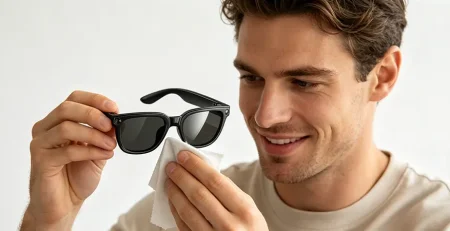
This is the single most important thing you can do to protect your optical lenses. The microfiber cloth that came with your SpeCiC glasses is designed to lift dirt and oil off the lens surface without scratching it or wearing down the coatings.
Never use paper towels, napkins, toilet paper, or your shirt to wipe your lenses. Paper products are made of wood fibers, which are abrasive and will scratch the surface of your lens with every wipe. Your shirt has dirt, dust, and oil on it, which will also scratch your lenses and leave smudges. Keep the microfiber cloth in your glasses case or your bag, so you always have it with you when you need to clean your lenses.
2. Rinse With Water Before Wiping (If There’s Visible Dirt)
If your lenses have visible dust, dirt, sand, or other debris on them, do not wipe them dry. The dirt particles will scratch the surface of your lens as you wipe them across it, like sandpaper.
Instead, rinse the lenses with clean, fresh water first to wash away the dirt and debris. Then, gently wipe them dry with your microfiber cloth. This is especially important if you’ve been to the beach, the desert, or a construction site, where there’s lots of sand and dust in the air. Luckily, your SpeCiC glasses have an IP65 water resistance rating, so rinsing them under the tap is completely safe and won’t damage the electronics.
3. Store Them in the Protective Case Every Single Time
The #1 cause of deep scratches on optical lenses is improper storage. Tossing your glasses in your bag with your keys, phone, wallet, and makeup is the fastest way to scratch them. Leaving them face-down on a table, desk, or counter will also scratch the lens surface over time.
When you’re not wearing your SpeCiC glasses, always put them in the included protective pouch or case. It’s designed to keep the lenses safe from scratches, bumps, and dirt, and it takes 2 seconds to do. It’s the easiest way to avoid unnecessary scratches and extend the life of your lenses dramatically.
4. Skip the Harsh Chemicals (Always)
Never use window cleaner, alcohol, bleach, Windex, or any other household cleaning product to clean your lenses. These harsh chemicals will strip the hydrophobic/oleophobic top layer of your coating, etch the AR coating, and permanently damage your lenses.
For tough smudges and oil, use a tiny amount of lens cleaning solution designed specifically for coated eyeglass lenses, or just clean, fresh water. Anything else will ruin your coatings and shorten the lifespan of your lenses.
5. Keep Them Away From Extreme Temperatures
Extreme heat and cold will ruin your lenses and your coatings faster than almost anything else. High temperatures will warp the lens material, break down the photochromic molecules in transition lenses, and cause the coatings to peel, bubble, or crack. Extreme cold can make the lens material brittle and more prone to cracking.
The biggest culprit here is leaving your glasses in a hot car on a summer day. The inside of a car can hit 140°F (60°C) in 30 minutes on a sunny day, which is way beyond the safe temperature range for your lenses and your smart glasses electronics. Never leave your glasses in a hot car, in direct sunlight on the beach, next to a hot oven, or on a radiator. Keep them in a room-temperature space whenever possible, and you’ll extend the life of your lenses dramatically.
6. Don’t Touch the Lenses With Your Fingers
We know, it’s tempting to push your glasses up your nose with your finger on the lens, but every time you touch the lens with your finger, you leave behind oil and sweat from your skin. This oil will break down the oleophobic coating over time, and it will make your lenses smudge easier and harder to clean.
Always push your glasses up by the frame or the temples, not the lenses. The less you touch the lens surface, the longer your coatings will last, and the less you’ll have to clean them.
7. Avoid Wearing Them in High-Risk Environments
If you’re going to the gym for a heavy workout, to the beach for a day in the sand and surf, or to a construction site, leave your smart glasses in their case, or swap them for a cheap pair of safety glasses.
Sweat, salt water, sand, dust, and flying debris will all scratch and damage your lenses, and break down your coatings over time. It’s not worth ruining your expensive smart glasses lenses for a single workout or beach day.
8. Reapply Anti-Fog Spray Sparingly (And Only Use Lens-Safe Products)
If you wear a mask, or you frequently go from cold to warm environments, you probably use anti-fog spray on your lenses. But not all anti-fog sprays are created equal. Cheap, drugstore anti-fog sprays can strip your lens coatings and ruin your lenses over time.
Only use anti-fog spray that is specifically designed for coated eyeglass lenses, and follow the instructions exactly. Don’t over-apply it, and only use it when you really need it. The less product you put on your lenses, the longer your coatings will last.
9. Clean Your Case Regularly
Your glasses case is supposed to protect your lenses, but if it’s dirty inside, it can do more harm than good. Dust, dirt, and sand will build up inside your case over time, and when you put your glasses in there, that dirt will get on your lenses and scratch them.
Once a month, empty out your case and wipe the inside with a clean, dry microfiber cloth to remove any dust and dirt. This will keep your case clean, and ensure that it’s actually protecting your lenses, not damaging them.
10. Inspect Your Lenses Once a Month
Once a month, take 2 minutes to hold your glasses up to a bright light and inspect the lenses. Look for scratches, scuffs, coating peeling, haze, or discoloration. Catching small issues early will help you adjust your habits to stop them from getting worse, and you’ll know exactly when it’s time to replace your lenses before they ruin your camera footage or your vision.
Which of these habits are you already doing? Which one will you start today? Let us know — small daily changes make a huge difference in how long your lenses last.
The Heated Debate: Why Do Brands Make Lens Replacement So Hard?
Now we get to the big, controversial question that every smart glasses user should be asking: why do most brands make lens replacement so difficult, expensive, and inconvenient?
The answer is simple: planned obsolescence.
Planned obsolescence is the practice of designing products with an artificially short lifespan, so consumers are forced to buy new ones more frequently. It’s the same trick phone brands used for years before right-to-repair laws forced them to make batteries user-replaceable.
Smart glasses brands know that your lenses will wear out in 2–3 years. If they make it hard or expensive to replace those lenses, a huge percentage of consumers will just buy a brand new pair of glasses instead. That means more sales, more revenue, and more profit for the brand — at your expense.
It’s not just about making you buy new glasses, either. It’s about locking you into their ecosystem. If you have to buy a new pair of glasses every 2–3 years, you’re far more likely to stick with the same brand, instead of switching to a competitor. It’s a cynical business tactic, and it’s the standard in the smart glasses industry.
But it doesn’t have to be this way.
SpeCiC was built to fight this broken model. We believe that if you invest in a pair of high-quality smart glasses, you should be able to use them for years, not just until the lenses wear out. That’s why every single SpeCiC frame is designed with user-replaceable lenses as a core feature. We make it easy, affordable, and fast to swap out your lenses, so you can keep using your favorite frames for as long as you want — no need to buy a whole new pair.
It’s time for the rest of the industry to follow suit. Consumers deserve the right to repair and maintain the products they buy, without being forced to jump through hoops or buy new ones prematurely.
Final Controversial Take
If a smart glasses brand doesn’t offer user-replaceable lenses, they don’t care about you — they care about your wallet. They’re intentionally designing their products to become obsolete, so you’ll give them more money in 2 years. It’s a scam, and it’s time for consumers to demand better. SpeCiC is leading the way, but the rest of the industry needs to catch up.
Wrapping Up
At the end of the day, the average lifespan of smart glasses optical lenses is 2–3 years for daily use, with proper care extending that to 5+ years. But the exact timeline depends on how you use them, how you care for them, and the type of lenses you have.
The 7 signs we covered are your guide to knowing exactly when it’s time to replace your lenses: distorted camera footage from scratches and haze, excessive glare, permanent yellowing or haze, peeling coatings, a changed prescription, physical damage, or lenses that stay dirty no matter how much you clean them. If you notice any of these signs, it’s time to start shopping for new lenses.
For SpeCiC owners, replacing your lenses is easy, affordable, and fast. You can order custom lenses directly from our website, and install them yourself at home in 10 minutes, no tools, no professional help, no waiting weeks to use your glasses again. We designed our frames to give you control over your device, not lock you into a cycle of constant upgrades.
And with the 10 pro tips we shared, you can extend the life of your lenses dramatically, save money on replacements, and keep your smart glasses working perfectly for years.
Now it’s your turn: grab your smart glasses, hold them up to a bright light, and give them a quick inspection. How are your lenses holding up? Do you see any of the signs we talked about?
We want to hear from you: Have you ever replaced the optical lenses on your smart glasses? Did you do it yourself, or did you have to go through a brand’s complicated process? What do you think about the planned obsolescence in the smart glasses industry? Drop a comment below — we read every single one.