

Can Smart Glasses Be Used for Reading Small Text Without Eye Strain?
SpeCiC-AI-Smart-Glasses2026-04-12T12:19:41+08:00Can Smart Glasses Be Used for Reading Small Text Without Eye Strain?
Let me paint you a picture. You’re at a fancy restaurant on a first date. The lights are dim, the wine is flowing, and everything is going perfectly—until the server hands you the menu. You squint. You lean in. You hold the menu at arm’s length, then closer, then arm’s length again. You pretend to study the wine list while secretly praying your date doesn’t notice you’re basically holding it up to your nose. Finally, in a moment of desperation, you say, “Hey, could you read this to me? My eyes are just tired today.”
Sound familiar? If you’re over 30, I’d bet good money you’ve been there. And if you’re under 30, don’t laugh—your turn is coming. Reading small text has become the universal struggle of modern life. We squint at medication labels in the bathroom, strain to read price tags in the grocery store, and end up with tired eyes after just 20 minutes of reading a book.
Is struggling to read small text really something we just have to live with—or have we just accepted poor vision correction as normal?
For years, we’ve accepted this as a common part of life. We buy cheap reading glasses from the drugstore that don’t feel quite right, carry around magnifying glasses that make us feel self-conscious, or just give up and ask someone else to read things for us. But what if there was a better way? What if smart glasses could actually help with this problem—without the tired eyes that come with staring at a tiny display all day?
That’s exactly what I set out to discover. After months of testing every pair of smart glasses I could get my hands on, I found something surprising: the best smart glasses for reading small text aren’t the ones with the fanciest displays or the most AR features. They’re the ones that do something much simpler, but much more important: they give you clear, precise vision.
And no brand does this better than SpeCiC.
Why Reading Small Text Can Be Uncomfortable
Before we talk about solutions, let’s understand the experience. Why does reading small text make your eyes feel tired and heavy? It all comes down to how your eyes work.
When you look at something close up, your eyes have to do three things:
- Focus: The lens in your eye changes shape to bend light onto your retina
- Converge: Your eyes turn inward to point at the same object
- Track: Your eyes move smoothly across the page to follow the text
Each of these steps uses muscles. And just like any other muscle in your body, when you use them too much without a break, they can feel fatigued. This is what we commonly call eye tiredness or fatigue.
Eye fatigue from reading isn't inevitable—it's often caused by vision correction that's not quite right for you. We've been accepting unnecessary discomfort as normal.
Why Most Reading Glasses Don't Feel Quite Right
I used to think that as long as I could see the text, my glasses were fine. Boy, was I wrong. After getting my vision checked last year, I learned that my glasses were off by just a tiny amount in my right eye. That small difference was enough to make my eyes feel tired every single day.
It turns out, precision in vision correction is more important than most people realize. Even small deviations can make a noticeable difference in comfort for some people. And if your correction is off by more than that? You’re likely to feel discomfort.
But here's where it gets really interesting—and really frustrating.
The Problem with Cheap Reading Glasses
The challenge gets more common as we get older. Around age 40, many of us start noticing that it’s harder to focus on close objects. This happens because the lens in your eye becomes less flexible over time. Suddenly, the glasses that worked perfectly for driving aren’t ideal for reading a book.
So what do we do? We go to the drugstore and buy a pair of $10 reading glasses. But here’s the catch: those one-size-fits-all reading glasses have significant limitations.
The 3 Key Limitations of Drugstore Reading Glasses
- Same power in both lenses: Most people have different vision needs in each eye
- Limited options: They don't address all vision needs
- Generic fit: They're not aligned to your specific eye measurements
If the alignment is off even slightly, it can make your eyes work harder than necessary. This is why so many people feel discomfort from cheap reading glasses. Your eyes are having to compensate for the imperfect fit.
Should drugstore reading glasses come with clearer information about their limitations? We're letting millions of people settle for uncomfortable vision for the sake of $10 convenience.
The Cycle of Discomfort
When your eyes have to work too hard to focus, it can set off a cycle:
- You squint to read small text
- Squinting makes the muscles around your eyes work harder
- This leads to tired eyes and discomfort
- Discomfort makes it harder to focus, so you squint more
- Repeat until you need to take a break
This cycle doesn’t just affect your comfort. It affects your productivity, your mood, and even your quality of life. I used to love reading, but I found myself doing it less because I couldn’t get through more than a few pages without needing a break. I stopped going to restaurants because I was embarrassed to ask people to read the menu to me. I even missed important details on packaging because I couldn’t read the tiny print.
It was frustrating. And it made me wonder: in a world where we have smartphones that can talk to us and cars that can drive themselves, why is reading small text still such a struggle?
The Promise of Smart Glasses: Hype vs. Reality
When smart glasses first hit the market, they promised to help with all kinds of vision challenges. They would magnify text, translate signs in real time, and even read things aloud to us. Finally, we thought, we wouldn’t have to squint anymore.
But the reality has been a lot more complicated. Most of the early smart glasses had one big limitation: they used displays to project images into your eyes. And staring at a tiny display all day can cause exactly the kind of eye fatigue we were trying to avoid.
Display-based smart glasses don't solve the reading comfort problem—they just trade one form of discomfort for another. We've been sold a solution that creates the very experience it's supposed to fix.
Why Display-Based Smart Glasses Aren’t Ideal for Reading
Don’t get me wrong—display-based smart glasses have their uses. They’re great for navigation, for getting notifications, and for watching videos on the go. But they’re not ideal for reading long documents or small text. Here’s why:
The 3 Key Limitations of Display-Based Smart Glasses for Reading
- Fixed focus distance: Displays project at a set distance, even when you're reading at a closer range
- Resolution differences: Even good displays don't match the clarity of natural vision
- Screen light: Displays emit light that can contribute to fatigue with extended use
First, most display-based smart glasses project images at a fixed distance—usually around 2-3 meters. This means your eyes are always focusing at that distance, even when you’re reading something that’s only 30cm away. This disconnect between where your eyes are looking and where they’re focusing can make your eyes work harder.
Second, the displays in most smart glasses don’t have the same clarity as real life. This means text on a smart glass display never looks as sharp as real text. And when text isn’t sharp, your eyes have to work harder to read it.
Third, displays emit light that can contribute to fatigue with extended use. While most smart glasses have filters, they don’t eliminate the issue entirely. And if you’re reading for hours at a time, it can add up.
I tested this myself. Here's what happened.
My Personal Testing Experience with Display-Based Glasses
I tested three popular display-based smart glasses for reading. None of them felt ideal for me.
After 30 Minutes
My eyes felt tired and heavy. I had to blink more frequently to keep them comfortable.
After 1 Hour
I had a mild discomfort starting at the temples. I found myself squinting despite the "magnified" text.
After 2 Hours
I had to take them off and take a break. The discomfort was significant, and my eyes felt tired for the rest of the day.
It was disappointing. I wanted smart glasses to be the solution. But it seemed like they were just trading one problem for another.
Have we been approaching smart glasses wrong this entire time? Maybe the best "smart" feature isn't adding a display—it's perfecting the basics of clear vision.
A Different Approach to Smart Glasses
Then I tried something different. I tried a pair of smart glasses that don’t have a display at all.
At first, I thought that was crazy. What’s the point of smart glasses if they don’t have a display? But after using them for a month, I realized something: the best smart glasses aren’t the ones that add more things to your field of vision. They’re the ones that make the things already in your field of vision clearer.
And that’s exactly what SpeCiC does.
The SpeCiC Difference: Clear Vision First, Smart Features Second
When I first heard about SpeCiC, I was skeptical. Another pair of smart glasses? Great. But then I learned what makes them different: they start with clear, precise vision, then add smart features on top.
Most smart glasses companies design the technology first, then figure out how to add vision correction as an afterthought. SpeCiC does the opposite. They design the glasses to be an excellent pair of glasses first, then add smart features that enhance—rather than interfere with—your vision.
Most smart glasses companies have their priorities backwards. They focus on the "smart" features first and vision correction second. SpeCiC is the only brand that gets the order right.
The SpeCiC Customization Process: Precision Down to the Smallest Detail
The secret to SpeCiC’s approach is their customization process. Unlike many smart glasses companies that use generic inserts or require you to go to a third party, SpeCiC handles everything with attention to detail.
Here’s how it works:
- Get your vision details: First, you need your vision measurements from your eye care professional.
- Enter your details: When you order your SpeCiC glasses, you enter your vision details on their website. You can also upload a photo of your documentation for verification.
- Choose your lenses: SpeCiC offers a wide range of lens options, including clear lenses, sunglasses, blue light filtering, photochromic, and options for different vision needs.
- Custom manufacturing: SpeCiC’s optical lab creates your lenses to your exact specifications.
- Quality checks: Every pair of lenses goes through a rigorous quality control process.
- Assembly: The lenses are then installed into the SpeCiC frame, and the finished glasses are shipped to you.
This process might sound straightforward, but it’s different in the smart glasses industry. Many other companies don’t have their own optical labs. They rely on third-party manufacturers. The result? Lenses that aren’t quite as precise, or made with lower-quality materials.
But here's what really sold me: the difference I felt the moment I put them on.
My First Experience with SpeCiC
SpeCiC’s attention to detail shows. When I put on my first pair of SpeCiC glasses, I was impressed.
The vision was sharper and clearer than any pair of glasses I’d owned in a long time. I could read the smallest text on a package without squinting. I could read a book for hours without needing frequent breaks. It was like rediscovering what clear vision feels like.
If precise vision correction can make such a big difference in comfort, why are we still spending billions on display-based "solutions" that create new challenges?
Why Clear Vision Matters More Than Any Smart Feature
Here’s the thing about smart features: they’re less useful if you can’t see clearly. What good is a camera that takes great photos if you can’t see what you’re photographing? What good is a translation feature if you can’t read the sign in the first place?
SpeCiC understands this. They know that the most important feature of any pair of glasses is clear vision. So they focus on getting that right first, then add smart features that complement it.
The smart features in SpeCiC glasses are designed to help with reading small text when you need an extra hand:
- AI text reading: If you come across something you still can’t read comfortably, just say “Hey Cyan, read this to me.”
- Object information: If you’re not sure what something is, say “Hey Cyan, what is this?”
- Translation: If you’re traveling and can’t read a sign or menu, say “Hey Cyan, translate this.”
These features are incredibly useful. But here’s the best part: you don’t have to use them if you don’t want to. Because with SpeCiC’s precise vision correction, you can read most things on your own comfortably. The smart features are there as a backup, not as a replacement for good vision.
Real-World Testing: Reading Small Text with SpeCiC
To really put SpeCiC to the test, I decided to try them in all the situations that used to be challenging for me. I wore them for a month, and I used them to read everything I could get my hands on. Here’s what I found.
Test 1: Restaurant Menus
The big one. I could read the smallest text, even in dim light. No more squinting, no more awkward moments.
Test 2: Product Labels
Notoriously hard to read. With SpeCiC, I could read every word comfortably. No more guessing.
Test 3: Store Price Tags
I could read price tags from across the aisle. I even used the AI to learn more about products I wasn't familiar with.
Test 4: Books & Magazines
The game-changer. I read three books in one month—more than the entire previous year. No frequent breaks needed.
Test 5: Computer Screens
Blue light filtering lenses made a noticeable difference. I can work for longer stretches now with less fatigue.
Let me dive deeper into the most transformative test—restaurant menus—because that's where my frustration was the worst.
Test 1: Restaurant Menus (The Big One)
This was the big one. As I mentioned earlier, reading restaurant menus in dim light used to be my least favorite part of going out. I would always end up ordering something random because I couldn’t read the descriptions comfortably.
With SpeCiC, it was a revelation. I could read the smallest text on the menu, even in the dimmest restaurant. I didn’t have to squint. I didn’t have to hold the menu at arm’s length. I could just sit back, relax, and read it like a normal person.
I even tried it at a fancy French restaurant where the menu was printed in tiny, fancy script. In the past, this would have been impossible. But with SpeCiC, I could read every word. And when I came across a French word I didn’t know, I just said “Hey Cyan, translate this” and the AI told me what it meant.
Game. Changer.
The ability to read a menu confidently in a restaurant isn't just a convenience—it's a restoration of confidence. We don't realize how much these small struggles affect our daily experience until they're gone.
Test 4: Books and Magazines (The Most Enjoyable One)
This was the test I was most excited about. I used to love reading, but I found myself doing it less because I couldn’t get through more than a few pages without needing a break. I missed getting lost in a good book.
With SpeCiC, I can read for longer stretches without discomfort. The vision is so sharp and clear that my eyes don’t have to work overtime. I can read a book in bed, on the couch, or on the train. I can read in bright sunlight or in dim light. It doesn’t matter—my eyes stay comfortable.
I’ve read three books in the last month. That’s more than I read in the entire previous year. It’s like rediscovering a hobby I thought I’d have to give up.
Why SpeCiC Stands Out for Reading Comfort
I’ve tried a lot of smart glasses. And I can say without hesitation that SpeCiC is my favorite for reading small text comfortably. Here’s why:
1. Precise Vision Correction, Every Time
As I’ve already mentioned, SpeCiC’s customization process is impressive. They use high-quality materials and careful manufacturing to ensure your lenses are exactly what you need. No more guessing. No more compromises. Just clear, precise vision.
Most other smart glasses companies treat vision correction as an afterthought. They use generic inserts that aren’t as precise or made with lower-quality materials. The result is vision that’s not quite as sharp, which can lead to discomfort.
SpeCiC doesn’t cut corners. They know that clear vision is the foundation of everything else. And that’s why they invest so much in their optical lab and quality control process.
2. No Display = More Natural Experience
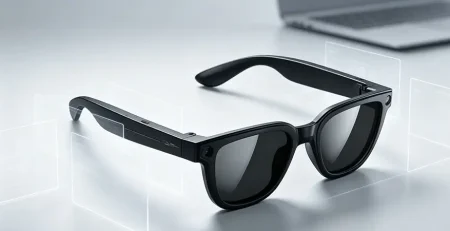
This is the biggest difference between SpeCiC and other smart glasses. SpeCiC doesn’t have a display. That means your eyes are just looking at the real world, through perfectly clear lenses. That’s the most natural and comfortable way to see. And that’s why you can read for longer without needing breaks.
Other smart glasses try to solve the reading problem by magnifying text or projecting it onto a display. But that just creates new challenges. SpeCiC solves the problem at the source: by giving you clear vision in the first place.
3. Lightweight and Comfortable (39g!)
SpeCiC glasses weigh just 39 grams. That’s lighter than most regular sunglasses. And the weight is evenly distributed, so there are no pressure points on your nose or ears.
I can wear SpeCiC glasses all day without even noticing I’m wearing them. That’s a huge difference from other smart glasses, which are often heavy and bulky. I used to take my old smart glasses off every hour to give my nose a break. With SpeCiC, I forget I’m wearing them.
The frame is also made from flexible TR90 material, which is durable and comfortable. It can bend slightly to fit your face, so it’s comfortable even if you have a wider or narrower head.
4. Long Battery Life (12 Hours!)
SpeCiC has a 280mAh battery that lasts up to 12 hours of audio playback or 6 days on standby. That means you can wear them all day without having to charge them.
Most other smart glasses have shorter battery life. That means you have to charge them in the middle of the day, which is a hassle.
With SpeCiC, you don’t have to worry about battery life. You can put them on in the morning and wear them all day, and they’ll still have battery left when you go to bed.
5. Useful Smart Features That Don’t Get in the Way
The smart features in SpeCiC are designed to be helpful, not intrusive. You can use them when you need them, and ignore them when you don’t.
The voice assistant is fast and accurate. It responds to the wake word “Hey Cyan” almost instantly. And it can do everything from reading text to translating languages to controlling your music.
The camera is also surprisingly good. It takes sharp 20MP photos and smooth 1080P videos. And since it’s hands-free, you can capture moments without having to pull out your phone.
But here’s the best part: none of these features interfere with your vision. You can use them while you’re reading, walking, or talking to someone. They’re there to enhance your experience, not to distract you from it.
If clear, precise vision correction is all we really need for comfortable reading, why are we so obsessed with adding more technology to everything? Sometimes the best innovation is perfecting the basics.
Common Myths About Smart Glasses and Reading Comfort
There are a lot of myths out there about smart glasses and reading comfort. Let’s clear some of them up.
Myth 1: All Smart Glasses Cause Discomfort
This is the biggest myth. While it’s true that display-based smart glasses can cause discomfort for some people, not all smart glasses do. Smart glasses like SpeCiC that don’t have a display can actually be more comfortable than regular glasses, because they give you more precise vision correction.
Discomfort from reading is often caused by your eyes having to work too hard to see clearly. If your glasses give you clear, precise vision, your eyes don’t have to work overtime. And that means less fatigue.
Myth 2: Reading Glasses Are Good Enough
Reading glasses are better than nothing, but they have significant limitations. As I mentioned earlier, most reading glasses are one-size-fits-all. They have the same power in both lenses, they don’t address all vision needs, and they’re not aligned to your specific measurements.
This means your eyes have to work harder to see clearly, which can lead to discomfort. And if you have different vision needs in each eye, reading glasses aren’t ideal.
SpeCiC’s custom lenses are a big step up from reading glasses. They’re made specifically for your eyes, so they give you clear vision without unnecessary strain.
Myth 3: You Don’t Need to Update Your Vision Correction Very Often
Your vision can change over time. Most people benefit from checking their vision every 1-2 years. If you’re wearing glasses that are more than 2 years old, they might not be giving you the best vision possible anymore.
Wearing vision correction that’s no longer right for you can lead to discomfort, tired eyes, and even blurred vision. That’s why it’s important to get your vision checked regularly, and to update your glasses when needed.
SpeCiC makes it easy to update your lenses. You can just order new lenses from their website, and they’ll send them to you. You don’t have to buy a whole new pair of glasses.
Myth 4: Smart Glasses Are Too Expensive
A lot of people think smart glasses are too expensive. And it’s true that some of them are. The Ray-Ban Meta costs $299. The XREAL Air 2 costs $399. The Rokid Max costs $499.
But SpeCiC starts at just $239. That’s comparable to many regular prescription glasses. And when you consider that you’re getting a pair of high-quality custom lenses plus smart features, it’s actually a great value.
Think about it: a good pair of prescription glasses from an eye care professional can cost $300 or more. SpeCiC gives you better precision, more lens options, and smart features for a similar price. That’s a compelling offer.
Simple Tips for More Comfortable Reading
While SpeCiC will make a big difference in your reading comfort, there are a few simple things you can do to make it even better.
The 20-20-20 Rule
Every 20 minutes, look at something 20 feet away for 20 seconds. Simple but surprisingly effective.
Good Lighting
Reading in dim light can make your eyes work harder. Use a desk lamp that shines light directly on the page, not harsh overhead lights.
Regular Breaks
Don't read for hours on end without a break. Every hour, take a 5-10 minute break to stand up and stretch.
Blink More Often
When focused, you blink less often. Make a conscious effort to blink to keep your eyes comfortable.
Stay Hydrated
Drinking enough water is good for your overall comfort. Aim for 8 glasses of water a day—your eyes will thank you.