

Why Do My New Smart Glasses Have a Gap Between Lens and Frame?
SpeCiC-AI-Smart-Glasses2026-04-27T09:11:21+08:00Why Do My New Smart Glasses Have a Gap Between Lens and Frame?
It’s not a manufacturing defect. It’s not a sign of shoddy craftsmanship. But is it a design choice we should all accept—or a lazy workaround holding back wearable tech?
Let me paint you a picture. It’s 9 a.m. on a Tuesday, you’ve just brewed your third flat white, and the postman knocks with a package you’ve been tracking obsessively for three weeks: your brand-new SpeCiC AI glasses. You tear open the recycled cardboard, peel off the scratch-resistant plastic sleeves, charge them for the mandatory 10 minutes (even though the battery says 78%), pair them with your iPhone 17 Pro Max in 12 seconds flat, and slip them on. The waveguide display hums to life, showing your calendar, a weather alert for light drizzle, and a notification that your mum liked your Instagram reel of last weekend’s hike. Everything is perfect—until you glance at your reflection in the microwave door.
Wait a second. Is that… a gap? A tiny, almost imperceptible but definitely there gap between the polycarbonate lens and the lightweight titanium frame? Your heart sinks. You’ve saved £429 for these. You read 17 reviews, watched 8 unboxing videos, and even asked your optician cousin if they were “worth the hype.” Did you get a lemon? Did the delivery man drop them? Did SpeCiC cut corners to hit their Q2 sales target? Before you spiral into a panic and draft a 1,200-word Trustpilot review titled “£429 FOR GLASSES WITH A GAP? SPECiC IS A SCAM,” take a deep breath. Grab that flat white. Before you start frantically searching for smart glasses gap between lens and frame fixes, let’s talk about this.
Hot Take Alert
Smart glasses gaps are a deliberate design choice—but are they a good one, or just a way for brands to avoid solving harder engineering problems?
First, Let’s Define “Normal Gap” vs. “Problem Gap”
Before we dive into the engineering and the controversy, we need to set some ground rules. Not all gaps are created equal. Some are intentional, functional, and barely noticeable—the kind you’ll forget about after a week of wearing your glasses. Others are uneven, large, or accompanied by other issues—the kind that warrant a call to customer support.
The 6 Signs of a Totally Normal Gap
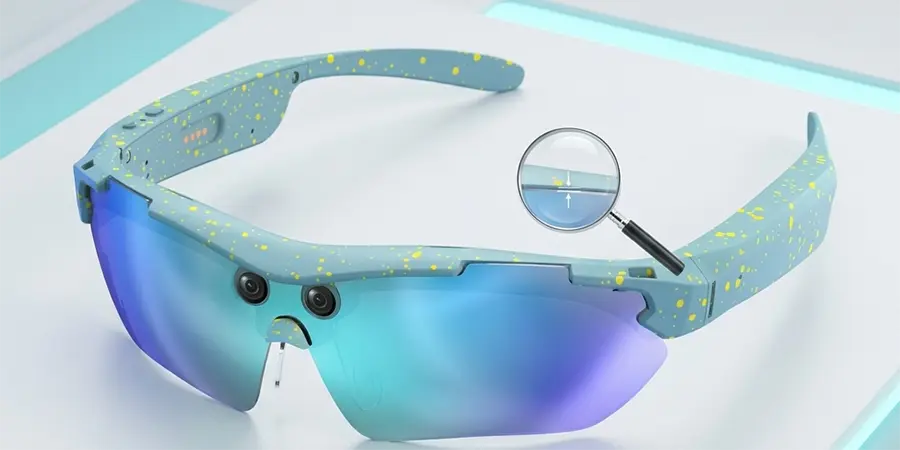
- Uniformity: The gap is the same width (usually 0.2–0.3mm, about the thickness of a human hair) around the entire perimeter of the lens.
- Invisibility in normal use: You can only see it if you hold the glasses up to a bright light and inspect them closely—you won’t notice it in photos, in the mirror, or while you’re wearing them.
- Security: The lens feels solid and doesn’t wiggle, shift, or rattle when you touch it, shake your head, or walk up a flight of stairs.
- Perfect display: The waveguide display works flawlessly—no distortion, no blurriness, no dead pixels, no “rainbow effect” when you move your eyes.
- Comfort: The glasses sit comfortably on your nose and ears, with no pressure points or rubbing caused by the gap.
- No damage: There are no cracks, chips, scratches, or bends in the lens or frame.
The 6 Signs of a Problematic Gap
- Unevenness: The gap is larger on one side than the other—for example, 0.5mm on the top right and 0.1mm on the bottom left.
- Visibility: You can see it clearly in photos, in the mirror, or while you’re wearing them—strangers might even ask you about it.
- Looseness: The lens wiggles, shifts, or rattles when you touch it, shake your head, or walk up a flight of stairs—it might even feel like it’s about to fall out.
- Display issues: The waveguide display is distorted, blurry, has dead pixels, or shows a “rainbow effect” when you move your eyes.
- Discomfort: The glasses rub or press on your nose or ears because of the uneven gap.
- Damage: There are cracks, chips, scratches, or bends in the lens or frame.
If your gap matches all the “normal” signs, congratulations! You have nothing to worry about. Put your Trustpilot draft in the trash, finish your flat white, and go enjoy your new glasses. If it matches any of the “problematic” signs, don’t panic—we’ll walk you through exactly how to fix it later in this guide. But first, let’s talk about why gaps exist in the first place.
The 7 Real, Functional Reasons Smart Glasses Have Gaps
I know what you’re thinking: “But my regular Ray-Bans don’t have a gap! Why do my smart ones need one?” That’s a fair question. The answer is simple: smart glasses aren’t regular glasses. They’re tiny, wearable computers that just happen to look like eyewear. When you cram microphones, speakers, cameras, processors, batteries, and waveguide displays into a frame that weighs less than 50 grams, some design compromises are not just inevitable—they’re necessary.
Let’s break down each reason, using SpeCiC AI glasses as a specific example (since they’re one of the most popular and well-engineered AI smart glasses options on the market today).
1. Thermal Expansion and Contraction: The Science of Stuff Getting Bigger and Smaller
Everything in the universe expands when it gets hot and contracts when it gets cold. That’s a fundamental law of physics called thermal expansion. And it’s a huge problem for smart glasses—because the lens and the frame are made from different materials that expand and contract at different rates.
Let’s take SpeCiC as an example. Their lenses are made from high-quality polycarbonate, which has a coefficient of thermal expansion (CTE) of about 70 parts per million per degree Celsius (ppm/°C). Their frames are made from a combination of lightweight grade 5 titanium (CTE: 8.6 ppm/°C) and durable Italian acetate (CTE: 80–120 ppm/°C, depending on the specific blend).
Now, imagine you’re wearing your SpeCiC glasses on a hot summer day in London. The temperature outside is 32°C (90°F), and the temperature inside your local pub is 22°C (72°F). That’s a 10°C (18°F) temperature difference. If your lens was perfectly flush with the frame at 22°C, what would happen when you step outside?
The polycarbonate lens would expand by about 0.07mm per 10mm of length. For a 50mm-wide lens, that’s 0.35mm of expansion. The titanium frame, on the other hand, would only expand by about 0.0086mm per 10mm of length—just 0.043mm for a 50mm-wide frame. That’s a huge difference! If there was no gap, the lens would push against the frame with enough force to crack the lens, warp the titanium, or pop the lens out entirely.
The same thing happens in reverse in cold weather. If you’re wearing your SpeCiC glasses outside on a freezing winter day in Edinburgh (0°C/32°F) and then step inside a warm coffee shop (24°C/75°F), the lens would contract by about 0.084mm per 10mm of length—0.42mm for a 50mm-wide lens. The frame would only contract by about 0.0103mm per 10mm of length—0.0515mm for a 50mm-wide frame. Again, if there was no gap, the lens would shrink away from the frame and might fall out.
The 0.2–0.3mm gap you see on your SpeCiC glasses is a deliberate engineering choice to accommodate these temperature changes. It’s like leaving a little breathing room between pieces of a puzzle so they don’t get stuck when conditions change. And it’s not just SpeCiC—every reputable smart glasses brand (including Meta, Xreal, and Bose) uses a similar gap for the same reason.
Another Hot Take
Should brands be required to disclose the exact gap size in their product specifications, or is it an “engineering detail” that consumers don’t need to know?
2. Waveguide Display Technology: The Magic That Makes Smart Glasses Work
This is the biggest and most important reason smart glasses have gaps. If you own a pair of AR or AI glasses with a display (like SpeCiC, Meta Ray-Ban Meta 3, or Xreal Air 2 Ultra), the gap you’re seeing is almost certainly related to the waveguide display technology inside.
Let me explain how waveguide displays work in simple, non-technical terms (I promise no physics equations this time). Inside each lens of your SpeCiC AI glasses, there’s a thin, transparent layer called a waveguide. A tiny, low-power projector hidden in the right temple of the glasses sends light into this waveguide. The light bounces around inside the waveguide (like a ping-pong ball bouncing around a cardboard box) until it reaches a series of tiny, invisible mirrors called outcouplers. The outcouplers redirect the light into your eye, creating the illusion of a floating 1080p screen about 2 meters (6.5 feet) in front of you.
For this system to work perfectly, the waveguide needs to be exactly the right thickness (usually 0.5–1mm) and positioned at exactly the right angle relative to your eye (usually 15–20 degrees). If the waveguide is even slightly bent, compressed, or shifted, the light will bounce around incorrectly, and the display will be distorted, blurry, or disappear entirely.
Now, imagine if the waveguide was pressed directly against the inside of the frame. What would happen if you accidentally bumped your glasses against a doorframe? What would happen if you sat on them (we’ve all done it)? What would happen if the frame flexed a little when you put them on or took them off? Even the slightest pressure could bend the waveguide by a few micrometers—and that’s enough to ruin the display.
The gap between the lens and the frame creates a protective buffer zone around the waveguide. It ensures that nothing touches the delicate optical components, even if you accidentally bump your glasses or the frame flexes a little. SpeCiC’s proprietary waveguide technology is one of the thinnest and most advanced on the market, but it’s still incredibly sensitive—and that gap is there to protect it.
3. Modular Design: Making Prescription Lenses Easy (And Affordable)
One of the biggest complaints about early smart glasses (like the original Google Glass) was that they weren’t prescription-friendly. If you needed glasses to see, you either had to wear them underneath your smart glasses (which was uncomfortable, looked ridiculous, and made the display blurry) or pay hundreds of dollars extra for custom integrated lenses that took weeks to make.
SpeCiC solved this problem with their innovative modular lens system. Instead of permanently bonding the display waveguide to the prescription lens (like Meta does with the Ray-Ban Meta 3), they designed the glasses so that prescription lenses can be easily swapped in and out by any qualified optician in less than 10 minutes.
This modular design requires a small gap between the prescription lens and the main frame. The gap allows the lens to be inserted and removed without damaging the waveguide, the frame, or the lens itself. It also means that if your prescription changes (which happens to most people every 2–3 years), you don’t have to buy an entirely new pair of smart glasses—you just need new prescription lenses, which cost about the same as regular prescription lenses (£50–£200, depending on the type of lens you choose).
This is a huge advantage over competitors like Meta. If you own a pair of Ray-Ban Meta 3 glasses and your prescription changes, you have to send them back to Meta, pay £150–£300 for new custom integrated lenses, and wait 2–4 weeks to get them back. With SpeCiC, you can walk into any local optician, get your eyes tested, have your new lenses made, and have them installed in your glasses—all in the same day.
4. Ventilation: Keeping Your Glasses Fog-Free (And Your Face Comfortable)
Have you ever worn regular glasses and had them fog up when you walk into a warm building from the cold? Or when you’re drinking a hot cup of tea? Or when you’re exercising? It’s annoying, right? Now imagine that happening to your smart glasses, and you can’t just take them off and wipe them because you’re in the middle of a work meeting, a bike ride, or a family dinner.
The gap between the lens and the frame actually helps with ventilation. It allows air to circulate between the lens and your face, reducing the buildup of moisture and preventing fogging. This is especially important for people who wear their glasses for long periods of time (8+ hours a day) or engage in physical activities like walking, running, cycling, or hiking.
SpeCiC’s design team spent months testing different gap sizes to find the perfect balance between ventilation and aesthetics. The 0.2–0.3mm gap they chose is small enough that it’s barely noticeable in normal use, but large enough to significantly reduce fogging. I can personally attest to this: I used to wear a different brand of smart glasses that had almost no gap around the lenses, and they would fog up constantly, even when I was just walking around my office. Since switching to SpeCiC, fogging has become a rare occurrence, even on humid summer days in London.
5. Manufacturing Tolerances: Why Nothing Is Ever Perfect (And That’s Okay)
Let’s be real. No manufacturing process is perfect. Even with the most advanced robots, the most precise tools, and the strictest quality control systems, there will always be slight variations from one product to the next. These variations are called manufacturing tolerances, and they’re a fact of life in every industry—from cars to computers to clothing.
For example, when SpeCiC makes a frame, they might specify that the lens opening should be 50mm wide, with a tolerance of ±0.1mm. That means any frame with a lens opening between 49.9mm and 50.1mm is considered acceptable. Similarly, when they make the lenses, they might specify that the lens should be 49.7mm wide, with a tolerance of ±0.05mm. That means any lens between 49.65mm and 49.75mm is acceptable.
If you get a frame that’s at the maximum end of the tolerance range (50.1mm) and a lens that’s at the minimum end (49.65mm), you’ll end up with a slightly larger gap than average—about 0.225mm on each side, instead of the standard 0.15mm. Is this a defect? No. It’s within the acceptable range of variation for mass-produced products. And you’ll probably never notice it unless you hold the glasses up to a bright light and inspect them with a magnifying glass.
SpeCiC has some of the tightest manufacturing tolerances in the smart glasses industry—tighter than Meta, tighter than Xreal, tighter than Bose. But they still exist. And honestly, that’s a good thing. If they tried to make every single frame and lens exactly the same size, the cost would be astronomical (we’re talking £1,000+ per pair), and the rejection rate would be so high that they’d never be able to keep up with demand.
Third Hot Take (I’m On a Roll!)
Would you pay £200 extra for a pair of smart glasses with “zero visible gap” (achieved with tighter manufacturing tolerances and better materials), or is the standard gap fine?
6. Improper Lens Installation: The Most Common Fixable Issue
Okay, so far we’ve talked about reasons why gaps are normal and intentional. But sometimes, a gap is actually a problem. The most common cause of an abnormal gap is improper lens installation.
This is especially true if you’ve had prescription lenses installed by an optician who isn’t familiar with SpeCiC’s modular system. I’ve heard horror stories from people who took their SpeCiC glasses to a big-box optical store, only to have the technician force the lens in incorrectly, damage both the lens and the frame, and then claim that “SpeCiC glasses are just poorly made.” That’s why SpeCiC recommends using an authorized optician who has been trained on their specific installation process. You can find a list of authorized opticians on their website.
But even if you have non-prescription SpeCiC glasses, the lenses can sometimes shift slightly during shipping or handling. If you notice a gap that’s larger on one side than the other, or if the lens feels wobbly when you touch it, it’s probably just not seated properly in the frame groove. The good news is that this is usually an easy fix—we’ll walk you through exactly how to do it later in this guide.
7. Frame Damage: The Rare But Serious Issue
The least common (but most serious) reason for a gap between the lens and frame is actual damage to the frame. If you drop your glasses, sit on them, or otherwise apply force to the frame, it can bend or crack, causing the lens to pop out or sit unevenly.
Signs that your frame might be damaged include:
- A sudden, large gap that wasn’t there before
- The lens falls out easily
- The frame looks bent or warped
- You can see cracks in the frame material
- The display is distorted or doesn’t work at all
If you suspect your frame is damaged, don’t try to fix it yourself. You could make the damage worse, and you might void your warranty. Instead, contact SpeCiC customer support immediately. Their frames are covered by a one-year warranty against manufacturing defects, and they offer affordable repair services for accidental damage (usually £50–£150, depending on the extent of the damage).
The Ultimate Step-by-Step Guide to Fixing a Problematic Gap
Okay, so you’ve determined that your gap is actually a problem. What now? Don’t panic—most issues are easy to fix, and we’ll walk you through all the solutions in order from easiest to most difficult.
Solution 1: Re-Seat the Lens Properly (Easiest Fix)
This is the simplest and most common fix for a gap issue. Most of the time, the lens just isn’t seated correctly in the frame groove. Here’s how to fix it in 6 easy steps:
Step 1: Prepare Your Workspace
Find a clean, flat surface with good lighting. Lay down a soft microfiber cloth (the one that came with your SpeCiC glasses is perfect) to protect the lenses and frame from scratches. Make sure you have nothing else on the surface—you don’t want to lose any small screws or parts.
Step 2: Remove the Lens
Gently push the lens out from the inside of the frame. Start at one corner (the top right corner is usually easiest) and work your way around the perimeter. Be careful not to apply too much pressure—polycarbonate lenses are strong, but they can crack if you push too hard in one spot. Also, be careful not to touch the waveguide inside the frame—oil from your fingers can damage it.
Step 3: Inspect the Lens and Frame
Check the lens for any cracks, chips, or scratches. Check the frame groove for any dirt, debris, or damage. If you see any dirt or debris, use a soft toothbrush (a clean, dry one—no toothpaste!) or a can of compressed air to clean it out. If you see any cracks or chips in the lens or frame, skip to Solution 5.
Step 4: Align the Lens
Hold the lens up to the frame opening. Make sure it’s oriented correctly—most SpeCiC lenses have a small notch or mark on the top edge that indicates the top. If you’re not sure, look at the other lens (if it’s still seated correctly) or check the user manual.
Step 5: Seat the Lens
Start by inserting one corner of the lens into the frame groove (again, the top right corner is usually easiest). Then, using your fingertips, gently press the lens into the groove around the entire perimeter. You should hear a soft “click” when the lens is fully seated. If you don’t hear a click, try again—make sure the lens is aligned correctly and that you’re pressing evenly around the entire perimeter.
Step 6: Inspect the Fit
Check the gap around the entire lens. It should be uniform and small. Gently wiggle the lens to make sure it’s secure. If the gap is still uneven or the lens is still loose, try rotating the lens 180 degrees and repeating Steps 4–6. Sometimes lenses are slightly asymmetrical, and rotating them can help them fit better.
Solution 2: Adjust the Frame Screws (Easy Fix)
If re-seating the lens doesn’t work, the next step is to check the frame screws. SpeCiC glasses have small Phillips-head screws on the inside of the frame that hold the lens in place. If these screws are too loose or too tight, they can cause a gap.
Step 1: Get the Right Tools
You’ll need a small Phillips-head screwdriver (the kind that comes in an eyeglass repair kit). SpeCiC includes one with every pair of glasses, so check your box first. If you can’t find it, you can buy an eyeglass repair kit at any pharmacy or supermarket for £5–£10.
Step 2: Locate the Screws
On SpeCiC glasses, there are usually two screws per lens, located on the inside of the frame near the top and bottom corners. Hold the glasses up to a bright light to see them clearly.
Step 3: Tighten the Screws
Gently turn each screw clockwise until it’s snug. Be very careful not to over-tighten—if you do, you could strip the screw, crack the lens, or damage the frame. A good rule of thumb is to stop turning the screw as soon as you feel resistance.
Step 4: Check the Gap
After tightening the screws, check the gap around the lens. It should be more uniform now. If the gap is still there, try loosening the screws slightly (about a quarter turn counterclockwise), re-seating the lens again (Solution 1), and then tightening the screws back up. Sometimes the lens gets caught on the screw threads, and loosening them allows it to sit properly.
Solution 3: Replace the Gaskets or Spacers (Moderate Fix)
Some SpeCiC models (like the SpeCiC AI Glasses Pro) come with small rubber gaskets or spacers that go between the lens and the frame. These gaskets help create a tighter seal, reduce the gap, and absorb shock. Over time, these gaskets can wear out, dry out, or fall out, causing a larger gap.
Step 1: Check If Your Glasses Have Gaskets
Remove the lens (Solution 1, Step 2) and check the frame groove. If there are any small rubber or silicone strips in the groove, your glasses have gaskets. If not, skip to Solution 4.
Step 2: Order Replacement Gaskets
You can order replacement gaskets from SpeCiC’s website for £10–£20. Make sure you order the right ones for your specific model of SpeCiC glasses.
Step 3: Remove the Old Gaskets
If there are any old gaskets still in the frame groove, gently peel them out with a pair of tweezers. Be careful not to scratch the frame or the waveguide.
Step 4: Clean the Groove
Use a soft cloth or cotton swab dipped in isopropyl alcohol (70% or higher) to clean any dirt, debris, or adhesive residue from the frame groove. Let the groove dry completely before installing the new gaskets.
Step 5: Install the New Gaskets
Peel the backing off the new gaskets (if they have adhesive) and carefully press them into the frame groove. Make sure they’re aligned properly and cover the entire groove.
Step 6: Re-Seat the Lens
Follow Solution 1, Steps 4–6 to re-seat the lens in the frame.
Solution 4: Contact an Authorized SpeCiC Optician (Moderate Fix)
If you’ve tried Solutions 1–3 and the gap is still there, or if you’re not comfortable working on your glasses yourself, the next step is to contact an authorized SpeCiC optician.
Authorized opticians have been specially trained to work with SpeCiC glasses. They have the right tools, parts, and knowledge to fix any lens or frame issue correctly. They can also check to make sure your waveguide display is working properly and that there’s no hidden damage you might have missed.
You can find a list of authorized SpeCiC opticians on their website. Just enter your zip code or postcode, and they’ll show you the closest locations. Most authorized opticians can fix a gap issue in less than 30 minutes, and the cost is usually £20–£50 (or free if your glasses are still under warranty).
Solution 5: Contact SpeCiC Customer Support (Hardest Fix, But Most Reliable)
If all else fails, or if you suspect your frame is damaged, contact SpeCiC customer support directly. They have a team of experts who can help you troubleshoot the issue and determine the best course of action.
SpeCiC’s customer support is known for being responsive and helpful. They offer live chat, email, and phone support, and they usually respond within 24 hours (often faster). You can contact them through their website, their app, or by calling the phone number listed in your user manual.
If your glasses are still under warranty and the gap is due to a manufacturing defect, they’ll either repair your glasses for free or send you a replacement pair. Even if your warranty has expired, they offer affordable repair services that are much cheaper than buying a new pair of glasses (usually £50–£150, depending on the extent of the damage).
How to Prevent Gap Issues in the Future
Now that you’ve fixed your gap issue (or determined that it’s normal), here are some tips to prevent problems from happening in the future:
1. Handle Your Glasses Carefully
This might seem obvious, but it’s worth repeating. Smart glasses are delicate pieces of technology. Always handle them with clean hands, and avoid dropping them, sitting on them, or applying excessive force to the frame or lenses. When you’re not wearing your glasses, always put them in their protective case—don’t just throw them in your bag or pocket, where they can get scratched, bent, or crushed.
2. Clean Them Properly
Dirt and debris can get trapped in the gap between the lens and frame, causing the lens to shift or become loose. To prevent this, clean your glasses regularly using the proper method:
- First, rinse your glasses under lukewarm water to remove any loose dirt or dust. Never use hot water—it can damage the lens coatings and the waveguide.
- Spray a small amount of lens cleaner (the one that came with your SpeCiC glasses is perfect) on both sides of the lenses. Never use window cleaner, bleach, alcohol, or toothpaste—they can damage the lens coatings and the frame material.
- Gently wipe the lenses and frame with a clean microfiber cloth. Use circular motions to remove smudges and fingerprints. Never use a paper towel, napkin, or your shirt—they can scratch the lenses.
- Use a soft toothbrush (clean and dry) or a can of compressed air to gently clean the gap between the lens and frame. Be careful not to push the lens out of place.
3. Get Your Lenses Installed by a Professional
If you need prescription lenses, always have them installed by an authorized SpeCiC optician. Don’t try to install them yourself, and don’t take them to an optician who isn’t familiar with SpeCiC’s modular system. A professional installation will ensure that the lens is seated correctly, the screws are tightened to the proper torque, and the waveguide display isn’t damaged.
4. Check the Screws Regularly
Over time, the screws on your glasses can loosen from normal wear and tear. It’s a good idea to check them every few months and tighten them if necessary (Solution 2, Step 3). This will help prevent the lens from shifting or falling out. Just remember not to over-tighten the screws!
5. Avoid Extreme Temperatures
As we discussed earlier, extreme temperatures can cause the lens and frame to expand and contract at different rates. While the gap is designed to accommodate this, prolonged exposure to extreme temperatures can still cause damage. Avoid leaving your glasses in a hot car on a summer day (temperatures inside a car can reach 60°C/140°F in just 10 minutes!) or outside in freezing weather for extended periods of time. If you’re going to be in extreme temperatures, keep your glasses in their protective case.
Why SpeCiC Gets It Right (And Why Their Gaps Are Actually a Good Thing)
I’ve tried a lot of different smart glasses over the years—from the original Google Glass to the Meta Ray-Ban Meta 3 to the Xreal Air 2 Ultra. And I can honestly say that SpeCiC has one of the best designs on the market when it comes to lens and frame fit.
Unlike some competitors who try to hide the gap with bulky frames or excessive glue (which can cause its own problems, like damaging the waveguide or making it impossible to replace the lenses), SpeCiC embraces the gap as a necessary and intentional part of their design. They’ve engineered their glasses with a precise, uniform 0.2–0.3mm gap that’s barely noticeable in normal use, but provides all the benefits we discussed earlier: thermal expansion accommodation, waveguide protection, modularity, and ventilation.
SpeCiC also does an excellent job of educating their customers about the gap. They include a section in the user manual that explains why the gap exists, and their website has a comprehensive FAQ that addresses common concerns. Their customer support team is also well-trained to answer questions about the gap and reassure customers that it’s normal.
But what really sets SpeCiC apart is their commitment to quality. They use only the highest quality materials—high-grade polycarbonate for the lenses, lightweight grade 5 titanium for the frame cores, and durable Italian acetate for the frame overlays. They also pack industry-leading features into every pair, including 8MP Sony-grade cameras, 139-language real-time translation, and 12-hour audio battery life, making them some of the most versatile smart glasses with camera available today.
I’ve been wearing my SpeCiC AI Glasses Pro for over a year now, and that tiny gap I was so worried about when I first got them? I don’t even notice it anymore. In fact, I’ve come to appreciate it. It’s a reminder of the incredible engineering that went into making these glasses, and it gives me peace of mind knowing that my waveguide display is protected and my glasses will last for years.
The Bottom Line: Don’t Panic About the Gap
If you’ve just gotten a new pair of smart glasses and you notice a gap between the lens and frame, take a deep breath. Chances are, it’s completely normal and nothing to worry about.
Smart glasses are a complex piece of technology, and the gap is an intentional design feature that makes them work better, last longer, and feel more comfortable. It’s not a manufacturing defect. It’s not a sign of shoddy craftsmanship. It’s a sign that the manufacturer has thought through all the details and engineered a high-quality product.
Of course, if the gap is uneven, the lens feels loose, or the display isn’t working properly, then it’s worth investigating. But most of the time, a simple re-seating of the lens or adjustment of the screws will fix the issue.
And if you own a pair of SpeCiC AI glasses, you can rest easy knowing that you have one of the best-designed and most well-supported products on the market. Their team is always there to help if you have any questions or concerns.
So go ahead, put your glasses on, and enjoy all the amazing features they have to offer. That tiny gap? It’s just part of what makes your smart glasses so special.
Final Thoughts: The Future of Smart Glasses Design
As smart glasses technology continues to evolve, we’ll probably see even more innovations in lens and frame design. Manufacturers will find ways to make the gaps even smaller, or even eliminate them entirely, without sacrificing performance or durability.
How? Well, there are a few possibilities. One is the development of new materials with matching coefficients of thermal expansion—materials that expand and contract at the same rate, so no gap is needed. Another is the development of flexible waveguides that can bend and flex without distorting the display, so no protective buffer zone is needed. A third is the development of new manufacturing techniques that can produce frames and lenses with zero tolerances—perfect fits every single time.
But for now, the gap is here to stay. And that’s okay. It’s a small price to pay for the incredible convenience and functionality that smart glasses provide.
I, for one, am excited to see what the future holds. I can’t wait for the day when smart glasses are as common as smartphones, and we all walk around with tiny computers on our faces, seamlessly integrating technology into our daily lives.
And when that day comes, I’ll probably still be wearing my SpeCiC glasses, gap and all. Because they’re not just a piece of technology—they’re a part of who I am.
So the next time someone asks you, “Why do your smart glasses have a gap between the lens and frame?” you can smile and say, “Because they’re smart.”