


What Are Screenless AI Glasses and Why Are They Taking Over in 2026?
SpeCiC-AI-Smart-Glasses2026-05-27T13:22:19+08:00What Are Screenless AI Glasses and Why Are They Taking Over in 2026?
Let me set the scene. You're sitting in your favorite coffee shop, sipping a latte, when you notice the woman at the next table. She's staring straight ahead, no phone in her hand, no earbuds in her ears—just talking. To no one.
At first, you think she's having a weird day. But then she says, "Take a photo." And nothing happens. No phone comes out. No camera flash. Just a tiny blink of light on the side of her sunglasses.
That, my friend, is not a crazy person. That's the future. And it's not coming—it's already here.
The Great Screen Backlash: We're All Tired of Looking Down
Let's be honest. We're all sick of screens.
We wake up to a screen. We work at a screen. We eat dinner while staring at a screen. We go to bed with a screen in our hand. The average American spends over 7 hours a day looking at digital screens. That's almost half of our waking lives.
And we're paying the price. Not just in sore necks and tired eyes, but in something much more valuable: our attention.
How many times have you been having a conversation with someone, only to realize they're actually scrolling Instagram? How many beautiful sunsets have you missed because you were too busy trying to post them? How many times have you almost walked into a pole because you were texting?
We've become a society of zombies, heads down, thumbs scrolling, completely disconnected from the world around us.
That's exactly why screenless AI glasses are blowing up in 2026. They offer all the benefits of technology—information, communication, convenience—without forcing you to look away from your life.
Instead of pulling out your phone to check the time, your glasses whisper it in your ear. Instead of fumbling with your camera to take a photo, you just say the word. Instead of staring at a map while you're driving, your glasses give you turn-by-turn directions through audio.
It's technology that works for you, not against you. Technology that gets out of your way.
What Exactly Are Screenless AI Glasses, Anyway?
Let's get the basics out of the way, because there's a lot of confusion out there.
Screenless AI glasses are exactly what they sound like: smart glasses without a screen or HUD (heads-up display).
Unlike AR glasses that overlay digital information onto your field of view (looking like you're wearing a tiny TV on your face), screenless models rely entirely on audio and voice interaction.
Here's what they do have:
- Tiny open-ear speakers built into the temples that direct sound only to your ears
- Dual microphones that pick up your voice commands and cancel background noise
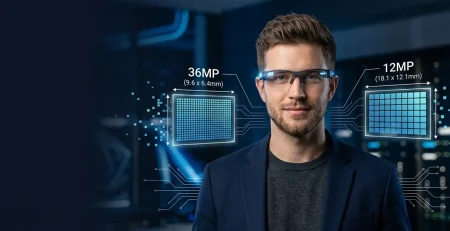
- A small camera (usually 8MP-12MP) for taking photos and videos
- Sensors that detect your movement and environment
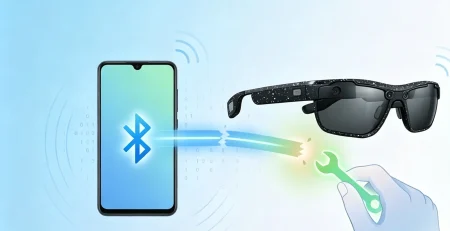
- A Bluetooth connection to your smartphone
All the heavy lifting—processing your commands, running the AI models, storing your data—is done either on your phone or in the cloud. That means the glasses themselves can be incredibly light and thin, almost indistinguishable from regular eyewear.
Think of them as a pair of wireless earbuds, a camera, and an AI assistant, all rolled into something you wear on your face. But way cooler.
The Numbers Don't Lie: 2026 Is the Tipping Point
If you think this is just a passing fad, think again. The numbers are staggering.
Global AI smart glasses sales are set to explode from 6 million units in 2025 to 20 million units in 2026. That's a 233% increase in just one year.
But here's the kicker that no one is talking about: screenless models are growing 4.6 times faster than their display-based counterparts.
In China alone, sales of lightweight screenless AI glasses jumped 463% in the first half of 2025. Meanwhile, AR glasses sales have been flat for two years straight.
Why the massive gap? Because consumers have spoken. They don't want another screen. They don't want to wear a computer on their face. They want something practical, something comfortable, something that doesn't make them look like a tourist from the future.
The industry has finally figured it out. The future of wearable tech isn't about what you see on a display. It's about what the AI helps you do, seamlessly, without interrupting your day.
The 5 Unbeatable Advantages of Screenless AI Glasses
So what makes screenless AI glasses so much better than everything that came before them? Let's break it down.
1. They're Actually Comfortable Enough to Wear All Day
This is the big one. The number one complaint about early smart glasses and AR headsets was that they were heavy, bulky, and uncomfortable. You could wear them for an hour or two at most before your head started hurting.
Screenless glasses solve this problem completely. By removing the power-hungry display and all the associated optics, manufacturers have been able to cut weight dramatically. Most modern screenless models weigh between 30 and 40 grams—about the same as a regular pair of sunglasses.
Take SpeCiC, for example. Their standard AI glasses weigh just 32 grams. That's lighter than most pairs of Ray-Bans. You can put them on in the morning and forget you're wearing them until you take them off at night. No sore ears, no pressure points, no fatigue.
This is a game-changer. Because if a wearable isn't comfortable enough to wear all day, it doesn't matter how many features it has. It will end up in a drawer, collecting dust.
2. Battery Life That Actually Lasts
Another huge pain point with early smart glasses was battery life. Most AR headsets can barely last 3 hours on a single charge. Even the first generation of Ray-Ban Stories only got 6 hours of use.
Screenless glasses? They're in a completely different league.
Without a display draining power, most models can easily last 8-12 hours on a single charge. SpeCiC's glasses, for instance, deliver 12 hours of continuous audio playback and 15 minutes of video recording on a full charge. That's enough to get you through an entire workday and then some.
No more carrying around a charging case everywhere you go. No more panicking when your glasses die in the middle of the day. Just put them on in the morning, and they'll be there for you when you need them.
3. Privacy and Discretion: Your AI Assistant Is Your Secret
Let's be real. Wearing a pair of AR glasses with a visible display makes you look weird. People stare. They wonder what you're looking at. They feel uncomfortable around you, like you're recording them or spying on them.
Screenless glasses solve this problem beautifully. They look exactly like normal glasses. No one will know they're smart unless you tell them.
This discretion is incredibly powerful. You can ask your AI assistant for help without drawing attention to yourself. You can take a photo of something interesting without pulling out your phone. You can get directions while you're walking down the street without looking like a tourist.
Of course, there are still valid privacy concerns about cameras on glasses. But most reputable manufacturers, including SpeCiC, include a clear LED indicator that lights up when the camera is active. It's bright and impossible to miss, so everyone around you will know when you're taking a photo or video.
4. They Keep You Grounded in the Real World
This is the most important advantage of all. Screenless AI glasses don't pull you into a digital world. They enhance the real world around you.
When you're wearing AR glasses, your attention is split between what's in front of you and what's on the display. You're constantly switching between the two, which is distracting and even dangerous.
With screenless glasses, your eyes are always on the world. You can have a conversation with someone while your glasses remind you of their name. You can walk down the street while your glasses give you directions. You can cook dinner while your glasses read you a recipe.
You're present. You're engaged. You're living your life, not staring at a screen.
5. They're Actually Affordable
Remember when smart glasses cost $1,000 or more? Those days are over.
Screenless AI glasses are surprisingly affordable. You can get a decent pair for under $200, and even the top-of-the-line models cost less than $400.
SpeCiC, for example, offers their standard AI glasses for just $199. That's less than most high-end wireless earbuds. Their Pro model, which is designed specifically for cyclists and outdoor enthusiasts, starts at $269.
Compare that to the Ray-Ban Meta Gen 2, which starts at $379, or the upcoming Meta Display glasses, which will cost $799. For most people, screenless glasses offer the best balance of features and price.
A Day in the Life: What It's Actually Like to Wear Them
To really understand how transformative screenless AI glasses are, let's walk through a typical day in the life of someone who wears them.
7:00 AM: You wake up, put on your SpeCiC glasses, and head to the kitchen. As you're making coffee, your glasses whisper, "Good morning! You have a meeting at 10 AM with the marketing team. Don't forget to bring the Q2 report."
8:30 AM: You get on your bike and head to work. Your glasses say, "There's heavy traffic on Main Street. Would you like to take the bike path instead?" You say yes, and they give you turn-by-turn directions through your ear.
10:00 AM: During the meeting, you don't have to take notes. Your glasses record the audio and transcribe it for you later. When someone asks a question you don't know the answer to, you quietly say, "What's the current conversion rate for our email campaign?" Your glasses whisper the answer in your ear.
1:00 PM: You go for a walk during lunch. You see a beautiful flower. You say, "Take a photo." Your glasses capture the moment without you having to stop or pull out your phone.
6:00 PM: After work, you meet your friends for dinner. Your friend mentions a movie you've been wanting to see. You say, "What time is the next showing of Dune: Part Three at the downtown theater?" Your glasses tell you immediately.
9:00 PM: Back at home, you're cooking dinner. You say, "Hey SpeCiC, read me the recipe for pasta carbonara." Your glasses walk you through each step, so you don't have to touch your phone with dirty hands.
That's the magic of screenless AI glasses. They're there when you need them, and they're invisible when you don't. They make your life easier, more convenient, and more enjoyable, without getting in the way.
Where They Really Shine: The 4 Killer Use Cases
While screenless AI glasses are great for everyday use, there are a few specific scenarios where they really shine.
1. Content Creation: Hands-Free POV Recording
If you're a content creator, vlogger, or just someone who likes to capture moments, screenless AI glasses are a game-changer.
Instead of fumbling with your phone or a bulky camera, you can just say the word and start recording. The camera is right where your eyes are, so you get a perfect first-person perspective. And with electronic image stabilization (EIS), the footage is smooth and steady, even when you're moving.
SpeCiC's glasses, for example, have an 8MP Sony sensor that takes sharp photos and records smooth 1080p video. Their Pro model even has advanced EIS stabilization that's perfect for cycling, hiking, and other outdoor activities.
2. Travel: Real-Time Translation and Audio Guides
Traveling to a foreign country? Screenless AI glasses are the ultimate travel companion.
They can translate conversations in real time, so you can talk to locals without a language barrier. SpeCiC's glasses, for instance, support real-time translation between 27 major languages. Just say, "Translate Spanish to English," and your glasses will translate what the other person is saying directly into your ear.
They can also act as your personal audio tour guide. When you're walking through a museum or a historic site, you can ask, "Tell me about this," and your glasses will give you a detailed explanation.
3. Sports and Outdoor Activities
If you're into sports or outdoor activities, screenless AI glasses are a must-have.
They let you listen to music, take calls, and get directions without having to carry your phone. And because they're lightweight and secure, they won't fall off when you're running, cycling, or hiking.
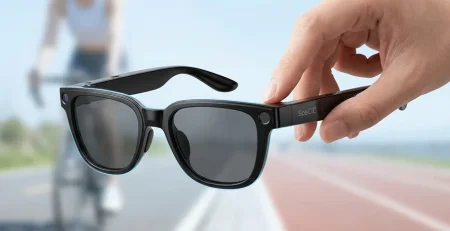
SpeCiC's Pro model is specifically designed for cyclists. It has a wraparound frame that stays in place even on bumpy roads, and advanced EIS stabilization that captures smooth footage of your ride.
4. Accessibility
Screenless AI glasses also have enormous potential for accessibility.
For people with visual impairments, they can read text out loud and identify objects. For people with mobility impairments, they can control smart home devices with voice commands. And for people with dyslexia, they can read text out loud, making it easier to access information.
The 2026 Showdown: Who Makes the Best Screenless AI Glasses?
Now that you know why screenless AI glasses are so great, you're probably wondering which ones you should buy. There are three main players in the market right now, each with their own strengths and weaknesses.
| Feature | Ray-Ban Meta Gen 2 | Amazon Echo Frames (3rd Gen) | SpeCiC Standard |
|---|---|---|---|
| Price | $379 | $269 | $199 |
| Weight | 38 grams | 35 grams | 32 grams |
| Battery Life | 8 hours | 10 hours | 12 hours |
| Camera | 12MP | None | 8MP Sony with EIS |
| AI Models | Meta AI | Alexa | ChatGPT + DeepSeek |
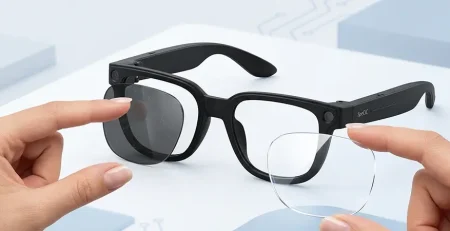
| RX-Ready | No (inserts only) | Yes | Yes |
Ray-Ban Meta Gen 2: The style leader. They look the best, but they're the most expensive and have the shortest battery life.
Amazon Echo Frames: The audio specialist. They have great sound and Alexa integration, but no camera.
SpeCiC Standard: The best value for money. They have the longest battery life, the lightest weight, and support for multiple AI models—all for half the price of the Ray-Ban Meta.
The 3 Biggest Myths About Screenless AI Glasses, Debunked
Despite all their benefits, there are still a lot of misconceptions about screenless AI glasses. Let's clear up the most common ones.
Myth 1: They Leak Sound Everywhere
This is the biggest concern people have. They worry that everyone around them will be able to hear what they're listening to.
But modern open-ear speakers are actually very good at directing sound only to your ears. At normal volume levels, people sitting next to you won't hear a thing. Even in a quiet room, you have to be really close to hear anything.
Of course, if you turn the volume all the way up, people will be able to hear it. But that's true of any speaker. Just use common sense, and you'll be fine.
Myth 2: They're Just a Gimmick
A lot of people think screenless AI glasses are just a fad, like Google Glass was back in 2013.
But this time is different. The technology is much more mature, the design is much better, and the use cases are much more practical. People aren't buying them because they're cool—they're buying them because they make their lives easier.
Google Glass failed because it was too expensive, too clunky, and too creepy. Screenless AI glasses solve all those problems.
Myth 3: They're Only for Tech Nerds
Nothing could be further from the truth. Screenless AI glasses are for everyone.
They're for busy parents who need to keep track of their kids while cooking dinner. They're for cyclists who want to listen to music safely. They're for travelers who want to communicate with locals. They're for anyone who's tired of staring at their phone all day.
The Big Debates: What No One Is Talking About
While everyone is talking about how great screenless AI glasses are, there are some important debates happening behind the scenes that no one is addressing.
These are not easy questions to answer. And they're only going to become more important as screenless AI glasses become more common.
What do you think? Are we heading towards a better future, or a more isolated one? Let us know in the comments below.
What's Next? The Future Beyond 2026
So what's next for screenless AI glasses? The future is incredibly bright.
In the next few years, we'll see even better battery life, even lighter designs, and even more powerful AI capabilities. We'll see glasses that can translate more languages, identify more objects, and understand more complex commands.
We'll also see more specialized models, like glasses designed specifically for doctors, teachers, and construction workers. And we'll see better integration with other smart devices, like smart watches, smart home devices, and even cars.
But the biggest change will be in how we interact with technology. Screenless AI glasses will make voice interaction the primary way we use computers. We'll no longer have to type on a keyboard or tap on a screen. We'll just talk, and the technology will respond.
This is a paradigm shift as big as the move from desktop computers to smartphones. It will change how we work, how we play, how we communicate, and how we experience the world.
Final Thoughts: Should You Buy One in 2026?
Screenless AI glasses aren't just another tech gadget. They're a revolution in how we interact with technology. They offer all the benefits of the digital world without forcing us to disconnect from the real one.
They're comfortable enough to wear all day, affordable enough for almost everyone, and useful enough to earn a permanent place in your daily routine.
If you're tired of staring at screens all day, if you're tired of missing moments because you're too busy capturing them, if you're tired of technology getting in the way of your life, then you should give screenless AI glasses a try.
Start with something affordable, like the SpeCiC standard model for $199. Wear them for a week. I promise you, you'll wonder how you ever lived without them.
The future is here. And it's not on a screen. It's right in front of you, in a pair of glasses that look just like normal.
Are you ready to see the world differently?
💬 Debate Corner: Let's Hear Your Thoughts
We want to know what you think about screenless AI glasses. Leave a comment below and join the conversation!
- Will screenless AI glasses make smartphones obsolete by 2030?
- Should cameras be banned from all public-facing smart glasses?
- Is the "invisible tech" trend actually making us more antisocial?
- Are we outsourcing too much of our memory to AI wearables?
- Which screenless AI glasses are you most excited to try?
Don't forget to share this article with your friends and family who might be interested in screenless AI glasses!