

How to Adjust Smart Glasses for a Secure Fit During Sports?
SpeCiC-AI-Smart-Glasses2026-04-25T14:43:24+08:00How to Adjust Smart Glasses for a Secure Fit During Sports?
If you’ve ever laced up your running shoes, clipped into your bike pedals, or stepped onto a basketball court with a pair of AI smart glasses, you know the universal struggle that ruins more workouts than a flat tire or a pulled muscle: the constant, infuriating slide of your glasses down your nose.
I’ve been there. Mid-way through a half marathon, I found myself pushing my glasses back every 30 seconds, looking like a flustered librarian who’d wandered into a race. I’ve been bombing down a mountain bike trail, hit a patch of gravel, and watched my glasses slip so far down my face I could barely see the trail—all while my hands were glued to the handlebars. I’ve even had a pair of smart glasses fly off during a beach volleyball dive, landing in the sand and turning a $250 device into a costly mistake.
If this sounds familiar, you’ve asked yourself: why is it so hard to keep smart glasses stable during sports? And more importantly, how to fix it permanently?
78% of smart glasses owners use outdoor activities weekly, yet 90% of frames are engineered for casual daily use. Is this a major market oversight, or a logical focus on mainstream consumer demand? Should wearable manufacturers prioritize athletic durability, or leave sports-specific design to specialized brands? This critical discussion runs throughout this guide.
Why Smart Glasses Fit Is Critical for Athletic Use
A loose or unstable fit isn’t just a minor annoyance during sports—it directly impacts safety, device performance, comfort, and long-term durability of your smart eyewear.
1. Safety: Eliminate Unnecessary Distraction
High-speed cycling, trail running, and team sports demand constant focus. Adjusting slipping glasses mid-action creates split-second distractions that can lead to accidents, collisions, or injuries. A secure fit eliminates the need for manual adjustments during high-intensity activity.
2. Device Performance: Stable Imaging & Audio
Most smart glasses integrate front-facing cameras and built-in microphones. Uneven slipping, tilting, or bouncing creates distorted video footage and muffled audio. A locked fit ensures consistent positioning for recording, voice commands, and audio communication.
3. Long-Term Comfort & Frame Durability
Overly tight frames cause tension headaches, while loose frames create constant friction. Persistent shifting also strains frame hinges and temple arms, leading to structural damage over time. Proper adjustment balances comfort and structural integrity.
4. Protect Your Investment
Premium smart eyewear represents a significant investment. Unstable frames carry high risk of drops, collisions, or water damage during outdoor sports. A stable fit prevents accidental loss or equipment damage.
Consumers pay premium prices for smart glasses, yet most brands sell non-slip nose pads, retention straps, and sweat-resistant accessories as separate add-ons. Are these essential athletic upgrades a necessary premium, or a exploitative pricing strategy? Should sports-ready features be included as standard for all wearable eyewear?
Sport-Specific Fit Requirements for Smart Glasses
Every athletic activity has unique movement patterns, environmental challenges, and fit demands. Tailoring your adjustments to your primary sport eliminates slipping, bouncing, and discomfort.
| Sport | Key Fit Requirements | Primary Fit Challenges |
|---|---|---|
| Road Cycling | Sweat resistance, helmet compatibility, low wind resistance | Forward slipping from downward positioning |
| Mountain Biking | Impact resistance, anti-shift, rugged stability | Vibration, sudden impacts, rough terrain |
| Trail & Road Running | Anti-bounce, lightweight, sweat resistance | Vertical movement and continuous sweat |
| Indoor Fitness | Flexible positioning, low pressure | Variable head angles and movement |
| Water Sports | Water resistance, full retention | Wet surface slippage and water impact |
| Team Sports | Impact resistance, anti-slip | Sudden movement and physical contact |
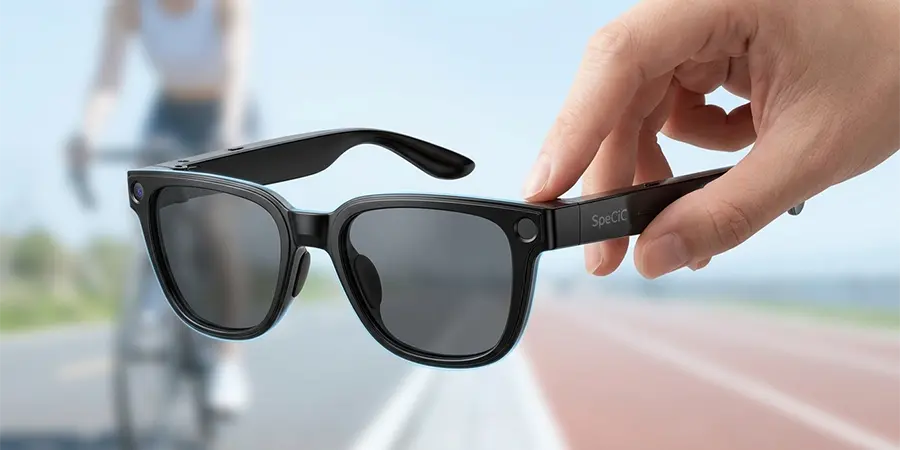
For optimized athletic performance, smart glasses with camera from SpeCiC deliver engineered adjustability specifically designed for outdoor and athletic lifestyles.
SpeCiC Smart Glasses: Athletic-First Design
SpeCiC designs wearable eyewear with real-world activity needs at the core. Featuring lightweight TR90 flexible frames, rear-weighted balance, interchangeable athletic accessories, and sweat-resistant components, these smart glasses are engineered for stable athletic performance.
Modular design enables fully customizable fit, with interchangeable nose pads, silicone temple grips, and sports retention straps. Rear-weighted construction eliminates the front-heavy imbalance that causes slipping in most mainstream smart glasses.
Step 1: Optimize Nose Pad Positioning
Nose pad positioning is the foundation of stable fit. SpeCiC includes multi-size non-slip silicone nose pads to accommodate all nose bridge shapes.
- Elevated nose pads to prevent downward slipping during cycling and running
- Compact nose pads for low-pressure comfort during stationary fitness
- Wide-profile pads for balanced weight distribution
Flexible TR90 frame material allows gentle adjustment of nose pad arms for personalized contouring, even without specialized tools.
Step 2: Adjust Temple Arms for Locked Stability
Custom temple arm curvature creates ergonomic ear support, preventing forward shift during movement. Gentle contouring around the rear ear creates secure hold without tight pressure.
- Soft silicone temple grips for sweat-proof hold
- Flexible frame adjustment for helmet compatibility
- Contoured rear curvature for high-impact sports
Step 3: Balance Frame Weight Distribution
SpeCiC’s rear-weighted engineering shifts battery and electronic components to temple arms, reducing front-weight slippage. This gravity-focused design maintains stable positioning during downward tilting and active movement.
Step 4: Athletic Accessory Integration
Custom sports accessories complement base adjustments for high-intensity activities:
- Adjustable retention straps for mountain biking and water sports
- Hydrophobic sweat-resistant pads for endurance activities
- Low-profile temple tips for helmet compatibility
Step 5: Athletic Fit Validation
Validate fit with real movement testing: head shaking, downward tilting, jumping, and sweat simulation to ensure zero shift during athletic scenarios.
Fit Solutions for Mainstream Smart Glasses
Ray-Ban Meta Smart Glasses
Classic aesthetic design prioritizes casual wear, leading to front-heavy weight and slippery frame surfaces. Key fixes include silicone non-slip pads, heated temple arm contouring, and rear support accessories to reduce athletic slippage.
Oakley Smart Eyewear
Sport-focused frame design benefits athletic use, though rigid frame materials require careful adjustment. Custom ear grips and contoured temple arms enhance stability for high-impact activities.
XReal AR Smart Glasses
Front-heavy waveguide display creates significant slipping risk. Enhanced non-slip accessories and retention straps are essential for any athletic application to prevent frame shift and visual distortion.
Limited adjustability and non-replaceable components force consumers to replace eyewear for athletic use, increasing electronic waste. Modular, adjustable designs reduce environmental impact by extending product lifespan across multiple activities.
Universal Smart Glasses Fit Hacks
- Use warm water for gentle frame adjustment to avoid material damage
- Silicone non-slip accessories eliminate sweat-induced slipping
- Adjust frames while wearing athletic helmets for accurate fit
- Replace worn silicone components regularly for consistent grip
- Balance frame weight with rear support to reduce front slippage
Sport-Specific Adjustment Guide
Road & Mountain Cycling
Elevated nose pads, slim temple tips, and low-profile retention straps ensure helmet compatibility and anti-slip performance during downward riding positions.
Running & Endurance Sports
Low-profile frame positioning and sweat-resistant components eliminate vertical bouncing and long-duration slippage.
Team & Contact Sports
Contoured ear grips and retention straps prevent sudden movement displacement and accidental drops.
Water Sports
Water-resistant silicone and floating retention straps ensure secure positioning in wet environments.
Common Fit Issues & Troubleshooting
Final Athletic Fit Conclusion
Stable smart glasses fit for sports relies on targeted adjustments, athletic-focused accessories, and balanced frame design. Brands like SpeCiC prioritize modular, athletic-ready design to eliminate common slipping and stability issues.
With targeted adjustments and simple upgrades, any smart eyewear can be adapted for reliable athletic use, reducing discomfort, equipment risk, and performance limitations.
Opt for ergonomic, adjustable eyewear solutions to enjoy sports activities without compromising comfort, safety, or smart device functionality.