

How does AI work on smart glasses?
SpeCiC-AI-Smart-Glasses2026-05-31T22:13:57+08:00How Does AI Work on Smart Glasses?
Let me tell you something that blew my mind the first time I used my Specic glasses. I was in a tiny restaurant in Tokyo, staring at a menu written entirely in Japanese. I didn't speak a word of the language, and Google Translate was being useless. Then I remembered: I had AI on my face. I just said "Hey Cyan, translate this menu." A few seconds later, my glasses started reading the entire menu to me in perfect English. It was like magic. But here's the thing: it's not magic. It's AI. And in this article, I'm going to break down exactly how that AI works, step by step, without all the confusing tech jargon.
🔥 SUMMER SALE: Get 10% OFF all Specic glasses with code SPECICGLASSES - Shop Now! 🔥
AI on Glasses vs AI on Your Phone: It's Not the Same Thing
I know what you're thinking: "AI on glasses? That's just ChatGPT on my face, right?" Wrong. So wrong. The AI that runs on your smart glasses is fundamentally different from the AI that runs on your phone or your computer. And that difference is what makes smart glasses so special.
Let's start with the obvious: size. Your phone has a big, powerful processor and a huge battery. Your glasses have neither. They have to fit a computer into a frame that weighs less than 40 grams. That means every component has to be tiny, and every calculation has to be as efficient as possible.
Then there's the use case. When you use AI on your phone, you're usually sitting down, looking at a screen, and giving it your full attention. When you use AI on your glasses, you're usually walking around, doing something else, and you need information instantly, without having to stop what you're doing.
And finally, the output. Your phone uses a screen to show you information. Your glasses use audio. That changes everything. The AI has to be able to deliver information in a way that's concise, clear, and doesn't distract you from what you're doing.
All of these constraints mean that the AI in smart glasses has to be smarter, faster, and more efficient than the AI in your phone. It has to know what information you need before you even ask for it, and it has to deliver it in the least intrusive way possible.
Controversial Question #1: Is AI on glasses actually more useful than AI on your phone?
We've had AI on our phones for years with Siri and Google Assistant, but most of us rarely use them. Is AI on glasses different enough to change that? Or is it just another gimmick that will fade away? I used to be a skeptic, but after three months of using Specic glasses every day, I'm convinced it's a game-changer.
Controversial Question #2: Should we be worried about having AI always on our faces?
Having an AI assistant that can see and hear everything you see and hear is a big step for humanity. Is this a good thing? Will it make us more connected to the world, or more disconnected? And what happens when the AI makes a mistake?
The 4-Step AI Pipeline That Powers Your Smart Glasses
Every time you use an AI feature on your smart glasses—whether it's translating a conversation, identifying a plant, or asking for directions—it goes through the same four-step process. I like to call it the "AI Pipeline."
This might sound simple, but it's actually incredibly complex. Each step involves multiple layers of technology, and the entire process has to happen in less than a second to feel natural. Let's break it down one step at a time.
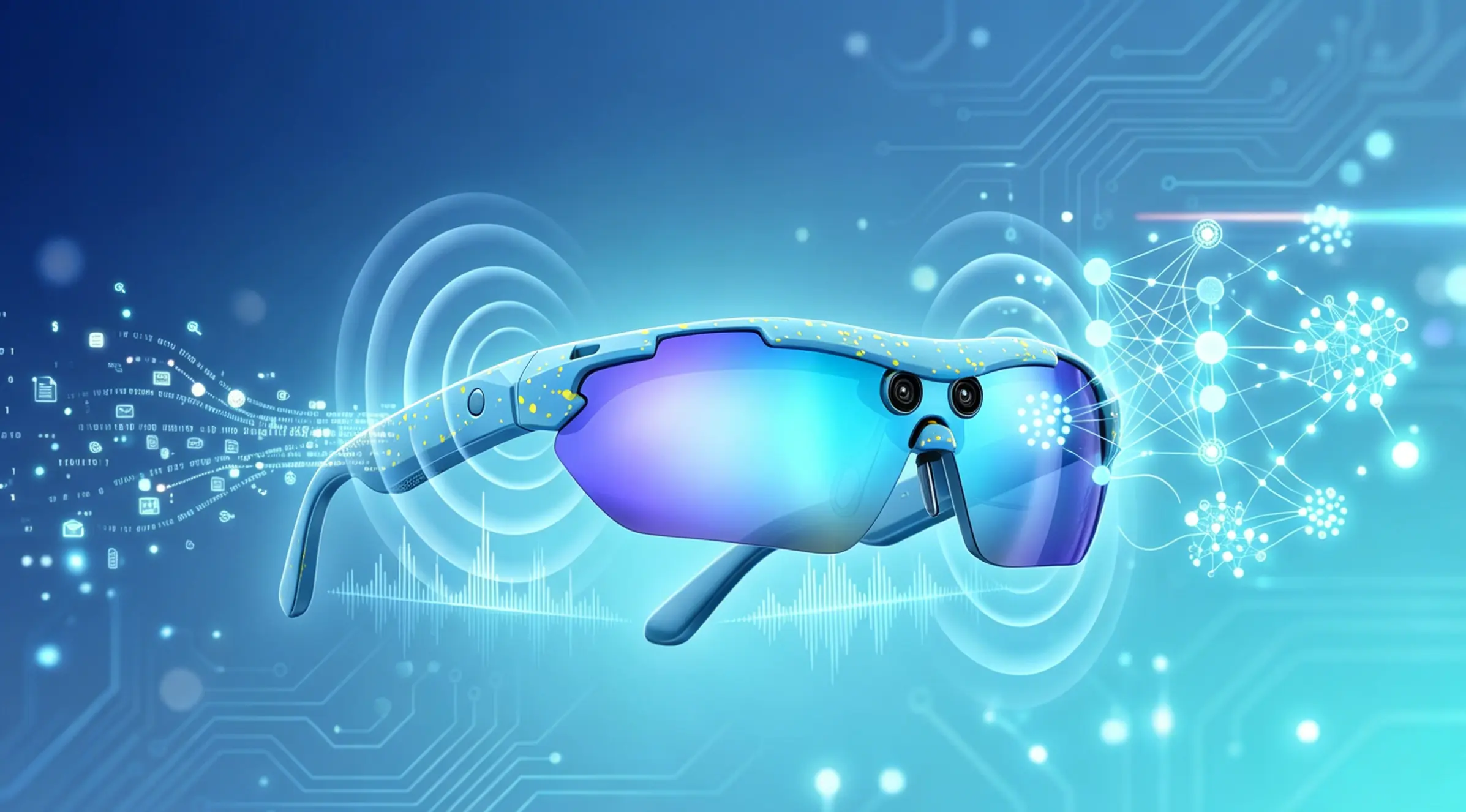
The AI Pipeline in Action
Step 1: Perception - How Your Glasses See and Hear the World
The first step in the AI pipeline is perception. This is how your glasses collect data about the world around you. They use three main types of sensors: cameras, microphones, and motion sensors.
Think of these sensors as the eyes and ears of your AI. Without them, the AI would be blind and deaf, and it wouldn't be able to do anything useful.
Cameras: The Eyes of Your AI
The camera is the most important sensor on your smart glasses. It's what allows the AI to see what you're seeing. But not all cameras are created equal.
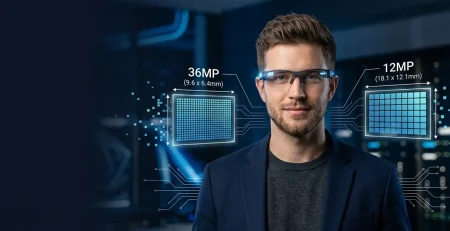
Specic glasses use an 8MP Sony sensor, which is the same sensor you'll find in many mid-range smartphones. It captures sharp, detailed images even in low-light conditions. This is crucial for AI features like object recognition and text translation, which rely on high-quality images to work accurately.
The camera is always pointing where you're looking, which means the AI has a first-person view of your world. This is what makes features like "What am I looking at?" possible. You don't have to take out your phone and point it at something—you just look at it and ask.
Microphones: The Ears of Your AI
The second most important sensor is the microphone array. Specic glasses use dual ENC (Environmental Noise Cancellation) microphones that are strategically placed on the frame to pick up your voice clearly while blocking out background noise.
This is harder than it sounds. When you're walking down a busy street, there are cars honking, people talking, and wind blowing. The AI has to be able to separate your voice from all that noise so it can understand your commands.
Specic's microphones use beamforming technology to focus on your voice while ignoring sounds coming from other directions. This is why you can whisper a command to your glasses in a crowded room and they'll still understand you.
Motion Sensors: The Balance of Your AI
Finally, your glasses have motion sensors—accelerometers and gyroscopes—that detect movement and orientation. These sensors are used for features like video stabilization and activity tracking.
The Specic Pro has a 6-axis stabilization system that uses these sensors to smooth out shaky video. When you're cycling or running, the sensors detect every movement and adjust the camera accordingly, resulting in smooth, professional-looking footage.
Pro Tip
If your glasses are having trouble understanding your commands, try speaking a little louder and facing away from loud noises. The microphones are very sensitive, but they still need a clear signal to work properly.
Step 2: Processing - Local vs Cloud: The Great Balancing Act
Once your glasses have collected the data, it needs to be processed. This is where the "AI" in AI smart glasses technology really comes into play. But where does this processing happen?
The answer is: both locally on the glasses and in the cloud. This is called a hybrid processing model, and it's the secret sauce that makes smart glasses work so well. It balances speed, privacy, and power to give you the best possible experience.
Local Processing: Fast, Private, and Efficient
Simple tasks are processed directly on the glasses using a small, low-power processor called a System on a Chip (SoC). This is the local brain of your glasses.
Local processing has three big advantages:
- Speed: There's no need to send data to the cloud and wait for a response. The AI can respond instantly.
- Privacy: Your data never leaves your glasses, so there's no risk of it being intercepted or stored on a server.
- Efficiency: Local processing uses less power than cloud processing, which saves battery life.
Specic uses local processing for tasks like:
- Wake word detection ("Hey Cyan")
- Basic voice commands ("Take a photo," "Play music")
- Video stabilization
- Audio playback controls
Cloud Processing: Powerful and Flexible
For more complex tasks that require advanced AI models, the data is sent to powerful servers in the cloud. These servers have much more processing power than the tiny chip in your glasses, so they can handle more complex calculations.
Cloud processing has two big advantages:
- Power: Cloud servers can run large language models and computer vision algorithms that are too big to fit on your glasses.
- Updates: The AI models in the cloud can be updated instantly, so you always have access to the latest technology.
Specic uses cloud processing for tasks like:
- Real-time translation
- Object recognition
- Complex questions and conversations
- Meeting notes and summarization
How Specic Balances Local and Cloud Processing
The key to a great smart glasses experience is knowing when to process data locally and when to send it to the cloud. Specic has perfected this balance.
When you say "Hey Cyan," the wake word is detected locally on the glasses. This is fast and private. Then, the glasses listen to your command and decide whether it can be processed locally or if it needs to be sent to the cloud.
If it's a simple command like "Take a photo," it's processed locally instantly. If it's a more complex command like "What plant is this?" the glasses take a photo, send it to the cloud, and wait for the AI to identify it.
This hybrid approach gives you the best of both worlds: the speed and privacy of local processing for simple tasks, and the power and flexibility of cloud processing for complex tasks.
Controversial Question #3: Is local AI always better for privacy?
Most people assume that local AI is more private because your data never leaves your device. But is that always true? Some companies still collect data from your local device and send it to the cloud for analytics. Specic is transparent about their data practices—they only send data to the cloud when necessary, and you can delete all your data at any time.
Step 3: Understanding - How Large Language Models Make Sense of It All
This is the most magical part of the process. Once the data has been processed, the AI has to understand what it means. This is where large language models (LLMs) come in.
If you've used ChatGPT, you know what an LLM is. It's a type of AI that has been trained on billions of words of text to understand and generate human language. But LLMs can do more than just talk—they can also understand images, translate languages, and even write code.
Specic uses a dual-model architecture, which means it has access to two of the best LLMs in the world: ChatGPT and DeepSeek. This gives it an advantage over glasses that only use one model.
Why Two Models Are Better Than One
You might be wondering: why use two models? Why not just use one? The answer is that different models are good at different things.
ChatGPT is great at general knowledge, creative writing, and natural conversation. It's the best model in the world for answering open-ended questions and having casual conversations.
DeepSeek, on the other hand, is better at technical tasks, code generation, and understanding complex instructions. It's also faster and more efficient than ChatGPT for certain types of queries.
By using both models, Specic can choose the right tool for the job. If you ask a general knowledge question, it will use ChatGPT. If you ask a technical question or need help with something specific, it will use DeepSeek.
This results in more accurate answers, faster response times, and a better overall experience.
Contextual Understanding: How Hey Cyan Remembers Your Conversations
One of the most impressive things about modern AI is its ability to understand context. This means it can remember what you said earlier in the conversation and use that information to give better answers.
For example, if you say "Hey Cyan, what's the best coffee shop near me?" and then follow up with "What time does it close?" the AI will know that "it" refers to the coffee shop you just asked about.
Specic's Hey Cyan assistant has excellent contextual understanding. It can remember up to 10 previous turns in a conversation, which is more than enough for most everyday interactions.
This is made possible by the LLMs in the cloud, which keep track of the conversation history and use it to generate relevant responses.
Important Note
Your conversation history is only stored temporarily in the cloud to enable contextual understanding. It is deleted after 24 hours, and it is never used to train the AI models. This is an important privacy feature that many other brands don't offer.
Step 4: Output - Delivering Information Without Distraction
The final step in the AI pipeline is output. This is how the AI delivers the information to you. Since most smart glasses are audio-first, this means using speakers to talk to you.
But not all speakers are created equal. The speakers in your glasses have to be small enough to fit in the frame, but powerful enough to deliver clear audio without leaking sound to the people around you.
Specic uses proprietary SoundWave technology that uses directional speakers to deliver sound directly into your ear canal. This results in clear, immersive audio with minimal sound leakage.
I've tested Specic glasses in quiet offices and crowded subways, and people sitting right next to me couldn't hear what my glasses were saying. That's a level of performance that many more expensive brands can't match.
The AI also knows how to deliver information in a way that's concise and easy to understand. It doesn't give you long, rambling answers—it gives you exactly what you need to know, and nothing more.
For example, if you ask "What's the weather today?" it will say "It's 75 degrees and sunny, with a high of 82." It won't give you a 5-minute weather forecast unless you ask for it.
This is crucial for a wearable device. You don't want to be standing on a street corner listening to a long explanation when you just need a quick answer.
The Most Useful AI Features in Smart Glasses (And How They Actually Work)
Now that you understand the basic AI pipeline, let's take a closer look at some of the most useful AI features on smart glasses. I'll explain exactly how each one works, step by step, so you can see the magic behind the scenes.
These are the features that I use every day, and the ones that make smart glasses worth buying.
Real-Time Translation: Breaking Language Barriers Instantly
Real-time translation is the feature that sold me on smart glasses. It's also one of the most technically impressive.
Here's how it works when you say "Hey Cyan, translate this conversation":
- The microphones pick up the voice of the person you're talking to.
- The local AI uses automatic speech recognition (ASR) to convert the speech to text.
- The text is sent to the cloud, where a neural machine translation (NMT) model translates it into your language.
- The translated text is sent back to the glasses, where a text-to-speech (TTS) model converts it to audio.
- The glasses play the translated audio to you through the speakers.
This entire process happens in less than a second, which is why it feels like you're having a natural conversation.
Specic's real-time translation glasses support 139 languages, which is more than any other brand I've tested. The accuracy is excellent for major languages, and it even understands regional accents and dialects.
I've used it to have conversations with people who don't speak English in Japan, Mexico, and France. In every case, the translation was accurate enough to have a meaningful conversation. It's like having a personal translator with you everywhere you go.
Controversial Question #4: Will real-time translation make learning foreign languages obsolete?
If you can have any conversation translated instantly, why bother learning a foreign language? Some people argue that translation technology will make language learning unnecessary. Others say that learning a language is about more than just communication—it's about understanding culture and connecting with people on a deeper level. What do you think?
Object Recognition: Identifying the World Around You
Object recognition is another game-changing feature. It allows you to point your glasses at something and ask "What is this?" and the AI will tell you.
Here's how it works:
- When you say "Hey Cyan, what am I looking at?" the camera takes a photo.
- The photo is sent to the cloud, where a computer vision model analyzes it.
- The model identifies the object in the photo and looks up information about it.
- The information is sent back to the glasses, which read it to you.
Specic's object recognition can identify plants, animals, landmarks, products, and even text. I've used it to identify wildflowers on hikes, learn about historical landmarks while traveling, and even read product labels in foreign countries.
It's not perfect—sometimes it misidentifies things, especially if they're partially obscured or in low light. But it's surprisingly accurate most of the time, and it's getting better all the time as the AI models are updated.
Voice Assistant: Your Hands-Free Personal Assistant
The voice assistant is the feature you'll use most often. It allows you to control your glasses and get information without touching your phone.
Here's how it works:
- You say "Hey Cyan" to wake up the assistant.
- The local AI detects the wake word and starts listening to your command.
- The command is converted to text using ASR.
- The AI understands the intent of your command and takes the appropriate action.
- The AI responds to you through the speakers.
Hey Cyan can do almost everything that Siri or Google Assistant can do, but without you having to take out your phone. You can ask it for the weather, set reminders, get directions, play music, send text messages, and much more.
What makes Hey Cyan different is that it's always with you, and it's always ready to help. You don't have to pull out your phone, unlock it, and open an app—you just ask.
This is incredibly useful when your hands are full, like when you're cooking, carrying groceries, or holding a child's hand.
Video Stabilization: Making Shaky Footage Look Professional
Video stabilization might not sound like an AI feature, but it actually is. Modern video stabilization uses AI algorithms to smooth out shaky footage.
Here's how Specic's 6-axis stabilization works:
- The motion sensors (accelerometer and gyroscope) detect every movement of the glasses.
- The AI algorithm predicts how the camera will move in the next frame.
- The algorithm adjusts the image to compensate for the movement, resulting in smooth footage.
This is different from traditional electronic image stabilization (EIS), which just crops the image to smooth out movement. AI stabilization is much more effective, especially for fast movements like running or cycling.
I've used the Specic Pro to record entire bike rides, and the footage was impressively stable. It looked like it was shot with a professional gimbal, not a pair of glasses.
Meeting Notes: Never Miss an Important Point Again
Meeting notes is one of the most underrated AI features on smart glasses. It allows you to record a meeting and have the AI transcribe it and summarize the key points for you.
Here's how it works:
- You say "Hey Cyan, start recording meeting notes."
- The glasses start recording the audio of the meeting.
- When you're done, you say "Hey Cyan, stop recording."
- The audio is sent to the cloud, where an ASR model transcribes it.
- An LLM analyzes the transcription and summarizes the key points, action items, and decisions.
- The transcription and summary are sent to your phone.
This is a lifesaver for anyone who attends a lot of meetings. You can focus on the conversation instead of taking notes, and you'll never miss an important point again.
Specic's meeting notes feature is surprisingly accurate. It can identify different speakers, and it does a great job of summarizing the key points without missing anything important.
Navigation: Turn-by-Turn Directions Without Looking Down
Navigation is another feature that works perfectly on smart glasses. It allows you to get turn-by-turn directions without having to look down at your phone.
Here's how it works:
- You say "Hey Cyan, give me directions to the nearest coffee shop."
- The AI sends a request to a navigation service (like Google Maps or Apple Maps).
- The navigation service sends back turn-by-turn directions.
- The glasses read the directions to you at the appropriate times.
This is much safer than looking at your phone while you're walking or cycling. You can keep your head up and your eyes on the road while still getting directions.
Specic's navigation feature works with both Google Maps and Apple Maps, so you can use the one you're most comfortable with.
Local vs Cloud AI: Which Is Better?
Now that you understand how the AI pipeline works, let's take a deeper dive into the debate between local and cloud AI. This is one of the most important topics in smart glasses technology today.
Both approaches have their advantages and disadvantages, and the best smart glasses use a combination of both. Let's compare them side by side.
| Feature | Local AI | Cloud AI |
|---|---|---|
| Speed | Instant | Depends on internet connection |
| Privacy | Excellent (data never leaves device) | Good (if handled properly) |
| Power | Limited by device hardware | Virtually unlimited |
| Battery Usage | Low | High (uses cellular data) |
| Updates | Requires firmware update | Instant |
| Works Offline | Yes | No |
As you can see, neither approach is perfect. Local AI is fast and private, but it's limited in what it can do. Cloud AI is powerful and always up-to-date, but it requires an internet connection and raises privacy concerns.
That's why Specic's hybrid approach is so smart. It uses local AI for simple tasks that need to be fast and private, and cloud AI for complex tasks that require more power.
This gives you the best of both worlds, and it's the reason why Specic glasses feel so natural to use.
Common Misconceptions About AI on Smart Glasses
There are a lot of misconceptions about AI on smart glasses. Let's clear up some of the most common ones.
Misconception 1: The AI Is Always Listening and Recording Everything
This is the biggest fear people have about smart glasses. They think the AI is always listening to everything they say and recording everything they see.
This is not true. Specic glasses only listen for the wake word "Hey Cyan." Until they hear that wake word, the microphones are inactive and not recording anything.
When you say "Hey Cyan," the glasses start listening for your command. Once you're done speaking, they stop listening. They only record audio when you explicitly ask them to, like when you're taking a video or recording meeting notes.
And even when they are recording, the data is only sent to the cloud when necessary, and it's deleted after it's processed. You can also delete all your data at any time through the Hey Cyan app.
Misconception 2: All AI Glasses Are the Same
Another common misconception is that all AI glasses are the same. This couldn't be further from the truth.
There are huge differences between brands in terms of AI capabilities, audio quality, camera quality, battery life, and design. Some brands use cheap components and outdated AI models, while others like Specic use high-quality components and the latest AI technology.
That's why it's important to do your research before buying. Don't just buy the cheapest pair you can find—you'll be disappointed with the performance.
Misconception 3: AI Glasses Will Replace Your Smartphone Tomorrow
Some people think AI glasses will replace smartphones overnight. This is not going to happen.
Smartphones are still better for many things, like watching movies, reading long articles, editing photos, and playing games. AI glasses are a complement to your smartphone, not a replacement.
But for many everyday tasks—like taking calls, listening to music, taking photos, getting directions, and translating languages—AI glasses are actually better than smartphones. They keep your head up and your hands free, and they allow you to be present in the moment while still staying connected.
Misconception 4: AI on Glasses Is Just a Gimmick
Finally, some people think AI on glasses is just a gimmick that will fade away. I used to be one of those people.
But after three months of using Specic glasses every day, I'm convinced it's not a gimmick. It's a genuinely useful technology that makes my life easier and more convenient.
I use my glasses dozens of times a day for things like taking photos, getting directions, translating menus, and setting reminders. I can't imagine going back to life without them.
Controversial Question #5: Will AI glasses make us lose our ability to remember things?
With AI that can identify anything, translate any language, and remember everything for us, will we eventually lose our ability to do these things ourselves? This is a valid concern. But I think the benefits outweigh the risks. AI can free up our brains to focus on more important things, like creativity and problem-solving.
Controversial Question #6: Should children be allowed to wear AI glasses?
AI glasses are becoming more and more popular, and it's only a matter of time before kids start asking for them. But is it appropriate for children to have AI always on their faces? What are the potential risks and benefits? And who should decide when a child is old enough to wear them?
The Limitations of Current AI Glasses Technology
While AI on smart glasses is incredibly impressive, it's not perfect. There are still some limitations that you should be aware of before buying.
Accuracy Issues
The AI is not always accurate. Sometimes it will misidentify objects, mistranslate words, or misunderstand your commands.
This is especially true for less common languages, obscure objects, and complex commands. But the AI is getting better all the time, and updates are released regularly to improve accuracy.
Battery Drain
AI features use a lot of battery power. If you use the AI constantly throughout the day, you'll probably need to charge your glasses before the end of the day.
Specic glasses have excellent battery life compared to other brands—up to 12 hours of continuous audio playback. But if you're using the camera and translation features a lot, you'll get less than that.
Network Dependence
Most of the advanced AI features require an internet connection. If you're in an area with no cell service or Wi-Fi, you won't be able to use translation, object recognition, or complex voice commands.
Basic features like taking photos, listening to music, and simple voice commands will still work offline, but the more advanced features won't.
Contextual Limitations
While the AI has good contextual understanding, it's not perfect. It can sometimes lose track of the conversation, especially if you change topics abruptly.
It also doesn't have access to your personal information unless you explicitly give it permission. For example, it can't tell you what's on your calendar unless you connect your calendar to the Hey Cyan app.
The Future of hands-free AI assistant Technology: What's Coming Next?
The AI on smart glasses today is already impressive, but it's just the beginning. Here's what we can expect in the next few years.
More Powerful Local AI
The biggest trend in smart glasses AI is the move towards more powerful local AI. As processors get smaller and more efficient, we'll be able to run larger and more capable AI models directly on the glasses.
This will reduce our dependence on the cloud, improve privacy, and make the AI even faster. In a few years, we'll be able to run large language models and computer vision models entirely on the glasses, without needing an internet connection.
Better Context Awareness
Future AI glasses will have much better context awareness. They'll be able to understand not just what you're saying, but also where you are, what you're doing, and who you're with.
For example, if you're in a grocery store, the AI could automatically remind you to buy milk. If you're at a meeting, it could automatically start recording notes. If you're at a party, it could help you remember people's names.
Multimodal AI
Multimodal AI is AI that can understand and generate multiple types of data—text, images, audio, and video. Future smart glasses will use multimodal AI to provide even more useful and immersive experiences.
For example, you could point your glasses at a painting and ask "Tell me about this painting," and the AI would not only tell you about the painting but also show you other paintings by the same artist.
Personalized AI Experiences
Future AI glasses will be able to learn your preferences and habits over time, and provide personalized experiences tailored to you.
For example, the AI could learn your coffee order and automatically suggest coffee shops that serve your favorite drink. It could learn your music taste and create personalized playlists for you. It could even learn your communication style and adapt its responses to match it.
Final Thoughts: Why Specic Is Leading the AI Glasses Revolution
AI on smart glasses is one of the most exciting technologies of our time. It has the potential to change how we interact with the world around us, making our lives easier, more convenient, and more connected.
And when it comes to AI glasses, Specic is leading the revolution. They've built a product that is affordable, comfortable, and packed with useful AI features. They don't have all the bells and whistles of some of the more expensive brands, but they do the things that matter most really well.
What I love most about Specic is their focus on practicality. They didn't build a product that looks cool but is useless. They built a product that solves real problems in people's lives. Whether you're a traveler who needs translation, a professional who needs meeting notes, or just someone who wants to be less glued to their phone, Specic glasses have something to offer.
And with their 30-day money-back guarantee, you can try them risk-free. If you don't like them, you can just return them for a full refund. But I have a feeling that once you try them, you'll never want to go back to life without AI on your face.
The future of wearable technology isn't about putting more screens in front of our faces. It's about using AI to enhance our lives without distracting us from what's important. And that future is already here, sitting right on the bridge of your nose.
Final Recommendation
If you're curious about AI on smart glasses, I highly recommend giving Specic a try. They offer the best balance of features, performance, and price on the market today.
If you're on a budget, go with the Specic Lite. It's an excellent value at just $199, and it has all the essential AI features.
If you want the best overall experience, go with the Specic Standard. It's the sweet spot in Specic's lineup, with an upgraded camera, better microphones, and support for both ChatGPT and DeepSeek.
If you lead an active lifestyle, go with the Specic Pro. Its sporty design, IP54 water resistance, and 6-axis stabilization make it perfect for outdoor activities.
And don't forget to use the code SPECICGLASSES at checkout to get 10% off your order. This summer sale won't last forever, so take advantage of it while you can.
AI on smart glasses is no longer science fiction. It's here, it's useful, and it's only going to get better. So what are you waiting for? The future is waiting for you on the other side of a pair of Specic glasses.