

What to Do If Smart Glasses Lens Starts Peeling?
SpeCiC-AI-Smart-Glasses2026-04-20T11:05:46+08:00What to Do If Smart Glasses Lens Starts Peeling?
Picture this: You're strutting down a sun-dappled sidewalk, feeling like a tech-savvy James Bond with your sleek AI powered smart glasses perched perfectly on your nose. You're taking hands-free photos of a stray corgi, answering a work call without fumbling for your phone, and generally living your best 21st-century life. Then, out of nowhere, you notice a tiny, infuriating bubble at the edge of your left lens.
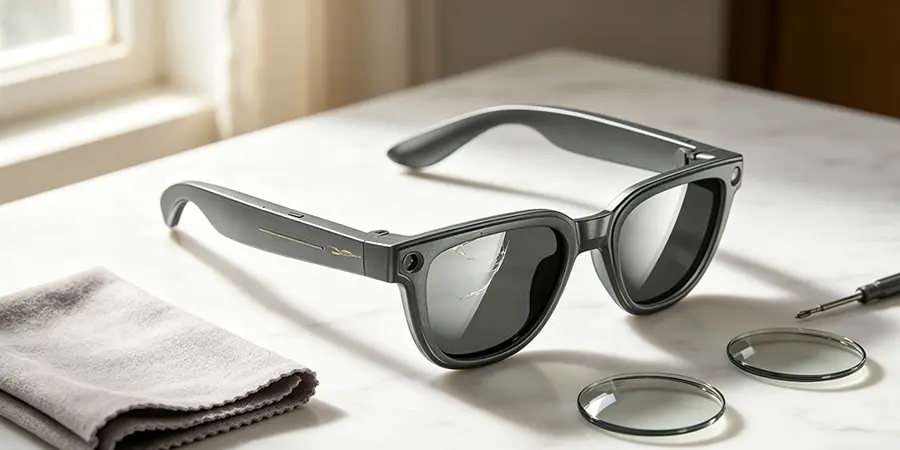
You blink, thinking it's just a smudge from that morning's avocado toast. You wipe it gently with your favorite linen shirt (we've all done it, don't lie). But it doesn't go away. In fact, when you squint closer, you see that the entire anti-reflective, scratch-resistant, blue-light-blocking coating is actually peeling off—like a bad sunburn on your eyeballs' most expensive accessory.
Controversial Hot Take #1
Smart glasses brands intentionally prioritize thinness and lightweight design over lens durability, even when it means coatings will wear out 2x faster than regular eyeglasses.
Think about it: Regular prescription glasses can have thick, durable multi-layer coatings that last 5+ years. But smart glasses brands refuse to use them because they add 0.5mm of thickness. Is shaving half a millimeter really worth replacing your lenses every year?
Cue the panic. You just dropped $200-$1,500 on these bad boys, and now they look like they've been through a war with a can of paint stripper. The worst part? That peeling isn't just unsightly—it's actively messing with your vision. Glare is suddenly everywhere, your eyes are straining after 10 minutes of screen time, and you can't help but feel like you're looking at the world through a cracked windshield.
But fear not, fellow smart glasses enthusiast! I've been there, done that, and bought three replacement pairs of lenses (and one entire new pair of SpeCiCs, because I'm a sucker for their design). In this comprehensive, no-BS guide, we're going to dive deep into the world of peeling smart glasses lenses.
First, we'll uncover the real science behind why your lenses are falling apart. Then, we'll give you brand-specific, step-by-step solutions for every major player—including our personal favorite, SpeCiC, and household names like Ray-Ban Meta, Amazon Echo Frames, and Bose Frames. We'll also cover temporary fixes for when you're in a pinch, professional repair options, and most importantly, how to prevent this mess from happening again.
Why Do Smart Glasses Lenses Peel Anyway? The Layered Truth
Before we jump into the fixes, let's take a quick, non-boring detour into the world of lens technology. Understanding why your lenses are peeling will not only make you sound smarter at your next tech meetup but also help you avoid making the same mistakes again.
Your Lenses Are a Fancy French Pastry—Not a Single Piece of Plastic
Modern eyeglass lenses, especially smart ones, aren't just single hunks of polycarbonate or Trivex. Oh no, they're sophisticated multi-layered creations, like a mille-feuille for your eyes. A typical high-end smart glasses lens has:
- The base lens material: Usually polycarbonate (lightweight, shatterproof) or Trivex (even lighter, better optical clarity, more impact-resistant)
- A scratch-resistant hard coat: Applied to both sides to protect the softer base material
- An anti-reflective (AR) stack: 3-7 thin layers of metal oxides (like titanium dioxide and silicon dioxide) that eliminate glare and reduce eye strain
- A blue light blocking layer: Either integrated into the AR stack or applied as a separate layer (on most blue light blocking smart glasses)
- A UV protection layer: Usually integrated into the base material, but sometimes added as an extra coat
- A hydrophobic/oleophobic top coat: The fancy one that makes fingerprints, water, and oil slide right off
Each of these layers is applied in a vacuum chamber using a process called physical vapor deposition (PVD). When done correctly, these layers bond together at the molecular level, creating a durable, clear lens that can withstand years of use. But when something goes wrong—whether it's user error or a design tradeoff—the layers start to separate, and that's when the peeling begins.
The Four Horsemen of Lens Peeling
In my years of destroying (and occasionally saving) smart glasses, I've identified four main culprits behind peeling lenses, all of which are entirely avoidable with the right care and knowledge:
- Chemical Warfare: This is by far the most common cause of peeling. Those fancy top coats and AR stacks are surprisingly sensitive to chemicals. Hand sanitizer, sunscreen, insect repellent, hairspray, perfume, and even some "eyeglass cleaners" (yes, really!) can break down the adhesive that holds the layers together. I once ruined a perfectly good pair of Ray-Ban Stories by spraying SPF 50+ on my face while wearing them. The coating started peeling within 24 hours. Lesson learned.
- Heatstroke for Your Glasses: Extreme heat is another major enemy of lens coatings. Leaving your smart glasses on the dashboard of a car in the summer is like putting them in a slow cooker. The interior of a car can reach 70-85°C (158-185°F) on a hot day, which causes the different layers of the lens to expand at different rates. This creates internal stress, leading to tiny cracks (called "crazing") and eventually peeling.
- The Abrasive Apocalypse: Wiping your lenses with anything other than a clean, lint-free microfiber cloth is a one-way ticket to Peeling City. Paper towels, napkins, your shirt, even some "soft" cotton cloths contain tiny wood or cotton fibers that act like sandpaper, scratching the surface of your lenses. These micro-scratches create entry points for moisture and chemicals, which then work their way between the layers and cause delamination.
- Improper Storage: Throwing your glasses loose in a bag or pocket with keys, coins, and other sharp objects is a surefire way to damage the coating. Even small scratches can quickly turn into peeling if not addressed promptly.
Controversial Hot Take #2
Smart glasses brands actively discourage third-party lens replacements, even though third-party lenses are often higher quality and 50% cheaper than official ones.
Many brands use proprietary lens shapes or hidden screws to make self-replacement as difficult as possible. They claim it's to "protect the integrity of the product," but we all know it's to protect their $100+ replacement lens profit margins.
Brand-Specific Solutions: Because Not All Smart Glasses Are Created Equal
Now that we've uncovered the real reasons behind your peeling lenses, let's get to the good stuff: how to fix it. The bad news is that once a coating starts peeling, there's no way to re-bond it to the lens. The good news is that there are plenty of options, from quick DIY fixes to professional replacements, depending on your brand and budget.
SpeCiC Smart Glasses: Our Top Pick for Easy, Affordable Repairs
Let's start with the brand we know and love: SpeCiC. If you own a pair of smart glasses with camera from SpeCiC, you're in luck—they have one of the most user-friendly, affordable lens replacement systems on the market. Unlike many other brands, SpeCiC designed their glasses with replaceable lenses from the get-go, which is a huge breath of fresh air in an industry that often tries to lock you into buying a whole new pair.
SpeCiC's lenses use a simple snap-in system that doesn't require any tools, and they offer a wide range of options, including clear, blue light blocking, polarized, and even transition lenses. They also offer prescription lens replacement service for an additional fee.
What to Do If Your SpeCiC Lenses Start Peeling
- Check Your Warranty First: SpeCiC offers a 1-year manufacturer's warranty on all their products, including lenses. If your lenses start peeling within the first year and it's not due to obvious user error (like leaving them in a hot car or dousing them in sunscreen), they'll replace them for free. Just head to their website, fill out a simple warranty claim form, and send them a few clear photos of the peeling. They usually process claims within 48 hours and ship the replacement lenses right to your door with free shipping.
- Order Replacement Lenses: If your warranty has expired or the damage is your fault, don't worry—SpeCiC replacement lenses are surprisingly affordable. A pair of standard clear lenses will set you back about $49, while polarized or transition lenses are around $79. That's a fraction of the cost of buying a whole new pair of smart glasses.
-
The 2-Minute Replacement Process: This is where SpeCiC really shines. Replacing the lenses is so easy, even your technologically challenged grandma could do it. Here's a step-by-step guide:
- Hold the frame with one hand, making sure to grip it firmly but gently (don't bend the TR90 frame too much!)
- Use your other thumb to gently push the lens from the back (the side that touches your face)
- The lens will pop out with a satisfying click
- Take your new lens, align it with the frame (make sure the blue light blocking or polarized sticker is facing the right way!)
- Gently press the lens into place around the edges until you hear another click
- Repeat for the other lens
Pro Tips for SpeCiC Owners
- SpeCiC sells a lens care kit specifically designed for their glasses. It includes a high-quality microfiber cloth, alcohol-free lens cleaning solution, and a hard, padded case. It's $19 and worth every penny.
- If you wear prescription lenses, SpeCiC's prescription lens replacement service is fast and affordable. Just send them your prescription (you can upload a photo or enter it manually), and they'll make custom lenses for your frames in about a week.
- SpeCiC's lenses have a special scratch-resistant coating that's more durable than many other brands. But that doesn't mean they're indestructible—still treat them with care!
Ray-Ban Meta: The Fashion-Forward Option with Tricky, Expensive Repairs
Ray-Ban Meta glasses are everywhere these days, and for good reason—they look like regular, stylish Ray-Bans, but with all the smart features you could want (hands-free calls, photo/video, music, etc.). Unfortunately, their lens replacement system isn't nearly as user-friendly or affordable as SpeCiC's.
What to Do If Your Ray-Ban Meta Lenses Start Peeling
- Warranty Check (But Be Prepared for a Hassle): Ray-Ban offers a 2-year limited warranty on their Meta glasses. If your lenses start peeling within that time frame and it's a manufacturing defect, they'll repair or replace them for free. However, be prepared for a bit of a fight—many users report that Ray-Ban's customer service is slow, unresponsive, and often tries to blame user error even when it's clearly a manufacturing defect.
- Official Ray-Ban Replacement: If your warranty has expired or you can't be bothered to fight with customer service, you can order replacement lenses directly from Ray-Ban. A pair of standard clear lenses costs about $99, while polarized lenses are $149. The catch? You have to send your glasses to Ray-Ban to have the lenses replaced. They don't sell lenses that you can install yourself, and the process can take 2-3 weeks.
- Third-Party Options (Our Recommendation): If you don't want to wait 3 weeks or pay Ray-Ban's premium prices, there are several reputable third-party companies that make replacement lenses for Ray-Ban Meta glasses. Brands like Revant Optics and Sublime Optics offer lenses for about $50-$80 a pair, and many of them are actually higher quality than the original Ray-Ban lenses (thicker coatings, better optical clarity, etc.). Most of these companies also offer easy-to-follow installation guides, so you can replace the lenses yourself in about 10-15 minutes.
-
The DIY Removal Method (Temporary Fix Only): If you're feeling handy (and a bit brave), you can try removing the peeling coating yourself. This will eliminate the peeling and the glare, though you'll lose the benefits of the anti-reflective, scratch-resistant, and blue light blocking coatings. Here's how:
- Fill a bowl with warm (not hot!) water and a few drops of mild, fragrance-free dish soap
- Soak your Ray-Bans for 15-20 minutes to soften the coating
- Use a pair of clean, sharp tweezers to gently peel off the remaining coating (start at the edges where it's already peeling)
- Rinse thoroughly with clean, lukewarm water to remove any soap residue
- Dry with a clean, lint-free microfiber cloth
Amazon Echo Frames: The Budget Option with Limited Support
Amazon Echo Frames are a great budget option for people who want voice controlled smart glasses without breaking the bank (they start at just $179). However, their lens support is somewhat limited compared to SpeCiC and Ray-Ban.
What to Do If Your Amazon Echo Frames Lenses Start Peeling
- Amazon's Warranty (Usually Pretty Good): Amazon offers a 1-year limited warranty on Echo Frames. If your lenses start peeling within that time, contact Amazon customer service. They're usually pretty good about replacing defective products, though you may have to send back the entire pair.
- Third-Party Lenses (Your Only Option After Warranty): Unlike Ray-Ban, Amazon doesn't sell official replacement lenses for Echo Frames. However, there are plenty of third-party options available on Amazon itself. Brands like Sublime Optics and Revant Optics make replacement lenses for all generations of Echo Frames, starting at around $30 a pair.
- Installation (Relatively Easy): Installing third-party lenses in Echo Frames is relatively easy, though not as simple as SpeCiC. You'll need a small Phillips-head screwdriver to remove the screws that hold the lenses in place. Be careful not to strip the screws—they're very small!
Temporary Fixes: What to Do When You're in a Pinch
Sometimes your lenses start peeling at the worst possible time—right before a big meeting, a vacation, or a first date. While these temporary fixes won't solve the problem permanently, they'll help you get by until you can get replacement lenses.
The "Peel It All Off" Method (Most Effective Temporary Fix)
As I mentioned earlier with the Ray-Ban method, you can remove all the remaining coating from your lenses. This will eliminate the peeling and the glare, though you'll lose the benefits of the anti-reflective, scratch-resistant, and blue light blocking coatings. It's not ideal, but it's better than walking around with blurry, peeling lenses.
The Nail Polish Trick (Use With Extreme Caution!)
I've heard mixed reviews about this method, but some people swear by it for small areas of peeling. Here's how it works:
- Clean the lens thoroughly with a clean microfiber cloth and alcohol-free lens cleaning solution
- Take a bottle of clear, non-toxic, fragrance-free nail polish
- Apply a very thin layer over the peeling area using a small, clean brush (you can use the brush that comes with the nail polish, but make sure it's clean!)
- Be careful not to get any nail polish on the frame or the electronics
- Let it dry completely (at least 30 minutes) before wearing your glasses
This method works by sealing the peeling edge, preventing it from getting worse. However, it can make your vision blurry in that area, and it's not a long-term solution. I only recommend this if you have a small spot of peeling and absolutely need to wear your glasses for a few hours.
Prevention is Better Than Cure: How to Keep Your Lenses From Peeling in the First Place
Now that we've covered all the ways to fix peeling lenses, let's talk about how to prevent it from happening in the first place. Trust me, it's much easier (and cheaper) to take care of your lenses than it is to replace them.
The Golden Rules of Lens Care (Follow These or Suffer the Consequences!)
- Only Clean With Microfiber: This is the single most important rule. Never, under any circumstances, wipe your lenses with anything other than a clean, lint-free microfiber cloth. Paper towels, napkins, your shirt, even "soft" cotton cloths will scratch your lenses and damage the coating.
- Rinse Before Wiping: Before you wipe your lenses, always rinse them under lukewarm water first. This will remove any dust, dirt, or debris that could scratch the coating when you wipe.
- Use the Right Cleaner: Only use cleaning solutions specifically designed for eyeglasses. Avoid household cleaners like Windex, which contain ammonia that can damage the coating. And never use hand sanitizer to clean your lenses!
- Avoid Extreme Heat: Never leave your smart glasses in a hot car, on a sunny windowsill, or near a heat source like a stove or radiator. The heat will cause the coatings to crack and peel.
- Keep Them Away From Chemicals: Be careful when using sunscreen, insect repellent, hairspray, perfume, or any other chemicals. Take your glasses off before applying these products, and if any gets on the lenses, rinse them off immediately with lukewarm water.
- Store Them Properly: Always store your glasses in a hard, padded case when you're not wearing them. This will protect them from scratches, bumps, and heat. Never just throw them in your bag or pocket—this is a surefire way to damage them.
- Handle With Care: Always put on and take off your glasses with both hands. This will prevent the frames from warping and the lenses from being stressed. And never touch the lenses with your fingers—oil from your skin can damage the coating.
Controversial Question for Discussion
When buying smart glasses, should you prioritize repairability and long-term cost of ownership, or should you prioritize the latest features and sleekest design?
Many people buy the thinnest, most feature-packed glasses only to end up spending more on replacements than the original cost of the glasses. Is it worth it? Let us know what you think in the comments below!
When to Throw in the Towel: Signs It's Time to Replace Your Glasses Altogether
Sometimes, no matter how hard you try, your smart glasses are just too far gone. Here are some signs that it's time to bite the bullet and buy a new pair:
- The Peeling is Severe: If more than 50% of the coating is peeling, it's probably not worth replacing the lenses. At that point, the frame is likely also showing signs of wear and tear, and you'll probably need to replace the whole thing soon anyway.
- The Electronics Are Failing: If your smart glasses are having other issues besides peeling lenses—like poor battery life, connectivity problems, or broken speakers—it might be more cost-effective to buy a new pair than to repair the old one.
- The Frame is Damaged: If the frame is cracked, warped, or broken, replacing the lenses won't do you much good. The frame won't fit properly, and the new lenses will probably fall out or get damaged quickly.
- They're Outdated: Smart glasses technology is advancing rapidly. If your glasses are more than 3-4 years old, they're probably outdated. Newer models have better battery life, better cameras, better audio, and more features. Sometimes it's worth upgrading just for the improved functionality.
- Repairs Are Too Expensive: If the cost of repairing your glasses is more than half the cost of a new pair, it's probably not worth it. You're better off putting that money towards a new pair that will last you longer.
Frequently Asked Questions
No, once the coating starts peeling, there's no way to re-bond it to the lens at the molecular level. The only permanent solution is to replace the lens. The only temporary solution is to remove the remaining coating entirely.
With proper care, high-quality smart glasses lenses (like SpeCiC's) should last 2-3 years. If you're rough with your glasses or expose them to harsh conditions, they might only last 6-12 months. Regular prescription glasses lenses, on the other hand, usually last 3-5 years with the same care.
Yes, in most cases. More expensive lenses (like third-party Revant Optics lenses) usually have thicker, more durable coatings that are more resistant to scratching, peeling, and glare. They also usually have better optical clarity, which is better for your eyes and reduces eye strain.
No, absolutely not! Toothpaste is abrasive and will scratch your lenses even more. It will make the peeling worse, not better. Never use toothpaste on your eyeglass lenses.
Conclusion
Dealing with peeling smart glasses lenses is never fun, but it's not the end of the world. With the right knowledge and a little bit of effort, you can fix the problem and get back to enjoying your hands free smart glasses.
Remember, the best way to deal with peeling lenses is to prevent it from happening in the first place. Follow the golden rules of lens care, invest in a good lens care kit, and treat your glasses with the respect they deserve.
If your lenses do start peeling, don't panic. Check your warranty first—many brands will replace defective lenses for free. If your warranty has expired, there are plenty of affordable replacement options available, from third-party lenses to professional repair services.
And if all else fails, it might be time to upgrade to a new pair. The good news is that smart glasses are getting better and more affordable every year. Who knows? Your next pair might be the one that finally lasts you a lifetime.
Now go forth and protect those lenses! Your eyes (and your wallet) will thank you.