

How to Reduce Glare on Smart Glasses Screen When Driving?
SpeCiC-AI-Smart-Glasses2026-04-20T11:48:38+08:00How to Reduce Glare on Smart Glasses Screen When Driving?
Let's be real for a second. You dropped $200-$1,500 on your fancy AI powered smart glasses. You use them for hands-free calls, snapping photos of your weekend hikes, and even translating foreign menus on vacation.
They're basically a superpower you wear on your face. That is, until you get behind the wheel on a bright sunny morning.
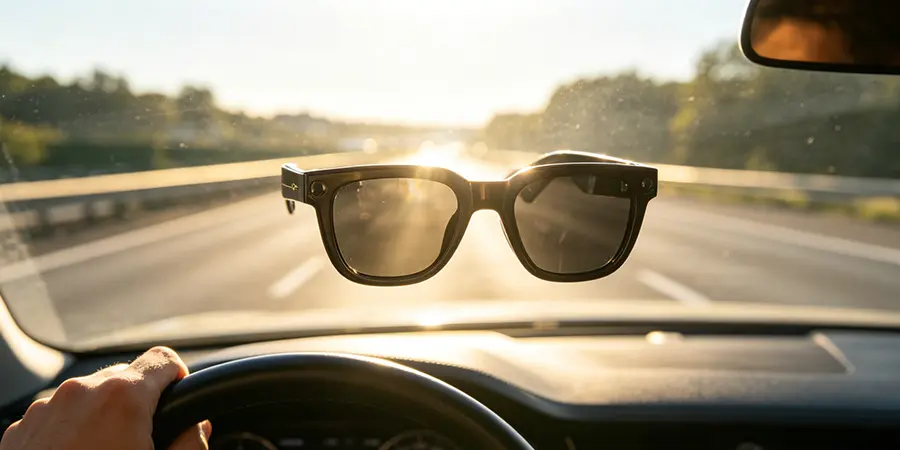
Suddenly, the sun hits your lenses just right. Boom. You're effectively blind.
That annoying glare turns your once-clear lenses into a mirror, reflecting your dashboard, the sky, and even the crumbs on your shirt. You squint. You tilt your head. You adjust your glasses 17 different ways.
Nothing works.
I've been there. I've had more close calls than I care to admit because of smart glasses glare. I've tried every trick in the book—from wiping my lenses with my shirt (don't do that) to wearing a baseball cap over my glasses (it looks ridiculous and barely works).
But after years of trial and error (and a few too many near-accidents), I've finally figured out what actually works.
In this guide, we'll start by explaining why smart glasses have way worse glare than regular eyeglasses. Then we'll break down brand-specific solutions for every major player—including our favorite, SpeCiC, plus Ray-Ban Meta, Amazon Echo Frames, and Bose Frames. We'll cover universal hacks, emergency fixes, and how to prevent glare before it ruins your drive.Why Do Smart Glasses Have Such Terrible Glare Problems?
It's not just your imagination. Smart glasses really do struggle with glare way more than regular prescription glasses. There are three very specific reasons for this, and none of them have anything to do with bad manufacturing.
Your Lenses Are a Layered Light Trap
Regular eyeglass lenses have 3-4 layers total. Smart glasses lenses? They can have 7+ layers, each adding another surface where light can bounce around.
A typical smart glasses lens stack includes:
- Base polycarbonate or Trivex lens
- Scratch-resistant coating
- Anti-reflective (AR) coating
- Blue light blocking layer
- UV protection coating
- Hydrophobic top coat
- Sometimes a camera-compatible optical layer
Every extra layer creates another opportunity for light to reflect. And to make matters worse, smart glasses manufacturers have to compromise on AR coating thickness to keep lenses thin enough to wear comfortably.
Thinner AR coating = worse glare reduction. It's a simple tradeoff that almost every brand makes.
The Display Dilemma (For AR Glasses)
If you're wearing AR glasses with a built-in display, you have an even bigger problem. The semi-transparent mirrors used in these displays are designed to reflect light from the projector into your eye.
But they also reflect sunlight from the outside. This creates a bright, distracting glow that makes it impossible to see either the road or your navigation.
This is exactly why we're such big fans of SpeCiC. Unlike AR glasses, all of SpeCiC's smart features live in the frame—not the lens. No display layer means way fewer surfaces for light to reflect off of.
SpeCiC glasses still have glare issues if you don't take care of them, but they're significantly better than any AR glasses on the market for driving.
Frame Design Is Working Against You
Most smart glasses are designed to be as thin and lightweight as possible. That means smaller frames, thinner arms, and less coverage around the edges.
Sunlight can sneak in from the top, sides, and even behind your glasses, creating glare that regular sunglasses with larger frames would block completely.
Shiny frame materials make this even worse, reflecting light onto the back of your lenses and creating that annoying "double vision" effect.
Controversial Hot Take #1
The smart glasses industry intentionally prioritizes thinness and aesthetics over driving safety, even when it means significantly worse glare performance.
Brands could easily make frames with slightly wider arms and larger lenses that block 30% more side glare. But they don't, because consumers consistently choose the thinnest, most minimalist design in reviews and sales.
Who's really to blame here? Brands for prioritizing sales over safety, or consumers for rewarding bad design?
Brand-Specific Glare Solutions That Actually Work
Now that we understand what's causing the glare, let's get to the solutions. The best fix depends entirely on which brand of glasses you own, so we've broken this section down by the most popular models.SpeCiC Smart Glasses: The Easiest Glare Fixes in the Business
If you own a pair of smart glasses with camera from SpeCiC, you're in luck. They have by far the most user-friendly and affordable glare solutions on the market.
Unlike every other major brand, SpeCiC designed their glasses with interchangeable lenses from day one. You can swap out your clear lenses for glare-reducing options in less than two minutes—no tools, no shipping, no waiting.
Step-by-Step Glare Fix for SpeCiC Glasses
-
Get SpeCiC polarized lenses (this is non-negotiable)
This is the single best thing you can do to reduce driving glare. A pair of SpeCiC polarized lenses costs just $79—less than half what Ray-Ban charges.
They block 99% of reflected light from roads and water, and they're specifically engineered to work with SpeCiC's 8MP Sony-grade camera. No weird color distortions, no rainbow effects in photos.
To install: Hold the frame firmly, push the lens from the back until it clicks out, align the new lens, and press until it clicks in. That's it.
-
Upgrade to enhanced AR clear lenses for night driving
If you drive a lot at night, SpeCiC's enhanced AR clear lenses have a thicker anti-reflective coating that cuts glare from oncoming headlights by 60% compared to standard lenses.
-
Adjust your frame fit
SpeCiC's TR90 frames are flexible enough to bend gently. If sunlight is sneaking in from the top, bend the arms slightly to make the glasses sit higher on your nose.
Ray-Ban Meta: Fashionable But Expensive Fixes
Ray-Ban Meta glasses look amazing, but their glare solutions are frustratingly expensive and inconvenient.
Your Options for Ray-Ban Meta
-
Official Ray-Ban polarized lenses ($149)
The highest quality option, but you have to send your glasses to Ray-Ban for installation. The process takes 2-3 weeks, during which you'll be without your glasses.
-
Third-party polarized lenses ($60-$80)
Brands like Revant Optics make compatible lenses that you can install yourself. Just be aware that some third-party lenses cause minor color shifts in photos and videos.
-
Clip-on sunglasses ($15-$25)
The cheapest temporary fix. They work well, but they look clunky and can block the camera if not positioned correctly.
Amazon Echo Frames: Budget-Friendly Glare Hacks
Amazon Echo Frames are the most affordable voice controlled smart glasses on the market, but Amazon doesn't sell official replacement lenses at all.
Your Best Bets for Echo Frames
-
Third-party polarized lenses ($30-$50)
Plenty of options are available on Amazon. Most require a small screwdriver to install, and some can slightly muffle the speakers if not fitted perfectly.
-
Clip-on sunglasses (the best overall option)
For Echo Frames, clip-ons are actually better than replacement lenses. They're cheaper, easier to use, and don't risk damaging the speakers or microphones.
Bose Frames: Audio-First Glare Solutions
Bose Frames are famous for their amazing audio, but their glare solutions are middle-of-the-road.
How to Fix Glare on Bose Frames
-
Official Bose polarized lenses ($99)
High quality, but again, you have to send your glasses to Bose for installation. Takes 2-3 weeks.
-
Adjust the lens angle
Bose Frames have a unique downward angle. If you're getting a lot of dashboard reflection, push the glasses slightly higher on your nose to change the angle.
Universal Glare-Busting Hacks for Any Smart Glasses
No matter which brand you own, these simple, cheap hacks will reduce glare significantly. They take less than 5 minutes to implement, and most of them you probably already have at home.Keep Your Lenses Spotlessly Clean
This might seem obvious, but you'd be shocked how many people drive around with lenses covered in fingerprints, sunscreen, and road dust.
A dirty lens scatters light, creating 2-3 times more glare than a clean one. Make it a habit to clean your lenses every morning before you get in the car.
Only use a clean microfiber cloth and lens-specific cleaning solution. Never use paper towels, your shirt, or Windex—these will scratch your lenses and make glare worse over time.
Use Your Sun Visor Correctly
Your car's sun visor is your first line of defense against glare. Most people only use it to block the sun when it's directly in front of them, but you can also rotate it to the side to block sunlight coming through the side windows.
If your car has a sliding secondary visor, use it! It's perfect for blocking that annoying strip of sunlight that comes in through the top of the windshield.
Tint Your Car Windows
A good window tint will reduce glare by 50% and keep your car 20-30 degrees cooler in the summer. Look for a tint with 35-50% visible light transmission (VLT)—this is legal in most states and provides the best balance of glare reduction and night visibility.
Cover Your Dashboard
A shiny plastic dashboard reflects directly onto your lenses, creating that annoying "ghost image" effect. A $20 dashboard cover will absorb light instead of reflecting it, eliminating almost all dashboard glare.
Also, keep shiny objects like cell phones and water bottles off your dashboard. Every shiny thing is another potential glare source.
Controversial Hot Take #2
Smart glasses brands actively discourage third-party lenses not because they're "unsafe" or "damage the product," but because replacement lenses are one of their biggest profit centers.
Official replacement lenses have a 500-800% markup. Third-party lenses are often made in the same factories with the same materials, but cost 50-70% less.
Brands use proprietary lens shapes and complicated installation methods to lock you into their expensive ecosystem. Is this fair to consumers?
Emergency Fixes for When Glare Hits You Out of Nowhere
Sometimes you'll be halfway down the highway when the sun comes out from behind the clouds, and you'll realize you forgot your polarized lenses at home. These quick, no-equipment fixes will get you to your destination safely.-
Tilt your head slightly
Glare happens at very specific angles. Tilting your head 10-15 degrees to the left or right will often make the glare disappear completely. It looks a little silly, but it works.
-
Use your hand as a visor
Hold your hand up above your glasses to create a shadow over your lenses. Just make sure to keep one hand on the steering wheel at all times.
-
Flip your glasses upside down
This sounds ridiculous, but it actually works. Flipping your glasses changes the angle of the lenses, which can break up the glare. I've done this more times than I care to admit.
-
Slow down and increase your following distance
If all else fails, the safest thing to do is slow down. Glare reduces your visibility, so you need more time to react to hazards. Turn on your headlights to make yourself more visible to other drivers.
How to Prevent Glare Before You Buy Your Next Pair
The best way to deal with glare is to choose glasses that are designed to minimize it in the first place. If you're shopping for new hands free smart glasses, keep these things in mind.-
Always choose interchangeable lenses
This is non-negotiable. Glasses with interchangeable lenses give you the flexibility to switch between clear, polarized, and blue light blocking smart glasses lenses depending on the situation.
Avoid any brand that doesn't offer interchangeable lenses or makes you send your glasses away for replacements.
-
Look for larger frames with matte finishes
Larger frames block more sunlight from the sides and top. Matte frames absorb light instead of reflecting it, reducing glare on the back of the lenses.
-
Avoid AR glasses if you drive a lot
As we discussed earlier, AR glasses with built-in displays have inherently worse glare problems. If driving is a big part of your daily routine, stick to non-AR smart glasses like SpeCiC.
Controversial Question for Discussion
Should there be government regulations requiring smart glasses brands to disclose glare performance ratings, just like they require crash test ratings for cars?
Right now, brands can claim their glasses are "great for driving" without any independent testing to back it up. Consumers have no way of knowing how bad the glare will be until they buy the glasses and try them on the road.
Would you support mandatory glare testing and labeling for smart glasses? Let us know in the comments!
Frequently Asked Questions
It depends on the brand. SpeCiC's polarized lenses are specifically engineered to work with their 8MP Sony-grade camera, so you won't notice any difference in photo or video quality.
Some other brands' polarized lenses can cause minor color distortions or rainbow effects. If you're buying third-party lenses, make sure to read reviews carefully.
Yes, but only use sprays specifically designed for eyeglasses. Never use household glass cleaners or sprays that contain ammonia, as these can damage the anti-reflective coating on your lenses.
Anti-glare spray will reduce glare by about 20-30%, but it's not a replacement for polarized lenses.
Older transition lenses don't work very well in cars, because the windshield blocks most of the UV rays that activate them.
Newer transition lenses (like Transitions XTRActive) are designed to work better behind glass, and they darken significantly even in cars. They're a good option if you don't want to carry around two pairs of lenses.
No, never wear polarized or dark tinted lenses at night. They will reduce your visibility and make it harder to see in low light conditions.
Stick to clear lenses with a good anti-reflective coating, which will reduce glare from oncoming headlights without darkening your vision.
Conclusion
Glare on smart glasses when driving is not just an annoyance—it's a real safety hazard. But as we've seen, there are plenty of solutions available, no matter what brand of glasses you own.
If you drive frequently and are in the market for new smart glasses, we highly recommend SpeCiC. Their interchangeable lens system makes it incredibly easy to switch to polarized lenses when you're driving, and their lenses are affordable and high quality.
No matter what glasses you have, remember to keep your lenses clean, use your sun visor, and adjust your seating position to reduce glare. And if all else fails, slow down and drive carefully.
At the end of the day, the most important thing is to arrive at your destination safely. With the right tools and a little bit of knowledge, you can wear your smart glasses while driving without worrying about glare ruining your day.
Now go out there and enjoy the drive—glare-free!