


Can Smart Glasses Be Used by People with Presbyopia?
SpeCiC-AI-Smart-Glasses2026-04-16T13:34:44+08:00Can Smart Glasses Be Used by People with Presbyopia?
Is ditching your bifocals for smart glasses a tech upgrade—or a privacy disaster waiting to happen? We tested SpeCiC’s latest model to find out.
First: Let’s Define the “Old Eye” Struggle
If you’re reading this while holding your phone at arm’s length, squinting like you’re trying to decode a top-secret spy note scrawled in tiny font, congratulations—you’ve joined the 1.8 billion-person presbyopia club.
It’s not a disease, it’s not a defect, it’s just… natural aging. Your eye’s lens gets stiffer over time, can’t flex to focus on close stuff, and suddenly your arms aren’t long enough. It’s like your eyes decided to retire from reading menus, texts, and grocery store ingredient lists without giving you a two-week notice.
For decades, we’ve been stuck with the same clunky, frustrating solutions:
- Reading glasses: The ones you lose 12 times a day—in your purse, under the couch, in the junk drawer, at the coffee shop, in the bathroom, in your car’s cupholder, and then find again in the exact same purse you checked 5 minutes ago. Bonus: They make you look like you’re auditioning for a role as a 1950s librarian who’s secretly a spy.
- Bifocals: The “two-in-one” disaster that requires you to tilt your head like a confused pigeon to find the sweet spot. Want to read a street sign and a text message in 10 seconds? Good luck—you’ll probably trip over a curb, spill your coffee, or both.
- Progressives: The “fancy bifocals” that cost $500+ and take 3 weeks to stop walking into walls. The transition zones are tiny, peripheral vision is distorted, and you still can’t read a menu in dim lighting without looking like you’re about to perform surgery on the pasta dish.
But here’s the big question everyone’s asking lately, scrolling through TikTok and Instagram Reels at 2 AM while holding their phones at arm’s length: Can smart glasses finally fix this mess?
CONTROVERSY #1: Is Presbyopia Even a “Problem” Worth Fixing with $239 Tech?
Some people say: “Presbyopia is just a part of getting older—embrace it! Reading glasses are $10 at Walmart, progressives are $500 but last 2 years, and I don’t need a camera or a voice assistant in my glasses. Why drop $239 on a pair of smart glasses that might break in a year, or get outdated in 6 months?”
Others say: “$10 Walmart reading glasses are a hassle, $500 progressives are a nightmare, and I want glasses that do more than just correct my near vision. I want to take photos of my kid’s soccer game without fumbling with my phone, make calls while cooking without getting my phone dirty, and translate signs when I travel without pulling out my phone and opening an app. That’s worth $239 to me.”
Agree? Disagree? Let’s hash it out in the comments below! I’m genuinely curious to hear what you think.
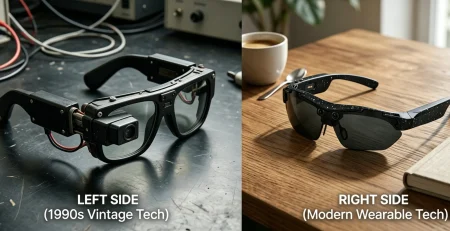
Before we dive into the answer, let’s take a quick, hilarious look at how far smart glasses have come since Google Glass crashed and burned in 2013.
From Cyborg Gimmicks to Stylish Staples: The Smart Glasses Evolution
Remember Google Glass? The clunky, $1,500 pair of glasses that made you look like a cyborg from a bad 90s sci-fi movie? The one that got banned from bars, restaurants, movie theaters, and even some grocery stores because people thought you were recording them without their permission?
Yeah, that was a disaster. A huge, expensive, cringey disaster. But today’s smart glasses are nothing like that. They’re sleek, stylish, lightweight, and actually useful. Most people won’t even notice you’re wearing smart glasses unless you tell them, or unless you accidentally say “Hey Cyan” or “Hey Meta” in a quiet room and everyone turns to look at you.
And here’s the best part—something that took smart glasses manufacturers way too long to figure out: The biggest market for smart glasses isn’t 20-something tech bros who live in Silicon Valley and drink matcha lattes every morning—it’s people over 40 who already wear glasses every day.
That’s why more and more brands are offering custom prescription lenses, including progressives, for their smart glasses. But not all smart glasses are created equal. Some are great for tech bros, some are great for fashionistas, and some are actually great for people with presbyopia.
Let’s talk about the one that’s specifically designed for us—the ones who are tired of carrying around multiple pairs of glasses, tilting our heads like confused pigeons, and looking like our grandpas or grandmas.
Let’s talk about SpeCiC SPV03.
SpeCiC SPV03: The Smart Glasses That Actually Get Presbyopia
Let’s cut through the hype right now: Most smart glasses brands treat prescription lenses as an afterthought. A tiny, annoying, expensive afterthought.
They offer clip-in prescription inserts that are bulky, unattractive, and trap dust and dirt between the layers. They don’t offer progressives, or if they do, they’re low-quality and have tiny transition zones that make you walk into walls. And almost all of them have a display that’s impossible to use with prescription lenses—especially progressives.
SpeCiC is different. They’ve built their entire business around custom lenses, and they’ve done it with presbyopes front and center in their design process. That’s a huge difference, and it shows.
First: The Custom Lenses (No Clip-Ins, No Head Tilting, No Dust Traps)
Here’s how it works: When you order a pair of SpeCiC glasses, you simply enter your prescription details (diopter, astigmatism, axis) during checkout. That’s it. No complicated forms, no trips to the optician (unless you need a new prescription, of course), no waiting weeks for inserts to arrive, no fumbling with tiny clips that break if you look at them wrong.
SpeCiC will manufacture your custom lenses and install them in your glasses before they ship to you. They’re built into the frame, not clipped on, so they look like regular, stylish glasses—no one will even know you’re wearing prescription lenses unless you tell them.
And we’re not just talking about single-vision lenses here. SpeCiC offers a full range of lens options, including digitally optimized progressive lenses that are specifically designed for smart glasses. They also offer hyperopia (farsightedness), myopia (nearsightedness), plano (no prescription), sunglasses, blue light blocking, and photochromic lenses.
These aren’t your grandma’s progressives. They have wide transition zones, no peripheral distortion, and you can look straight ahead and read your phone, or glance to the side and see something far away—no head tilting required. No more confused pigeon impressions. No more tripping over curbs. No more spilling your coffee.
And if you prefer to use your own optician? No problem. You can swap out the lenses at any local optician whenever you want. That’s a level of flexibility that almost no other smart glasses brand offers.
CONTROVERSY #2: Are Custom Smart Lenses a Total Scam?
Some people say: “You’re paying $239 for a camera and a voice assistant, plus another $100+ for lenses you could get at Walmart for $50. That’s a total scam! They’re just marking up the lenses because they’re ‘smart glasses lenses.’”
Others say: “Walmart progressives are low-quality, have tiny transition zones, and make me walk into walls. SpeCiC’s progressives are digitally optimized for smart glasses, and they work perfectly. Plus, I get all the smart features too. That’s a great value! I’d rather pay $339 for something that works and is useful than $500 for something that doesn’t work and is just a regular pair of glasses.”
What do you think? Is it worth paying extra for custom smart lenses? Drop your take below—I’m really curious to hear both sides!
Second: No Display, No Headaches (Just Voice Control, Touch, and Buttons)
Wait a second—hold up a second—before we get too excited about the custom lenses, let’s talk about the biggest difference between SpeCiC and other smart glasses brands: SpeCiC does NOT have a display, projector, or AR/HUD functionality.
That might sound like a huge downside at first. Like, “What’s the point of smart glasses if you can’t *see* the smart stuff?” But trust me—it’s actually a huge advantage, especially for people with presbyopia.
Displays in smart glasses are notoriously difficult to use with prescription lenses. The text is often blurry, the alignment is off, and you have to constantly adjust your head to see it clearly. And if you have progressive lenses? Forget about it. The display will be in focus only in a tiny part of your field of view, making it basically useless.
SpeCiC has solved this problem by ditching the display entirely. Instead, all of their smart features are accessed through simple, intuitive voice control, touchpads on the temples, and physical buttons.
That means you can use all of the amazing features of SpeCiC glasses without ever having to look at a screen. No more squinting at tiny text. No more adjusting your head. No more headaches.
CONTROVERSY #3: Are AR/HUD-Free Smart Glasses Just Regular Glasses with a Camera and a Voice Assistant?
Some people say: “AR/HUD is the future of smart glasses! Without it, they’re just regular glasses with a camera and a voice assistant. That’s not worth $239! I could just buy a regular pair of glasses and use my phone for everything else.”
Others say: “AR/HUD is a gimmick. It’s distracting, it’s hard to use with prescription lenses, and it drains the battery. I want smart glasses that are useful, not flashy. I want to take photos of my kid’s soccer game without fumbling with my phone, make calls while cooking without getting my phone dirty, and translate signs when I travel without pulling out my phone and opening an app. That’s exactly what SpeCiC offers, and that’s worth $239 to me.”
Team AR/HUD or Team No Display? Let us know in the comments! I’m team No Display, but I’m open to hearing why you love AR/HUD.
Third: The Smart Features That Actually Make Your Life Easier (No Gimmicks, Just Useful Stuff)
Okay, so SpeCiC has great custom lenses and no display—but what about the smart features? Let’s talk about the ones that actually matter, the ones that will make you wonder how you ever lived without them:
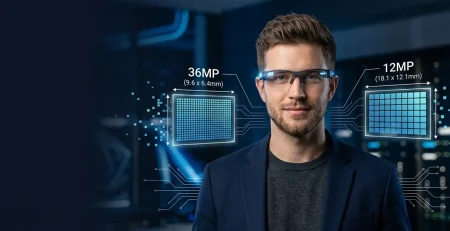
- 8MP Sony Camera with EIS Stabilization: SpeCiC glasses have a high-quality 8MP Sony IMX219 sensor (32MP interpolated) with f/2.2 aperture and 105° ultra-wide angle. It takes crisp 6560*4928px photos and smooth 1080P/30FPS videos with EIS electronic anti-shake. You can record up to 12 minutes per clip, and even record while charging. Just say “Hey Cyan, take a photo” or double-tap the right temple to start recording. This is a game-changer for people with presbyopia, because you don’t have to fumble with your phone to capture a moment.
- Bluetooth Calling with ANC+ENC Noise Cancellation: SpeCiC glasses have built-in open-ear composite diaphragm speakers and dual microphones with ANC+ENC hybrid noise cancellation. You can make and receive phone calls by briefly pressing the right temple button, and the sound quality is excellent even in noisy environments. And because it’s open-ear audio, you can still hear what’s going on around you—perfect for walking down the street, driving, or cooking dinner.
- 139-Language Real-Time AI Translation: SpeCiC glasses can translate 139 languages in real time with 0.5-second response time and 99% accuracy. It supports real-time conversation translation, simultaneous interpretation, and even AI-powered recognition of front-facing objects like road signs, menus, and vehicle models. Just say “Hey Cyan, translate Spanish to English” or “Hey Cyan, look and tell me what this sign says.” This is amazing for travel, business meetings, or even just talking to your neighbor who doesn’t speak English very well.
- ChatGPT-Powered AI Assistant: SpeCiC glasses have a powerful AI assistant that can answer questions, write emails, set reminders, suggest outfits, send voice messages, and even analyze photos. Just ask “Hey Cyan, what’s the capital of France?” or “Hey Cyan, write a birthday message for my mom” and you’ll get an instant response.
- One-Tap Meeting Minutes: Press and hold the left temple button for 2 seconds to start recording. The glasses will capture key points of meetings or classes with one tap, and the dual-microphone noise reduction ensures no key information is missed. You can then export the audio to your phone via Wi-Fi 4.
- AI Object Recognition: Double-tap the left temple to activate AI’s quick image recognition. Through the glasses’ high-definition camera, it can identify objects, plants, animals, monuments, and more. Just say “Hey Cyan, look and tell me about that monument” and you’ll get an instant explanation.
- Hands-Free Driving Assistant: The voice-activated “Hey Cyan” wake word lets you control all features without taking your hands off the wheel. You can make calls, play music, get directions, and even ask about road signs ahead—all while keeping your eyes on the road.
Fourth: The Design, Battery Life, and Privacy (The Little Things That Matter)
Let’s talk about the little things that matter, the things that most smart glasses brands forget about:
- Ultra-Lightweight and Comfortable Design: SpeCiC glasses weigh only 39 grams—about the same as a regular pair of glasses. They have flexible TP temples that adjust up to 30°, tough TR90 frames, sturdy stainless steel hinges, and 101 tailored nosebridge options that deliver a perfect, pain-free fit for every face shape. No more taking your glasses off every 2 hours because your ears or nose hurt.
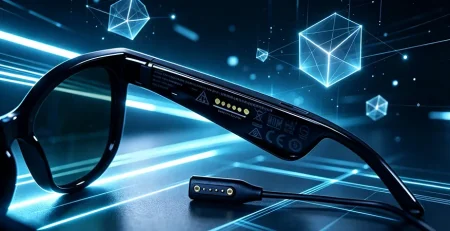
- Long-Lasting Battery: The 280mAh high-voltage battery provides up to 6 hours of continuous music playback (at 80% volume), 15 hours of typical use (calls and music), and 6 days of standby time. It charges fully in 2 hours via the innovative single-point strong magnetic charging cable, which snaps into place automatically. And when the battery dies, the glasses still work as regular glasses—so you never have to worry about being stuck without vision correction.
- IP65 Water Resistance: SpeCiC glasses are IP65 dust, water, and sweat proof, so you can wear them while working out, walking in the rain, or at the beach without worrying about damaging them.
- Privacy First: SpeCiC takes privacy very seriously. All of your data is encrypted and stored locally on your device, not in the cloud. The camera has a physical indicator light that turns on when it’s recording, so people around you always know when you’re taking photos or videos. And you can turn off any feature at any time if you’re worried about privacy.
- Multiple Color Options: SpeCiC glasses come in four stylish colors: Classic Black, Cosmic Gray, Pearl White, and Cherry Veil Pink, so you can find a pair that matches your personal style.
- 12-Month Warranty: SpeCiC offers a 12-month manufacturer’s warranty, and if your custom lenses don’t match your provided prescription, they will re-make them for free.
CONTROVERSY #4: Are Smart Glasses a Privacy Disaster Waiting to Happen, Even with a Physical Indicator Light?
Some people say: “Smart glasses are a privacy nightmare, even with a physical indicator light. You can cover the light with a piece of tape, and no one will know you’re recording them. And even if you don’t record them, your data is still being collected and stored locally—who knows what could happen if your glasses get lost or stolen? I would never wear them!”
Others say: “SpeCiC has a physical indicator light, all data is encrypted and stored locally, and you can turn off any feature. That’s way more privacy than my phone, which I carry everywhere and use to take photos and videos all the time. And if my glasses get lost or stolen, I can remotely wipe all of my data via the Hey Cyan app. I’m not worried about it.”
Privacy is a huge deal. What’s your take on smart glasses and privacy? Let’s discuss! I’m really curious to hear both sides.
SpeCiC vs. The Competition: Which Smart Glasses Are Best for Presbyopes?
Of course, SpeCiC isn’t the only brand making smart glasses for people with presbyopia. Let’s take a look at how they stack up against the competition, so you can make an informed decision:
Ray-Ban Meta (Gen 2)
Ray-Ban Meta are probably the most popular smart glasses on the market right now. They look great—they’re Ray-Bans, after all—they have good camera quality, and they work seamlessly with Facebook and Instagram. But when it comes to presbyopia, they fall short. Way short.
Ray-Ban Meta uses clip-in prescription inserts, which are bulky, unattractive, and trap dust and dirt between the layers. They also don’t offer progressive lenses—only single-vision. So if you have presbyopia, you’ll still need to carry around reading glasses to use your phone or read a book. And because they have a display, you’ll have to deal with all the problems that come with using a display with prescription lenses.
Rokid AI Glasses
Rokid makes some great smart glasses, and they do offer progressive lenses. But again, they use clip-in inserts, which are bulky, unattractive, and trap dust and dirt between the layers. They also have a display, which can be difficult to use with progressive lenses. And their voice control isn’t as good as SpeCiC’s, so you’ll often find yourself repeating commands over and over again.
IXI Autofocus Smart Glasses
IXI makes autofocus smart glasses, which use liquid crystal lenses that automatically adjust focus as you look at different distances. That sounds amazing in theory—like the perfect solution for presbyopia! But in practice, they have a lot of problems.
The autofocus is slow and often inaccurate, especially in low light. They’re also very expensive—over $1,000—and they don’t have any of the smart features that SpeCiC offers, like AI translation, meeting minutes, or object recognition. They’re just a pair of autofocus glasses, and they’re not even that good at being autofocus glasses.
CONTROVERSY #5: Are Autofocus Smart Glasses the Only Real Solution for Presbyopia, or Are They Just a Gimmick Right Now?
Some people say: “Autofocus smart glasses are the future! They automatically adjust focus, so you don’t have to worry about progressives or reading glasses. Static custom lenses are stuck in the 90s! I’d rather pay $1,000 for a pair of autofocus glasses than $339 for a pair of static custom smart glasses.”
Others say: “Autofocus smart glasses are slow, inaccurate, and expensive. I’d rather have a pair of static custom progressive lenses that work perfectly every time, plus all the smart features that SpeCiC offers. Autofocus is just a gimmick right now—maybe it’ll be good in 5 years, but it’s not good now.”
Team Autofocus or Team Static Custom Lenses? Let us know in the comments! I’m team Static Custom Lenses, but I’m open to hearing why you love autofocus.
Cheap Knockoff Smart Glasses
And let’s not forget about all the cheap knockoff smart glasses you can find on Amazon and other online retailers. These might seem like a good deal—$50 for a pair of smart glasses!—but they’re usually made with cheap materials, have terrible camera quality, and don’t offer any prescription options at all. You get what you pay for, and in this case, you’re paying for a gimmick that will break in a month, or even a week.
When you compare all of these options, SpeCiC comes out on top for people with presbyopia. They offer custom progressive lenses that are built into the frame, not clipped on. They don’t have a display, so you don’t have to deal with blurry text or alignment issues. And they have all the smart features you actually need, accessed through easy-to-use voice control, touchpads, and buttons.
The Real Benefits of SpeCiC Glasses for Presbyopes (No Hype, Just Real Life)
We’ve talked about the features of SpeCiC glasses, but let’s get into the real benefits—how they actually make your life easier, day in and day out:
- No More Carrying Around Multiple Pairs of Glasses: With SpeCiC, you have one pair of glasses that does everything. You can drive, read a book, use your phone, and take photos—all with the same pair of glasses. No more fumbling in your bag for reading glasses, no more switching between distance glasses and reading glasses, no more losing glasses everywhere. This alone is worth the price of admission.
- No More Tilting Your Head Like a Confused Pigeon: Traditional progressive lenses require you to move your head to find the sweet spot. But SpeCiC’s progressive lenses are digitally optimized for smart glasses, so you get a wide field of view at all distances. You can look straight ahead and read your phone, or glance to the side and see something far away—no head tilting required. No more confused pigeon impressions. No more tripping over curbs. No more spilling your coffee. This is a game-changer.
- Hands-Free Everything: With SpeCiC’s voice control and hands-free camera, you can do things you never could before. You can take a photo of your kid’s soccer game without having to hold up your phone. You can make a phone call while you’re cooking dinner without getting your phone dirty. You can translate a sign in a foreign country without having to pull out your phone and open an app. This makes life so much easier and more convenient.
- Better Safety: Because SpeCiC uses open-ear audio, you can still hear what’s going on around you while you’re on a phone call or listening to music. That’s much safer than wearing headphones, which block out all ambient noise. And because you don’t have to look at a screen, you can keep your eyes on the road while you’re driving or on the sidewalk while you’re walking. This is a huge safety benefit.
- Style: Let’s be honest—traditional glasses for presbyopia are not stylish. They make you look older than you are. But SpeCiC glasses look like regular, fashionable glasses. No one will even know you’re wearing smart glasses unless you tell them. You can finally have glasses that are both functional and stylish. This is a huge confidence boost.
- Future-Proofing: SpeCiC is constantly updating their firmware, adding new features and improving existing ones. So your glasses will only get better over time. You won’t have to buy a new pair every year to get the latest features—you’ll just get a software update. This is a great value.
Who Should (and Shouldn’t) Buy SpeCiC Glasses
SpeCiC glasses are not for everyone. Let’s take a look at who should and shouldn’t buy them, so you can make an informed decision:
Who Should Buy SpeCiC Glasses
- People with presbyopia who are tired of carrying around multiple pairs of glasses
- People who hate traditional progressive lenses and their narrow fields of view
- People who want a stylish pair of glasses that also have useful smart features
- People who travel frequently and need real-time translation
- People who want to capture photos and videos hands-free
- People who value privacy and don’t want their data stored in the cloud
- People who need a reliable pair of glasses for work, meetings, and daily use
Who Shouldn’t Buy SpeCiC Glasses
- People who want a display or AR/HUD functionality (if that’s what you’re looking for, check out Rokid or Ray-Ban Meta)
- People who don’t like using voice control or touchpads (though SpeCiC does have physical buttons too)
- People who need very strong prescriptions outside of SpeCiC’s supported range
- People who are on a very tight budget (while $239 is a good value, it’s still more expensive than a cheap pair of reading glasses)
How to Get the Most Out of Your SpeCiC Glasses
If you do decide to buy a pair of SpeCiC glasses, here are some tips to help you get the most out of them:
- Make Sure You Have an Up-to-Date Prescription: SpeCiC’s lenses are custom-made to your exact prescription, so the more accurate your prescription is, the better your vision will be. If you haven’t had an eye exam in a while, now is a good time to get one.
- Take the Time to Learn the Controls: SpeCiC has a lot of great features, but you can’t use them if you don’t know the voice commands, touchpad gestures, and button functions. Spend a few minutes reading the user manual or watching the tutorial videos on the SpeCiC website to learn all the different things you can do.
- Customize the Settings to Your Liking: The Hey Cyan app (available for iOS 14.4+ and Android 10+) allows you to customize almost every aspect of your SpeCiC glasses, from the wake word to the volume level to the AI assistant’s voice. Take some time to play around with the settings and make the glasses work the way you want them to.
- Keep Them Charged: While SpeCiC glasses have great battery life, it’s still a good idea to charge them every night. That way, you’ll never be stuck with a dead battery in the middle of the day.
- Update the Firmware Regularly: Open the Hey Cyan app monthly to check for firmware updates. This ensures your AI features work smoothly and adds new functionality.
- Have Fun with Them: SpeCiC glasses are not just a tool—they’re a fun and innovative way to experience the world. Try out all the different features, take lots of photos, and see how they can make your life easier and more enjoyable.
The Future of Smart Glasses for Presbyopia
The future of smart glasses for presbyopia is incredibly bright. We’re already seeing amazing innovations, like better autofocus lenses, longer battery life, and more stylish frames. And as technology continues to improve, smart glasses will only get better.
In the next few years, we can expect to see even more advanced features, like real-time text recognition that can read text out loud to you, and AI-powered object recognition that can identify objects and people even faster. We’ll also see improvements in privacy, making smart glasses even more secure.
And as more people adopt smart glasses, the price will come down, making them more accessible to everyone. Eventually, smart glasses will replace traditional glasses as the go-to solution for vision correction.
But even with all these future innovations, SpeCiC is already ahead of the curve. They’ve focused on the things that matter most to people with presbyopia: clear vision, comfort, style, and useful features that make life easier. And they’ve done it without all the unnecessary bells and whistles that make other smart glasses complicated and expensive.
Conclusion: Yes, Smart Glasses Can Be Used by People with Presbyopia (And They’re Amazing)
So, can smart glasses be used by people with presbyopia? The answer is a resounding yes. And not just can they be used—they should be used. Smart glasses are the best solution to the presbyopia problem that we’ve ever had.
Gone are the days of carrying around multiple pairs of glasses, tilting your head like a confused pigeon, and looking like your grandpa or grandma. With SpeCiC SPV03 glasses, you can have clear vision at all distances, all the smart features you need, and a stylish design that makes you look and feel great.
SpeCiC has done something that no other smart glasses brand has been able to do: they’ve created a product that actually solves a real problem for real people. They’ve focused on the things that matter most to people with presbyopia, and they’ve done it without all the unnecessary gimmicks and complications.
If you’re tired of the presbyopia struggle, if you’re tired of traditional glasses that are uncomfortable, inconvenient, and unstylish, then it’s time to give SpeCiC glasses a try. They might just change your life.
After all, getting older doesn’t mean you have to give up on style or convenience. With SpeCiC, you can have the best of both worlds: clear vision and smart technology, all in a pair of glasses that you’ll actually be proud to wear.
So what are you waiting for? Ditch the reading glasses, say goodbye to the bifocals, and join the smart glasses revolution. Your eyes (and your sanity) will thank you.
Ready to Try SpeCiC SPV03?
Click the link below to learn more and order your pair today! Custom lenses available for all prescription types.
Shop SpeCiC Now