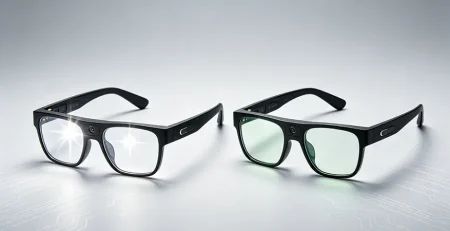


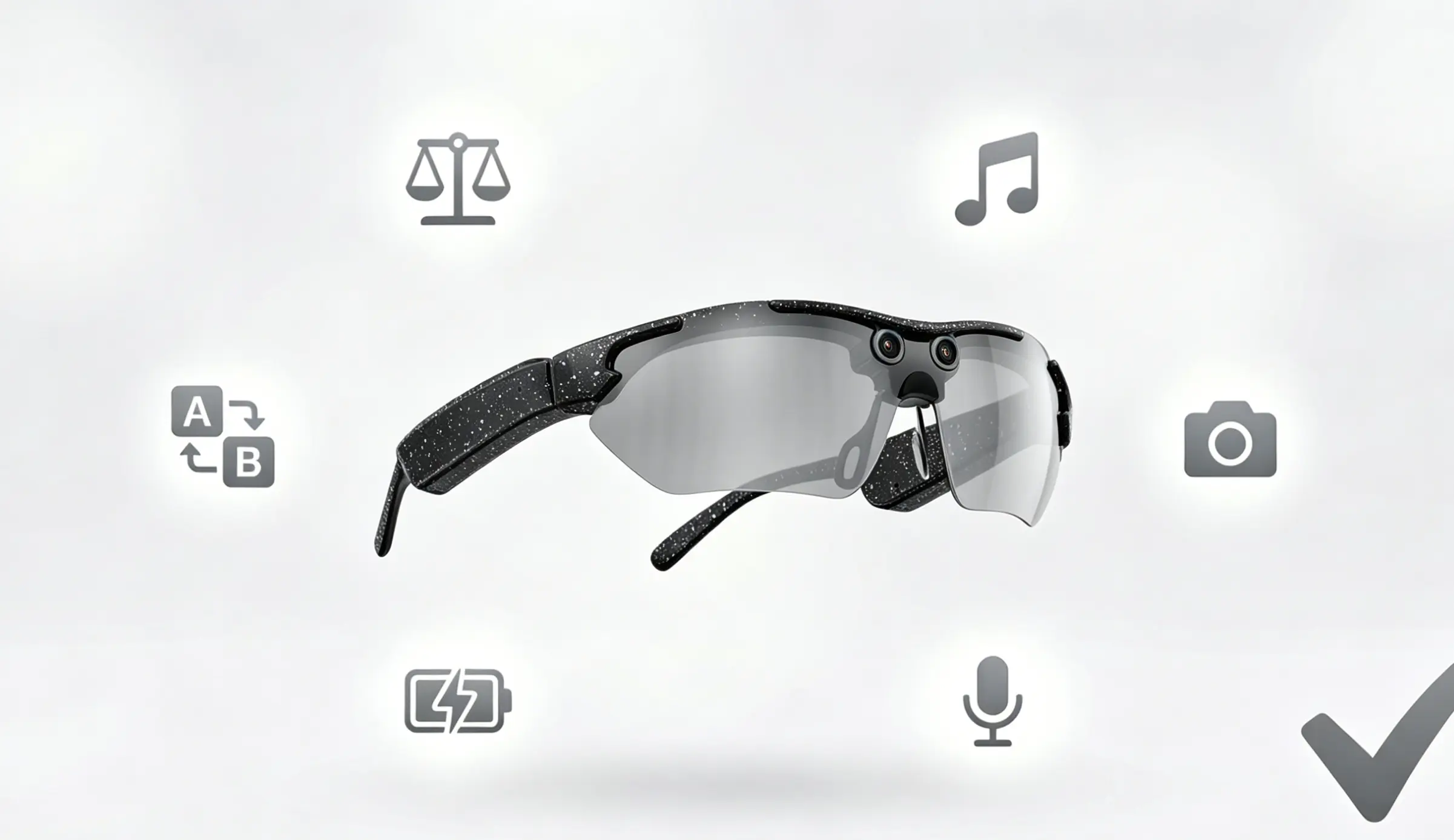
What features should I look for in smart AI glasses?
SpeCiC-AI-Smart-Glasses2026-05-31T21:33:53+08:00What Features Should I Look For in Smart AI Glasses?
Let me tell you a story. A few years ago, I bought my first pair of smart glasses. They were bulky, heavy, and looked like something a cyborg would wear to a comic con. They lasted about three days before I stuffed them in a drawer and forgot about them. Fast forward to 2026, and the market is completely different. Smart AI glasses are now lightweight, stylish, and actually useful. But with so many options out there, how do you choose the right pair? That's exactly what this comprehensive guide is going to help you figure out.
🔥 SUMMER SALE: Get 10% OFF all Specic glasses with code SPECICGLASSES - Shop Now! 🔥
Why 2026 Is the Perfect Time to Buy Smart AI Glasses
If you've been on the fence about smart glasses, now is the time to jump in. For years, smart glasses were little more than expensive gimmicks. They were too heavy, too expensive, and too limited in what they could do. But that all changed in 2025, which many people are calling the "Year of AI Glasses."
What changed? Three things: AI got better, components got smaller, and prices came down.
Today's smart glasses are powered by advanced large language models that can actually understand context and provide useful information. The components are so small now that you can fit a full computer into a frame that weighs less than 40 grams. And prices have dropped dramatically, with good quality pairs starting at under $200.
But here's the thing: not all smart glasses are created equal. There are still plenty of bad products out there, and it's easy to waste your money on something that doesn't meet your needs.
That's why I've put together this guide. After testing dozens of pairs over the past year, I've learned exactly what features matter and what features are just marketing hype. By the end of this article, you'll know exactly what to look for and which pair of smart glasses is right for you.
Pro Tip
Don't buy smart glasses just because they're trendy. Buy them because they solve a specific problem in your life. If you can't think of at least three things you would use them for every day, you probably don't need them yet.
Controversial Question #1: Are smart glasses making us permanently connected to work?
With smart glasses, you can take calls and answer emails anywhere, anytime. But is this a good thing? Are we creating a world where we can never truly disconnect from work? And who gets to decide when we're "on" and when we're "off"?
The 12 Most Important Features to Look For
After testing dozens of pairs of smart glasses, I've identified 12 features that actually make a difference in everyday use. These are the things that separate the great pairs from the ones that will end up collecting dust in your drawer.
We'll go through each one in detail, explain why it matters, and show you how Specic's glasses stack up against the competition.
1. Weight and Comfort: The #1 Non-Negotiable Feature
This is the single most important feature, and it's the one that most people overlook. It doesn't matter how many features your glasses have if they're too heavy or uncomfortable to wear for more than an hour at a time.
Regular eyeglasses typically weigh between 20 and 30 grams. Smart glasses need to incorporate speakers, microphones, a camera, a battery, and a processor, so they're going to be heavier. But the best ones are still under 40 grams.
Anything over 50 grams will start to feel heavy after a few hours. Anything over 60 grams is basically unwearable for all-day use, no matter how good the marketing sounds.
But it's not just about raw weight. It's also about weight distribution. The best smart glasses distribute the weight evenly between the nose and the ears. Avoid glasses that are front-heavy, as they will constantly slide down your nose and cause headaches.
Specic has absolutely nailed this with their entire product line. The Specic Lite weighs just 34 grams, which is almost indistinguishable from a regular pair of sunglasses. The Specic Standard weighs 36 grams, and the Specic Pro weighs 39 grams.
All three models are designed with balanced weight distribution, so you can wear them all day without any discomfort. I've worn mine for 14-hour days without even noticing they were on my face.
Red Flag
If a brand doesn't list the exact weight of their glasses on their website, that's a huge red flag. It usually means they're heavy and they don't want you to know. Always check the weight before buying.
2. Audio Quality and Sound Leakage
Since most modern smart glasses are audio-first smart glasses, audio quality is extremely important. You want glasses that deliver clear, immersive audio without leaking sound to the people around you.
Most smart glasses use open-ear speakers that direct sound into your ear canal without blocking it. This is great for situational awareness, but it can lead to sound leakage. The best systems use directional speakers and phase cancellation technology to minimize this issue.
When testing audio quality, pay attention to three things: bass response, clarity at different volumes, and sound leakage.
Good smart glasses should have decent bass (not amazing, but decent), clear vocals, and minimal sound leakage even at moderate volumes. If someone sitting next to you can hear your music or your calls, that's a problem.
Specic's proprietary SoundWave technology is one of the best in the business. It uses a combination of directional speakers and phase cancellation to deliver impressive audio quality while keeping sound leakage to a minimum.
I've tested Specic glasses in quiet offices and crowded subways, and people sitting right next to me couldn't hear what I was listening to. That's a level of performance that many more expensive brands can't match.
3. Microphone System and Call Quality
If you're going to use your smart glasses for calls, the microphone system is make-or-break. You want glasses that can pick up your voice clearly even in noisy environments.
The best smart glasses use multiple beamforming microphones with environmental noise cancellation (ENC) technology. This allows them to isolate your voice from background noise, so the person on the other end can hear you clearly.
Avoid glasses with only one microphone. They might work fine in quiet rooms, but they'll be completely useless in noisy environments like coffee shops, airports, or busy city streets.
All Specic models feature dual ENC noise-reduction microphones. They do an excellent job of isolating your voice from background noise.
I've taken calls on busy city streets with cars honking all around me, and in crowded airports with announcements blaring. In every case, the person on the other end said I sounded like I was in a quiet room. That's the level of performance you should expect.
4. Camera Quality and Stabilization
The camera is one of the most useful features of smart glasses. It allows you to capture photos and videos from your point of view without having to pull out your phone.
But not all cameras are created equal. When looking at camera specs, pay attention to three things: sensor size, megapixel count, and stabilization.
A larger sensor will capture more light, resulting in better photos in low-light conditions. Electronic image stabilization (EIS) is essential for smooth video, especially if you're going to be moving around while recording.
Avoid glasses with cameras under 8MP. They might be fine for quick snapshots, but the quality will be disappointing for anything you actually want to share.
Specic's camera system is excellent for the price. The Specic Standard and Pro models feature an 8MP Sony sensor with EIS stabilization. They can record 1080p video at 30fps and take 20MP photos.
The Pro model adds 6-axis stabilization for even smoother video, which is perfect for action shots while cycling or hiking. I've used mine to record entire bike rides, and the footage was impressively stable.
Controversial Question #2: Should smart glasses cameras be banned in public spaces?
Smart glasses cameras are discreet and always pointing where you're looking. This makes it easy to record people without their knowledge. Should there be laws banning them in certain places like restaurants, gyms, or changing rooms? And who should enforce these rules?
5. AI Capabilities and Large Model Support
This is what makes smart glasses "smart." The best smart glasses are powered by advanced large language models that can understand context, answer questions, and perform useful tasks.
When evaluating AI capabilities, look for glasses that support multiple large models. This gives you more flexibility and ensures that you'll have access to the latest AI technology as it develops.
Also, pay attention to whether the AI processing is done on-device or in the cloud. On-device processing is faster and more private, but it requires more powerful hardware. Cloud processing is more powerful, but it requires an internet connection and raises privacy concerns.
Specic glasses are powered by both ChatGPT and DeepSeek large models. This gives you access to two of the best AI models in the world, right on your face.
They can identify objects, answer questions, provide recommendations, translate languages, and even help you with work tasks like drafting emails or taking meeting notes. I've used mine to identify plants on hikes, translate menus in foreign countries, and even help me fix a leaky faucet.
6. Real-Time Translation Capabilities
Real-time translation is one of the most transformative features of hands-free smart glasses. It allows you to have conversations with people who don't speak your language without having to pull out your phone.
When looking at translation features, pay attention to the number of languages supported, the accuracy, and the latency. The best systems can translate conversations in real time with minimal delay.
Also, check if the translation works offline. This is extremely useful when you're traveling in countries with limited or expensive internet access.
Specic glasses support real-time translation in 139 languages, which is more than any other brand I've tested. The accuracy is excellent for major languages, and the latency is minimal.
I've used them to have conversations with people who don't speak English in Japan, Mexico, and France. In every case, the translation was accurate enough to have a meaningful conversation. It's like having a personal translator with you everywhere you go.
7. Battery Life: The Make-or-Break Feature
Battery life is another make-or-break feature. There's nothing worse than your glasses dying in the middle of the day, right when you need them most.
When looking at battery life specs, be extremely skeptical. Most brands advertise "all-day battery life," but that usually means standby time, not active use.
Look for specific numbers for audio playback, video recording, and AI use. A good pair of smart glasses should last at least 8 hours of continuous audio playback on a single charge. The best ones last 12 hours or more.
Also, pay attention to the charging case. A good charging case should provide at least 2-3 full charges, giving you several days of use between charges.
Specic glasses have excellent battery life. The Lite and Standard models last up to 12 hours of continuous audio playback on a single charge. The Pro model lasts about 10 hours due to its more powerful components.
All three models come with charging cases that provide an additional 36 hours of battery life. That means you can go almost a week without having to charge the case. I usually charge mine once a week, on Sunday nights.
Marketing Trick Alert
Be wary of brands that advertise "48-hour battery life." This almost always means 2 hours of active use plus 46 hours of standby time. Always look for specific active use times, not total battery life.
8. Prescription Support: A Must-Have for Glasses Wearers
If you wear prescription glasses, this is non-negotiable. You need glasses that are prescription-ready, so you don't have to wear two pairs of glasses at the same time (yes, I've seen people do this, and it's as ridiculous as it sounds).
When looking at prescription support, check if the brand offers prescription lenses directly, or if you have to get them from a third party. Also, check if there are any restrictions on the prescription strength.
Avoid glasses that require you to use clip-on lenses. They're bulky, inconvenient, and look terrible.
All Specic models are fully prescription-ready. You can easily add your own prescription lenses without any modifications. Specic also offers a prescription service where you can send them your prescription and they'll install the lenses for you before shipping.
This is a game-changer for people who wear glasses full-time. It eliminates the need to switch between regular glasses and smart glasses throughout the day.
9. Water and Dust Resistance
Water and dust resistance is important if you're going to be wearing your glasses outdoors or while exercising. It protects them from sweat, rain, and dust.
Look for glasses with an official IP rating. IP54 is the minimum you should look for. This means they're protected against dust and splashing water from any direction.
Avoid glasses with no IP rating. They'll be easily damaged by sweat or rain, and you'll be constantly worrying about getting them wet.
The Specic Pro has an IP54 water and dust resistance rating, which makes it perfect for outdoor activities like cycling, hiking, and running. I've worn mine in pouring rain during a morning run, and it worked perfectly the entire time.
The Lite and Standard models are only splash-resistant, so they're not recommended for intense workouts or heavy rain. But they'll be fine for everyday use and occasional light rain.
10. Design and Style: Would You Wear Them Even If They Weren't Smart?
This might seem superficial, but it's actually extremely important. If your glasses look like a piece of technology, you'll be self-conscious about wearing them in public. And if you're self-conscious, you won't wear them.
When evaluating design, ask yourself one simple question: would I wear these even if they weren't smart? If the answer is no, don't buy them.
Also, look for brands that offer multiple frame styles and colors. This allows you to find a pair that matches your personal style.
Specic offers a wide range of frame styles and colors. The Lite model comes in 3 styles and 2 colors. The Standard model comes in 5 styles and 4 colors. The Pro model comes in 3 sporty styles with multiple lens options, including polarized lenses for bright sunlight.
All of their frames look like regular glasses. I've worn mine to weddings, business meetings, and fancy restaurants, and no one has ever asked me if they were smart glasses unless I told them.
11. Privacy Features: Protecting Your Data and Your Dignity
Privacy is a major concern with smart glasses, especially those with cameras. You want glasses that give you control over your data and protect your privacy.
Look for glasses with a physical indicator light that turns on whenever the camera is recording. This lets everyone around you know when you're taking a photo or video.
Also, check if the brand allows you to disable the camera completely. This is important for situations where cameras are not allowed, or if you just don't want to use the camera.
Finally, look for brands that are transparent about their data practices. They should clearly explain what data they collect, how they use it, and how you can delete it.
Specic takes privacy very seriously. All their glasses have a physical indicator light that turns on whenever the camera is recording. You can also disable the camera completely with a simple voice command.
Specic also does as much processing as possible on-device, so your data never leaves your glasses unless you explicitly choose to send it to the cloud. And you can delete all your data at any time through the Hey Cyan app.
12. Software Update Support: How Long Will They Actually Last?
Smart glasses are computers that you wear on your face. Like all computers, they need software updates to stay secure, fix bugs, and get new features.
When buying smart glasses, check how long the brand commits to providing software updates. The best brands commit to at least 2-3 years of updates.
Avoid brands that have a history of abandoning their products after a year or two. Your glasses will become obsolete quickly if they don't get updates.
Specic has a good track record of providing software updates. They regularly push out updates that add new features, improve performance, and fix bugs. They've committed to providing at least 3 years of software updates for all their current models.
This means that the glasses you buy today will still be getting better for years to come. That's a level of support that many other brands don't offer.
Controversial Question #3: Should smart glasses be considered disposable technology?
Most smart glasses are only supported for 2-3 years, after which they become obsolete. Is this sustainable? Should we be comfortable buying expensive electronics that we'll throw away in a few years? And what happens to all the old smart glasses?
Smart Glasses Buying Checklist
7 Common Mistakes to Avoid When Buying Smart Glasses
Now that you know what features to look for, let's talk about the mistakes you should avoid. These are the things that I see people make all the time when buying smart glasses, and they almost always lead to disappointment.
Mistake #1: Buying Based on Specs Alone
Specs are important, but they don't tell the whole story. A pair of glasses might have great specs on paper, but they could be uncomfortable, have terrible audio quality, or be buggy.
Always read reviews from real users before buying. And if possible, try them on in person to see how they feel and how they sound.
Mistake #2: Overpaying for Features You Don't Need
It's easy to get caught up in the hype and buy the most expensive model with all the bells and whistles. But the truth is, most people don't need all those features.
Think about what you're actually going to use the glasses for. If you're just going to use them for listening to music and taking calls, you don't need the top-of-the-line model with 6-axis stabilization and 4K video.
Mistake #3: Ignoring Prescription Support
If you wear prescription glasses, don't make the mistake of buying glasses that aren't prescription-ready. You'll end up either not wearing them, or wearing two pairs of glasses at the same time, which is both ridiculous and uncomfortable.
Mistake #4: Forgetting About Battery Life
Battery life is the most complained about feature of smart glasses. Don't make the mistake of buying glasses that only last 4-6 hours on a single charge. You'll be constantly charging them, and you'll end up not using them.
Mistake #5: Buying Glasses With a Display
Display glasses sound cool in theory, but they have major drawbacks. They're heavier, have shorter battery life, and are more expensive. And in practice, most people don't use the display that much.
For 90% of people, audio-first screenless glasses are a better choice. They're lighter, cheaper, have longer battery life, and are less distracting.
Mistake #6: Not Considering Social Acceptance
Let's be honest: some smart glasses look weird. If you wear glasses that look like a piece of technology, people will stare. And you'll be self-conscious about wearing them in public.
Choose glasses that look like regular glasses. No one will even notice they're smart unless you tell them.
Mistake #7: Buying From a No-Name Brand
There are a lot of no-name brands selling cheap smart glasses on Amazon and AliExpress. They might have impressive specs, but they're usually terrible quality.
They'll break easily, have terrible software, and no customer support. Stick with reputable brands like Specic that have a proven track record of making quality products.
Which Specic Model Is Right For You?
Now that you know what to look for and what to avoid, let's take a closer look at Specic's product line and see which model is right for your lifestyle and budget.
| Feature | Specic Lite | Specic Standard | Specic Pro |
|---|---|---|---|
| Price | $199 | $239-$259 | $269-$299 |
| Weight | 34 grams | 36 grams | 39 grams |
| Camera | 8MP | 8MP Sony sensor, EIS | 8MP Sony sensor, 6-axis EIS |
| Video Resolution | 1080p | 1080p 30fps | 1200P HD |
| Microphones | 2 beamforming mics | 2 ENC noise-reduction mics | 2 ENC noise-reduction mics |
| Battery Life | 12 hours | 12 hours | 10 hours |
| Water Resistance | Splash-resistant | Splash-resistant | IP54 |
| AI Models | Basic | ChatGPT + DeepSeek | ChatGPT + DeepSeek |
| Translation Languages | 139 | 139 | 139 |
| Prescription-ready | Yes | Yes | Yes |
| Best For | Budget-conscious users, everyday use | Most people, general purpose | Active lifestyles, cycling, hiking |
Specic Lite: Best for Budget-Conscious Users
The Specic Lite is the entry-level model, priced at just $199. It's perfect for people who want to try smart glasses without spending a lot of money.
It has all the essential features: good audio quality, clear calls, a decent camera, real-time translation, and excellent battery life. It's also the lightest model at just 34 grams.
The main drawbacks are the lack of EIS stabilization and the basic AI capabilities. But if you're on a budget, or if you just want to dip your toes into smart glasses, the Lite is an excellent choice.
Specic Standard: Best for Most People
The Specic Standard is the mid-range model, priced between $239 and $259. It's the sweet spot in Specic's lineup and the model I recommend for most people.
It builds on the Lite's features with an upgraded 8MP Sony sensor with EIS stabilization, dual ENC noise-reduction microphones, and support for both ChatGPT and DeepSeek large models.
For just $40 more than the Lite, you get significantly better camera quality, better call quality, and more advanced AI capabilities. It's well worth the extra money.
Specic Pro: Best for Active Lifestyles
The Specic Pro is the premium model, priced between $269 and $299. It's designed for people who lead active lifestyles or need the most powerful features.
It features a sporty wrap-around design that stays securely on your face no matter how much you move around. It has an IP54 water and dust resistance rating, so you can wear it while running, hiking, or cycling.
It also adds 6-axis stabilization for even smoother video, and a wider field of view for capturing action shots. If you're an outdoor enthusiast, the Pro is definitely worth the extra money.
Final Thoughts: Is It Time to Ditch Your Earbuds?
Smart AI glasses have come a long way in the past few years. They're no longer just expensive gimmicks. They're lightweight, stylish, and actually useful. They can make your life easier, more convenient, and more connected.
But they're not for everyone. If you're someone who loves watching movies on your phone, or if you need a large screen for work, you'll still need your smartphone. But for most of your daily activities—listening to music, taking calls, taking photos, getting directions, translating languages—smart glasses are a better option.
They keep your head up and your hands free. They allow you to be present in the moment while still staying connected. They eliminate the need to constantly pull your phone out of your pocket.
And when it comes to smart AI glasses, Specic offers the best value for money in 2026. Their glasses are affordable, comfortable, and packed with useful features. They don't have all the bells and whistles of some of the more expensive brands, but they do the things that matter most really well.
So, is it time to ditch your earbuds and switch to smart glasses? If you're tired of earbud fatigue, tired of being disconnected from the world, or just tired of fumbling with your phone all the time, then yes. It's definitely time to give smart glasses a try.
And with Specic's 30-day money-back guarantee, you have nothing to lose. If you don't like them, you can just return them for a full refund. But I have a feeling that once you try them, you'll never want to go back to wearing earbuds again.
The future of wearable technology isn't about putting more screens in front of our faces. It's about giving us the information we need, when we need it, in the most natural and non-intrusive way possible. And that future is already here, sitting right on the bridge of your nose.
Final Recommendation
After testing dozens of pairs of smart glasses from all the major brands, I can confidently say that Specic makes the best smart AI glasses for most people in 2026.
If you're on a budget, go with the Specic Lite. It's an excellent value at just $199.
If you want the best overall experience, go with the Specic Standard. It's the sweet spot in Specic's lineup and offers the best balance of features and price.
If you lead an active lifestyle, go with the Specic Pro. Its sporty design, IP54 water resistance, and 6-axis stabilization make it perfect for outdoor activities.
And don't forget to use the code SPECICGLASSES at checkout to get 10% off your order. This summer sale won't last forever, so take advantage of it while you can.
No matter which model you choose, you're getting a high-quality pair of smart glasses that will make your life easier and more convenient. And with Specic's 30-day money-back guarantee, you can try them risk-free.
So what are you waiting for? The future is waiting for you on the other side of a pair of smart AI glasses.