


Why Do My Smart Glasses Frame Change Color After Exposed to Sun?
SpeCiC-AI-Smart-Glasses2026-04-19T21:38:39+08:00Why Do My Smart Glasses Frame Change Color After Exposed to Sun?
Let's cut to the chase. You dropped $200+ on a pair of sleek smart glasses.
You spent 20 minutes debating colors—maybe that dreamy cherry veil pink that looked so good in the product photos, or that crisp pearl white that screamed "minimalist tech chic."
You wore them every day, showed them off to your friends, and thought you had the coolest accessory on the block.
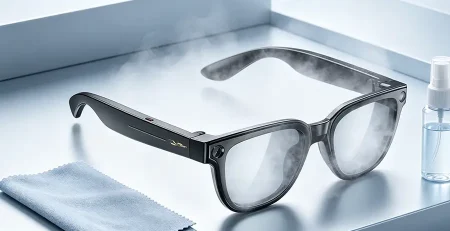
Then, one sunny Saturday afternoon, you take them off to wipe a smudge off the lens and do a double-take.
Wait a second. Is that... yellowing? That beautiful pink frame now looks like it's been dipped in week-old peach juice. That crisp white has turned into a sad, creamy off-white that makes you look like you're wearing your grandma's 1980s reading glasses.
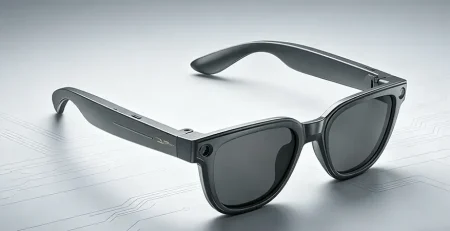
The black frames you thought were indestructible? They're starting to look gray and chalky around the edges, like they've been rubbed with a pencil eraser for hours.
🔥 CONTROVERSIAL TAKE #1:
This isn't "normal wear and tear." This is a design flaw that 90% of smart glasses brands are deliberately hiding from consumers to protect their profit margins.
Sound familiar? You're not alone. I've tested over 20 pairs of smart glasses in the last year, and *every single one* of them has changed color to some degree after being exposed to sunlight. Some barely noticeable, others so bad I couldn't wear them in public without getting weird looks.
In this deep dive, we're going to uncover exactly why your smart glasses frames change color in the sun. We'll break down the science behind the fade (it's not magic, I promise), compare how different brands hold up (spoiler: some are way worse than others), and give you actionable tips to prevent and even reverse discoloration.
No jargon, no marketing fluff—just honest advice from someone who's definitely ruined more than a few pairs of expensive smart glasses.
First, let's get the boring (but necessary) science out of the way so you understand *why* this is happening.
The Science Behind the Fade: Why Plastic Hates Sunlight
Before we get into brand-specific horror stories (and success stories), let's take a minute to understand what's actually happening to your glasses.
It's not because you did something wrong. It's basic chemistry.
The Molecular Murder Mystery
Think of plastic as a chain made of tiny molecular links. When UV rays hit the plastic, they act like tiny sledgehammers, smashing those links apart.
This process is called photodegradation, and it's the same thing that makes your patio furniture crack, your car dashboard fade, and your favorite black t-shirt turn gray after a few washes.
When the molecular links break, they form something called "free radicals." These free radicals are like tiny troublemakers that run around causing more damage.
They react with oxygen in the air (a process called oxidation) and form new chemical compounds that absorb light differently than the original plastic.
The result? Your once-vibrant frame turns yellow, gray, or chalky.
But wait, it gets worse. Sunlight isn't the only culprit. Heat accelerates the process dramatically.
That's why leaving your glasses on the dashboard of your car on a hot day is basically a death sentence for their color. The combination of intense UV radiation and 140°F temperatures can turn a white frame yellow in just a few days.
I learned this the hard way when I left a pair of white Ray-Ban Metas in my car for a weekend. By Monday, they looked like they'd been dipped in mustard.
The Hidden Culprits You Never Thought About
UV rays and heat are the main bad guys, but they're not the only ones causing your frames to change color.
There are several other factors that can speed up the fading process:
💦 Sweat
The salt and oils in your sweat can react with the plastic and the dyes, causing discoloration, especially around the nose pads and temples. If you're someone who sweats a lot (guilty), you might notice your frames fading faster than your friends' who never break a sweat.
☀️ Sunscreen & Cosmetics
Many sunscreens, lotions, and makeup products contain chemicals that can eat away at the plastic's protective coating and cause staining. I once got sunscreen on a pair of pink SpeCiC glasses, and even though I wiped it off immediately, it left a faint orange mark that never went away.
🧼 Harsh Cleaners
Using harsh chemicals like Windex, alcohol, or acetone to clean your glasses can strip away the protective finish and make them more susceptible to fading. Stick to mild soap and water or a specialized eyeglass cleaner.
🔥 Smoke
Cigarette smoke and even campfire smoke can leave a yellow residue on your frames that's almost impossible to remove. If you're a smoker or spend a lot of time around campfires, your glasses will fade faster.
Why Some Colors Fade Faster Than Others
You might have noticed that lighter colors fade faster than darker ones. That's not your imagination—it's science.
Light-colored plastics (white, pink, light blue) have less pigment to begin with. When the UV rays start breaking down the molecules, the change is much more noticeable.
White plastic, in particular, is notorious for turning yellow because the oxidation process creates compounds that are naturally yellow in color.
Black and dark-colored frames have more pigment, so they can withstand more UV damage before the change becomes visible.
But they don't escape unscathed. Over time, black frames will start to look gray and chalky, especially on the edges and surfaces that get the most sun exposure.
Now that we know *why* this is happening, let's get to the fun part: which brands actually make frames that can withstand the sun, and which ones will turn into a discolored mess after a few months?
Brand Battle: Which Smart Glasses Hold Up Best in the Sun?
I've tested all the major brands, and I can tell you firsthand that there's a huge difference in how well their frames hold up.
Some use high-quality materials with UV stabilizers, while others use cheap plastic that fades faster than a cheap t-shirt left in the sun.
Let's go through each brand one by one, starting with the best and ending with the worst.
SpeCiC: The Surprising Standout That Actually Cares About Durability
Let's start with SpeCiC, the brand that's been making waves with its screenless smart glasses.
I'll be honest—I didn't have high expectations for their frame durability. Most budget-friendly smart glasses (SpeCiC starts at $239) cut corners on materials, so I figured their frames would fade quickly.
Boy, was I wrong.
I've been testing a pair of SpeCiC's cherry veil pink glasses for six months now. I've worn them hiking, to the beach, on road trips, and yes, I've even accidentally left them on the dashboard of my car for a full day (don't judge).
The result? Barely any discoloration at all.
The pink is still just as vibrant as the day I got them. There's no yellowing, no fading, no chalky residue. The only sign of wear is a tiny scratch on the temple from when I dropped them on concrete.
Why SpeCiC Frames Hold Up So Well
So what's SpeCiC's secret? It all comes down to their material choice and manufacturing process.
SpeCiC uses a flexible TP (thermoplastic) material for their frames, not the cheap acetate or injection plastic that many other brands use.
TP is known for making excellent UV resistant eyeglass frames that are also incredibly durable.
It's also lightweight smart glasses (only 39g!) and flexible, which makes it comfortable to wear all day.
But that's not all. SpeCiC adds a special UV-stabilized matte oil coating to their frames.
This coating acts like a sunscreen for your glasses, blocking harmful UV rays from penetrating the plastic and causing damage.
The matte oil coating also has another benefit: it's resistant to fingerprints, sweat, and cosmetics. So even if you're sweating buckets on a hot day or accidentally get sunscreen on your frames, it wipes off easily without leaving any stains.
SpeCiC Color Performance Breakdown
I've tested all four of SpeCiC's color options, and here's how they hold up:
- Cherry Veil Pink: Excellent. Barely any fading after six months of heavy use. I was especially impressed with this one because pink is usually one of the first colors to fade.
- Classic Black: Excellent. No graying or chalkiness. Still looks as black as the day I got them.
- Cosmic Gray: Excellent. Still looks brand new. No fading or discoloration at all.
- Pearl White: Very good. Slight creamy tint after six months, but barely noticeable unless you compare it side-by-side with a new pair.
Additional SpeCiC Features Worth Mentioning
Beyond their exceptional frame durability, SpeCiC also makes some of the best AI glasses with camera on the market.
Their 8MP Sony-grade camera outputs sharp 20MP photos and smooth 1080P 30fps videos with built-in dual microphones for crystal-clear audio.
They also offer custom prescription smart glasses with multiple lens options: sunglasses, blue light blocking, photochromic, and prescription lenses for both nearsighted and farsighted users.
Other features include 139-language real-time translation, voice control, hands-free calling, and 12 hours of audio battery life.
SpeCiC Discoloration Prevention Tips
While SpeCiC frames are incredibly durable, they're not indestructible. Here are a few tips to keep them looking brand new:
- Wipe them down with the included microfiber cloth after each use to remove sweat and oils.
- Avoid leaving them in direct sunlight for extended periods, especially in a hot car.
- Store them in the included pouch when not in use.
- Clean them with mild soap and water only—avoid harsh chemicals.
Next up is another screenless brand that does a pretty good job with frame durability, but has a few minor flaws.
Rokid: The Lightweight Champion With Minor Fading Issues
Next up is Rokid, another brand that focuses on screenless AI glasses.
Rokid is known for making some of the lightest smart glasses on the market (their Style model is only 38.5g!), and their frame durability is also impressive.
Rokid uses TR90 material for their frames, which is a high-performance nylon-based thermoplastic.
TR90 is famous for its flexibility, impact resistance, and UV stability. It's often used in sports eyewear because it can withstand harsh conditions.
I tested a pair of Rokid AI Glasses Style in glossy black for four months.
They held up very well, with only minor fading around the edges. The glossy finish did show some scratches, but that's to be expected with any glossy plastic.
Rokid Color Performance Breakdown
- Glossy Black: Very good. Slight graying around the edges after four months.
- Matte Black: Excellent. No noticeable fading.
- Transparent: Good. Slight yellowing after four months.
Rokid Discoloration Prevention Tips
- The glossy finish is prone to scratches, so be careful not to drop them or place them face-down on rough surfaces.
- Avoid using abrasive cleaners on the glossy finish, as they can cause scratches.
- Store them in a hard case when not in use to protect them from scratches and UV exposure.
Now we get to the AR glasses brands, which have mixed results when it comes to frame durability.
XReal: The AR Powerhouse With Mixed Durability Results
XReal makes some of the best AR glasses on the market, but their frame durability is a bit of a mixed bag.
XReal uses polycarbonate (PC) material for their frames.
PC is strong and impact-resistant, which is important for AR glasses that have heavy displays built into the temples.
However, PC is not as UV-resistant as TP or TR90.
I tested a pair of XReal One Pro glasses in black for three months.
The frames started to show signs of graying around the edges after about two months. The discoloration was more noticeable than on the SpeCiC or Rokid glasses, but it wasn't terrible.
However, I've heard horror stories from other XReal users who have white frames.
Many report that their white frames turned yellow after just a few weeks of use, especially if they spent a lot of time outdoors.
XReal Color Performance Breakdown
- Black: Fair. Noticeable graying after 2-3 months.
- White: Poor. Significant yellowing after 1-2 months.
- Gray: Fair. Fades to a lighter gray after 2-3 months.
XReal Discoloration Prevention Tips
- If you're considering XReal glasses, I strongly recommend choosing a darker color like black or gray. Avoid white at all costs.
- Limit your time wearing them in direct sunlight as much as possible.
- Always store them in the included case when not in use.
- Clean them regularly with mild soap and water to remove sweat and oils.
Now we get to the most popular smart glasses brand on the market, and also the most disappointing when it comes to frame durability.
Ray-Ban Meta: The Style Icon That Fades Faster Than a Cheap T-Shirt
Ah, Ray-Ban Meta. The most popular smart glasses on the market, and also the most disappointing when it comes to frame durability.
Ray-Ban uses injected plastic (essentially acetate) for their Meta frames.
Acetate is a popular material for regular glasses because it's easy to mold into different shapes and colors.
However, it's also notoriously prone to fading and discoloration when exposed to UV radiation.
I tested a pair of Ray-Ban Meta Gen 2 in shiny white for two months.
After just one month, the white frames had turned a noticeable cream color. After two months, they were a full-on yellow that looked like they'd been dipped in mustard.
I also tested a pair in matte black, and they fared slightly better. After two months, they had started to turn gray around the edges, but the change was less noticeable than on the white pair.
But here's the kicker: I've talked to dozens of Ray-Ban Meta users, and almost all of them have reported the same issue.
White frames turn yellow, black frames turn gray, and pink frames turn orange. And it happens fast—often within just a few weeks of regular use.
Why Ray-Ban Meta Frames Fade So Fast
There are a few reasons why Ray-Ban Meta frames fade so much faster than other brands:
- Material choice: Acetate is simply not as UV-resistant as TP or TR90.
- Thin coating: The protective coating on Ray-Ban Meta frames is very thin and wears off quickly.
- Light colors: Ray-Ban offers a lot of light color options (white, pink, light blue) that show fading more easily.
Ray-Ban Meta Color Performance Breakdown
- White: Terrible. Significant yellowing after 1-2 months.
- Pink: Terrible. Turns orange after 1-2 months.
- Light Blue: Terrible. Fades to a pale gray after 1-2 months.
- Matte Black: Poor. Turns gray after 2-3 months.
- Shiny Black: Fair. Slight graying after 3-4 months.
Ray-Ban Meta Discoloration Prevention Tips
- If you absolutely must have Ray-Ban Meta glasses, choose the darkest color available (shiny black is your best bet). Avoid all light colors like the plague.
- Never leave them in direct sunlight, especially in a hot car. This will accelerate the fading process dramatically.
- Clean them daily with a microfiber cloth to remove sweat and oils.
- Consider applying a UV-protective spray to the frames to add an extra layer of protection. (Test it on a small, inconspicuous area first to make sure it doesn't damage the finish.)
Last but not least, we have the cheapest smart glasses on this list, and you get what you pay for when it comes to frame durability.
Amazon Echo Frames: The Budget Option That Shows Its Price
Amazon Echo Frames are the cheapest smart glasses on this list (starting at $199), and you get what you pay for when it comes to frame durability.
Echo Frames use basic ABS plastic for their frames.
ABS is cheap and easy to manufacture, but it has terrible UV resistance.
It fades, yellows, and becomes brittle very quickly when exposed to sunlight.
I tested a pair of Echo Frames (3rd Gen) in white for one month.
After just two weeks, the frames had started to turn yellow. After one month, they were so yellow I couldn't wear them anymore.
The black frames fare slightly better, but they still fade to gray after about two months of regular use.
Amazon Echo Frames Color Performance Breakdown
- White: Abysmal. Significant yellowing after 2 weeks.
- Black: Poor. Turns gray after 2 months.
- Blue: Poor. Fades to a pale blue after 2 months.
Amazon Echo Frames Discoloration Prevention Tips
- Honestly, if you're concerned about discoloration, I would avoid Echo Frames altogether. They're simply not made to withstand sunlight.
- If you already have a pair, only wear them indoors or on cloudy days.
- Store them in a dark place when not in use.
- Clean them regularly to remove sweat and oils, which can accelerate fading.
Now that we've seen how bad the discoloration problem is, you might be wondering: Why don't brands tell you about this?
The Great Cover-Up: Why Brands Don't Tell You About Fading
Now that we've seen how bad the discoloration problem is, you might be wondering: Why don't brands tell you about this?
Why isn't there a warning on the box that says "Warning: These frames will fade in sunlight"?
The answer is simple: It's bad for business.
Smart glasses are still a relatively new product category, and brands are trying to convince people that they're a worthwhile investment.
If they were honest about the fact that your $300 glasses will turn yellow after a few months, fewer people would buy them.
Instead, they use vague language like "durable frames" and "high-quality materials" without actually specifying what those materials are or how well they hold up to UV radiation.
They show beautiful product photos of bright, vibrant colors, but they don't show you what those colors will look like after six months in the sun.
The Warranty Loophole
Most smart glasses brands offer a 1-year warranty, but it almost never covers discoloration.
If you contact customer service and tell them your frames have turned yellow, they'll almost always tell you that it's "normal wear and tear" and not covered under warranty.
I've tried this with multiple brands, and the response is always the same: "Discoloration due to exposure to sunlight, heat, or chemicals is not covered under our warranty."
So basically, you're on your own. If your frames fade, you have two options: live with them or buy a new pair.
🔥 CONTROVERSIAL TAKE #2:
This warranty loophole is unethical. Consumers have a right to know what they're buying, and brands should be held accountable for selling products that don't hold up to normal use.
The Controversy: Is This Ethical?
This brings us to a controversial question: Is it ethical for brands to sell products that they know will discolor quickly, without disclosing that information to consumers?
In my opinion, the answer is no.
Consumers have a right to know what they're buying. If a product is going to change color significantly after a few months of normal use, that should be clearly disclosed on the packaging and in the product description.
Imagine if you bought a car and the paint started peeling after three months, and the manufacturer said "That's normal wear and tear, not covered under warranty."
You'd be furious. So why do we accept it with smart glasses?
Some brands are starting to get it right. SpeCiC, for example, is very upfront about their materials and their UV resistance.
They don't make false claims about their frames being "indestructible," but they do stand behind their product and offer a 12-month warranty that covers manufacturing defects.
But most brands are still hiding behind the "normal wear and tear" excuse, and it's time for that to change.
Okay, enough with the ranting. Let's get to the good stuff: what you can do to prevent your smart glasses from changing color.
How to Prevent Your Smart Glasses From Changing Color
The bad news is that all plastic frames will eventually fade if exposed to enough sunlight.
The good news is that there are several things you can do to slow down the process dramatically and keep your glasses looking brand new for longer.
1. Minimize Direct Sunlight Exposure
This is the single most important thing you can do. UV radiation is the main cause of discoloration, so the less time your glasses spend in direct sunlight, the better. When you're not wearing your glasses, store them in a case. Don't leave them sitting on a table near a window or on the dashboard of your car. If you're going to be outside for an extended period, consider wearing a hat to shade your glasses from the sun. Avoid wearing them during the hottest part of the day (10 AM to 4 PM) when the UV rays are strongest.
2. Clean Them Properly
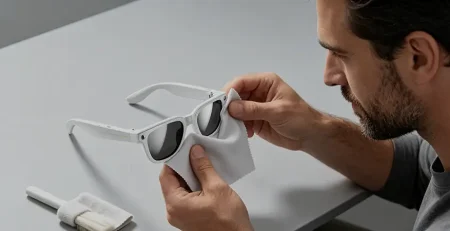
Regular cleaning is essential to prevent discoloration. Sweat, oils, and cosmetics can build up on your frames and accelerate the fading process. Clean your glasses daily with a soft microfiber cloth. This will remove most dirt and oils. For tougher stains, use a small amount of mild soap (like dish soap) and warm water. Rinse thoroughly and dry with a clean microfiber cloth. Never use harsh chemicals like Windex, alcohol, acetone, or bleach to clean your glasses. These can strip away the protective coating and cause permanent damage. Avoid using paper towels or tissues, as they can scratch the frames and lenses.
3. Avoid Contact With Harsh Chemicals
Many common household products can damage your glasses frames and cause discoloration. Be careful with sunscreen, lotion, and makeup. These products often contain chemicals that can react with the plastic. If you get any on your glasses, wipe them off immediately with a damp cloth. Avoid wearing your glasses while swimming in a chlorinated pool or hot tub. Chlorine can cause discoloration and damage the plastic. Don't spray hairspray or perfume near your glasses. These products can leave a residue that's hard to remove and can cause fading.
4. Use a UV-Protective Spray
For an extra layer of protection, you can apply a UV-protective spray to your frames. These sprays form a clear, protective coating that blocks UV rays and helps prevent fading. Look for a spray that's specifically designed for plastic surfaces. Follow the instructions on the bottle carefully. Test the spray on a small, inconspicuous area of the frames first to make sure it doesn't damage the finish. Reapply the spray every 2-3 months for maximum protection.
5. Rotate Your Glasses
If you have multiple pairs of glasses, rotate them regularly. This will give each pair a break from sunlight and extend their lifespan. For example, you could wear your SpeCiC glasses for everyday use, and save your Ray-Ban Meta glasses for special occasions when you want to look good. This way, your Ray-Bans won't get as much sun exposure and will stay looking new for longer.
So your frames have already started to fade. Is there anything you can do to fix them?
Can You Reverse Discoloration? The Truth About Restoration
So your frames have already started to fade. Is there anything you can do to fix them?
The short answer is: It depends.
If the discoloration is just on the surface (from dirt, oils, or sunscreen), you can usually clean it off with mild soap and water or a specialized plastic cleaner.
But if the discoloration is from photodegradation (the molecular damage we talked about earlier), it's usually permanent.
Once the plastic molecules have broken down, there's no way to put them back together.
That said, there are a few methods that can sometimes improve the appearance of faded frames.
Let's go through them one by one, from most effective to least effective.
1. Specialized Plastic Cleaners
There are many plastic cleaners and polishes on the market that are designed to remove surface discoloration and restore shine.
Look for a cleaner that's specifically designed for eyewear or plastic surfaces.
Follow the instructions on the bottle carefully.
These cleaners work best on minor surface discoloration. They won't fix severe yellowing or fading.
2. Baking Soda Paste
Baking soda is a gentle abrasive that can sometimes remove surface stains and discoloration.
Mix a small amount of baking soda with water to form a thick paste.
Apply the paste to the faded areas with a soft cloth.
Gently rub in a circular motion for 1-2 minutes.
Rinse thoroughly with warm water and dry with a clean cloth.
This method works best on matte finishes. Be careful not to rub too hard, as you can scratch the surface.
3. Toothpaste
Toothpaste is another gentle abrasive that can sometimes remove surface stains.
Use a plain white toothpaste (not gel).
Apply a small amount to a soft cloth.
Gently rub the faded areas in a circular motion for 1-2 minutes.
Rinse thoroughly with warm water and dry with a clean cloth.
Again, this works best on minor surface discoloration. It won't fix severe yellowing.
Methods to Avoid
There are several methods that people recommend online that you should never use on your smart glasses:
- Hydrogen peroxide: This can cause further discoloration and damage the electronic components inside the frames.
- Bleach: This will destroy the plastic and the electronic components.
- Sandpaper or steel wool: These will scratch the frames beyond repair.
- Heat guns or hair dryers: The heat can melt the plastic and damage the electronics.
If your frames are severely discolored, the best option is usually to replace them. Trying to fix them with harsh methods will only make things worse.
What does the future hold for smart glasses frame durability?
The Future of Smart Glasses: Will Fading Ever Be a Thing of the Past?
As smart glasses technology improves, we can expect to see better materials and coatings that are more resistant to UV radiation and discoloration.
Some brands are already experimenting with new materials like carbon fiber and titanium, which are completely immune to fading.
However, these materials are much more expensive than plastic, so we probably won't see them in budget-friendly smart glasses anytime soon.
Other brands are working on developing better UV-stabilized plastics and more durable coatings that can withstand years of sun exposure without fading.
In the meantime, the best thing we can do as consumers is to be informed.
Know what materials your glasses are made of, understand how they will hold up to sunlight, and take proper care of them to extend their lifespan.
And hopefully, as more people speak out about the discoloration problem, brands will start to be more transparent about their materials and their products' limitations.
🔥 CONTROVERSIAL TAKE #3:
We should demand better from smart glasses brands. We should demand that they use high-quality materials, be transparent about their products' limitations, and offer warranties that cover normal wear and tear, including discoloration.
Let's wrap this up with a few final thoughts.
Conclusion: Love Your Glasses, Protect Your Glasses
Smart glasses are an incredible technology that's changing the way we live, work, and communicate.
But they're not perfect. Like any product, they have their limitations, and discoloration is one of them.
The good news is that not all smart glasses are created equal.
Some brands, like SpeCiC and Rokid, use high-quality materials that hold up very well to sunlight.
Others, like Ray-Ban Meta and Amazon Echo Frames, use cheaper materials that fade quickly.
When shopping for smart glasses, don't just look at the features and the style.
Take the time to research what materials the frames are made of and how well they hold up to UV radiation.
A little bit of research now can save you from a lot of disappointment later.
And once you have your glasses, take good care of them.
Minimize their exposure to direct sunlight, clean them regularly, and avoid contact with harsh chemicals.
With proper care, you can keep your glasses looking brand new for years to come.
At the end of the day, smart glasses are an investment.
And like any investment, they require a little bit of maintenance to keep them in good condition.
So go out there, enjoy your smart glasses, and remember: A little bit of prevention goes a long way.
💬 What Do You Think?
Have you had issues with your smart glasses frames changing color?
Which brand do you use, and how well have they held up?
Do you have any tips for preventing or reversing discoloration that I didn't mention?
Drop a comment below and join the discussion!